
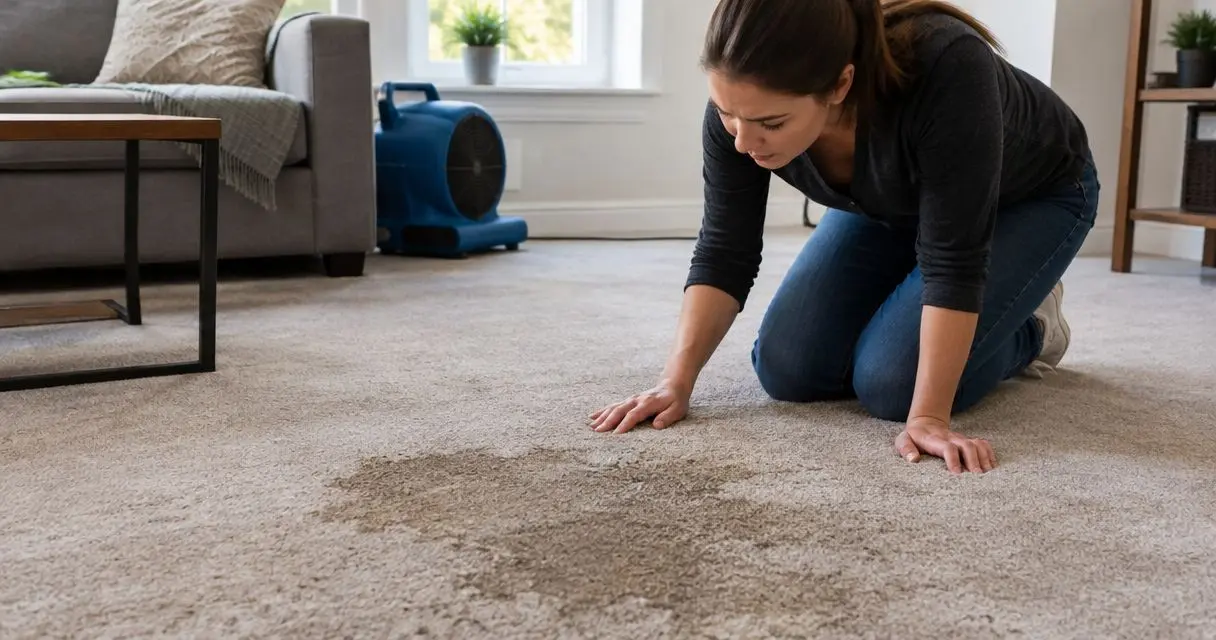
Water-damaged carpet can be saved when the water is clean, drying starts promptly, and the carpet, backing, padding, and floor can be cleaned and dried properly. Carpet exposed to sewage or outdoor floodwater needs replacing, and a dry-feeling surface does not prove that the padding or subfloor is dry.
- Can water damaged carpet be saved? Clean-water damage is sometimes salvageable; sewage and outdoor floodwater call for replacement.
- Wet padding and subfloor moisture matter as much as the visible carpet surface.
- EPA guidance recommends drying wet materials within 24 to 48 hours to help prevent mold growth.
- Phoenix Restoration Group provides 24/7 emergency water damage restoration in Carlisle, Des Moines, and Central Iowa.
Why this matters
Saving the carpet is only useful if the materials underneath are safe to keep. Carpet fibers can feel dry while padding holds water against a wood subfloor. Reinstalling carpet over that moisture leaves the underlying problem unresolved.
For property owners making this decision in 2026, the priority is to identify the water source, stop further damage, and assess every affected layer. Phoenix Restoration Group provides water damage restoration services alongside fire, mold, and biohazard restoration across Carlisle, Des Moines, and Central Iowa.
Can water-damaged carpet be saved or does it need replacing?
The decision depends on contamination and material condition, not simply how wet the carpet looks. Use this comparison to understand which situations support an assessment for salvage and which call for removal.
| Water exposure or condition | Recommended direction | Best for | Benefit | Limitation |
|---|---|---|---|---|
| Clean supply-water leak, discovered promptly | Assess for salvage | Intact carpet with a known clean-water source | Retains usable material | Padding and the floor still need separate assessment |
| Sewage backup or outdoor floodwater | Replace affected carpet and padding | Removing contaminated porous materials | Removes materials that retain contamination | The exposed floor still needs appropriate cleanup and drying |
| Unknown source or unknown wet time | Assess before deciding | Basements, unattended properties, and concealed leaks | Avoids treating uncertain water as clean | Appearance alone cannot establish safety |
| Mold growth or separated backing | Assess for removal and replacement | Carpet with biological growth or physical failure | Avoids reinstalling damaged material | Removing carpet does not resolve moisture in surrounding materials |
The U.S. Environmental Protection Agency's A Brief Guide to Mold, Moisture and Your Home recommends drying water-damaged materials within 24 to 48 hours to help prevent mold growth. That guidance is a prevention target, not a guarantee that carpet is safe before the deadline or automatically ruined afterward.
For your 2026 cleanup decision, treat the clock as a reason to act promptly, not permission to wait. Water source, hidden moisture, and the condition of the materials remain decisive.
Clean-water damage: assess the carpet for salvage
A recently discovered leak from a clean supply line offers a different starting point from a sewer backup. If the carpet remains intact and the affected layers can be cleaned and dried, keeping the carpet is a reasonable option to assess.
Best for: carpet exposed to a known clean-water source without visible mold or backing failure. The advantage is retaining usable flooring; the limitation is that salvage requires more than extracting water from the surface.
The initial source does not settle the whole question. Water can pick up contaminants as it moves through building materials, and prolonged dampness changes the condition of the affected area.
Ask the restoration provider to distinguish between saving the carpet and saving the entire flooring assembly. A recommendation to replace padding does not automatically mean the carpet must also be discarded.
Sewage and outdoor floodwater: replace affected carpet
Sewage and outdoor floodwater introduce contamination that ordinary carpet cleaning does not resolve. EPA flood-cleanup guidance identifies contaminated carpet and padding as materials to discard when they cannot be thoroughly cleaned and dried.
Best for: replacement is the appropriate direction for carpet and padding saturated with sewage or outdoor floodwater. Removing these porous materials addresses contamination, but it does not finish the cleanup.
The floor beneath the carpet, wall edges, and other affected materials still require assessment. Installing new carpet over a contaminated or wet floor hides damage rather than correcting it.
Keep people and pets away from the affected area. Do not use household fans to blow air across suspected sewage contamination or visible mold, and do not handle contaminated flooring as an ordinary cleaning task.
Wet padding: make a separate decision
Carpet and padding do not have to receive the same recommendation. A carpet face that remains usable can sit over padding that needs removal because of contamination, deterioration, or difficulty drying it in place.
Best for: separate assessment is useful when you want to retain sound carpet without keeping unsuitable padding. The benefit is a material-by-material decision; the drawback is that lifting carpet can reveal additional damage.
Padding holds moisture beneath the visible surface. Walking across the room or pressing a towel against the fibers cannot establish whether the floor below is ready for reinstallation.
Ask whether the recommendation covers the carpet, padding, tack strips, and subfloor individually. A single statement that the room is dry gives you less useful information than an explanation of the affected layers.
Why carpet salvage decisions vary
There is no universal salvage deadline that overrides contamination or physical damage. These factors explain why two apparently similar wet rooms can need different work:
- Water source: a clean supply-line leak and a sewage backup present different contamination concerns.
- Time wet: prolonged dampness increases the opportunity for mold growth and material deterioration.
- Backing condition: separated layers, damaged seams, and loss of adhesion affect whether carpet remains usable.
- Padding condition: the carpet surface does not reveal all moisture or contamination underneath it.
- Subfloor condition: wood, concrete, and surrounding building materials require assessment before flooring goes back down.
- Access for drying: trapped moisture beneath flooring or along walls must be addressed, not covered over.
In 2026, use these factors to evaluate a recommendation rather than asking only whether a machine can extract the water. Extraction removes water; it does not by itself establish cleanliness, dryness, or suitability for reuse.
What should you do before deciding to replace carpet?
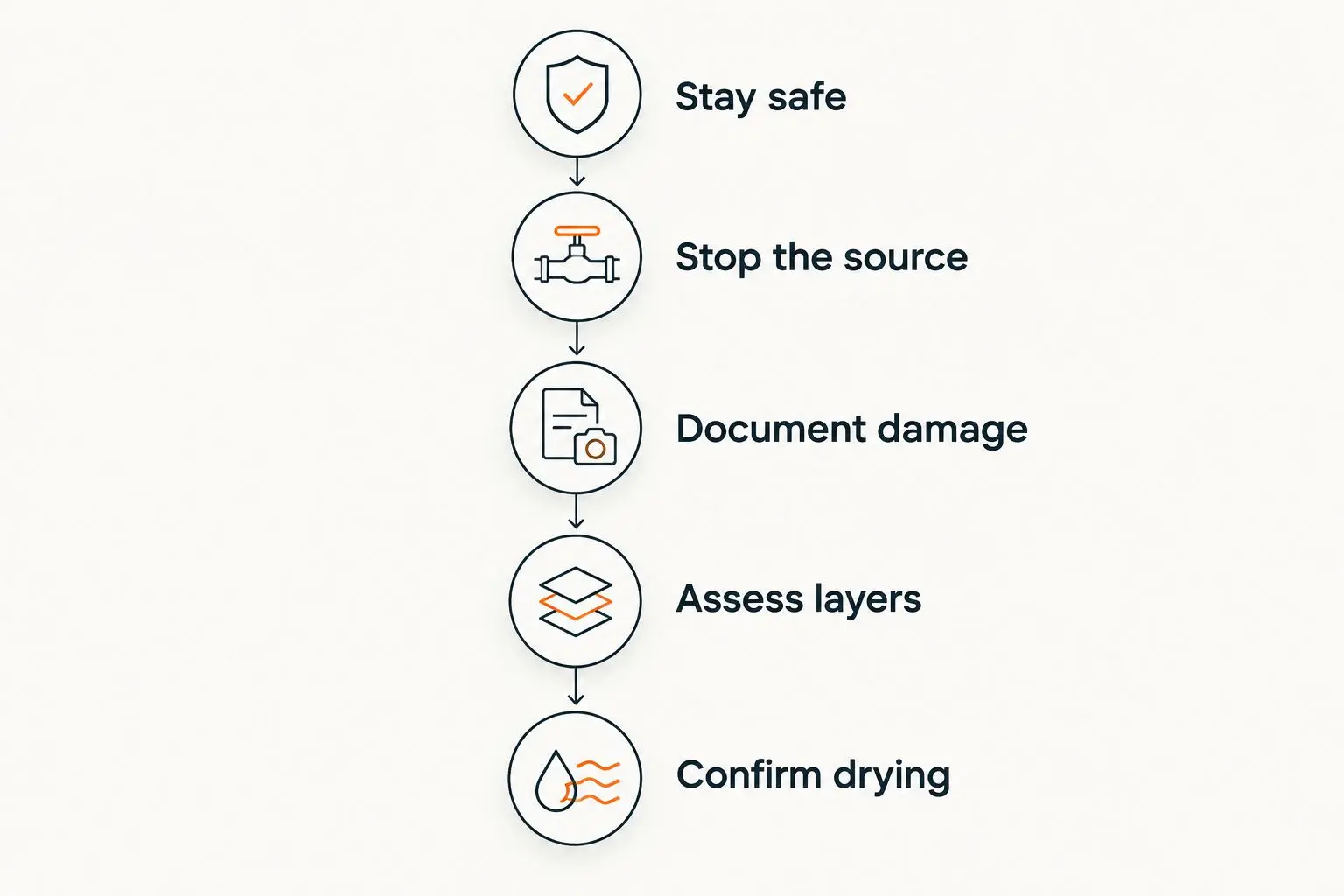
Follow a safety-first sequence. Your immediate job is to prevent further exposure and provide useful information, not to prove that the carpet can be saved.
- Stay safe. Keep out of standing water near electrical equipment, outlets, or wiring. Do not enter an area with suspected structural damage.
- Stop the source. Shut off a known leaking supply only if you can reach the control safely. Do not step into water to reach electrical controls.
- Document damage. Photograph the affected rooms and record when you discovered the water, where it came from, and what you observed.
- Assess layers. Arrange an assessment of the carpet, padding, floor, and nearby materials before deciding what stays.
- Confirm drying. Before reinstallation, ask how the affected materials were checked and what supports the drying decision.
This sequence keeps the carpet decision tied to the condition of the property. It also helps you explain the incident consistently to a restoration provider, landlord, property manager, or insurer.
Do not postpone urgent safety measures or source control while trying to preserve documentation. If safe access is uncertain, stay out and seek appropriate emergency assistance.
How can you tell whether carpet is actually dry?
Touch is not a reliable test for the whole flooring assembly. Surface fibers are accessible to room air, while moisture can remain in padding, seams, the backing, and the floor below.
A drying assessment uses moisture measurements appropriate to the material and checks affected areas beyond the most obvious wet spot. Ask where readings were taken and how the provider determined the materials were ready.
A room that smells normal is not proof of dryness either. Odor, appearance, touch, and moisture measurements answer different questions; none should be substituted for an assessment of contamination.
For a 2026 restoration plan, request a clear explanation of what is being dried, what is being removed, and what must happen before flooring is reinstalled. The guide to how long water damage restoration takes explains the broader drying process.
Can carpet be saved if it has been wet for more than 48 hours?
More than 48 hours of wet time calls for careful assessment, not an automatic salvage approval. EPA's 24-to-48-hour guidance addresses mold prevention; it is not a pass-or-fail test for every carpet.
An unknown timeline deserves the same caution. Tell the restoration provider when you discovered the water and when the area was last known to be dry, without treating those times as identical.
Does a musty smell mean the carpet needs replacing?
A musty smell is a reason to investigate moisture and possible mold, not a complete diagnosis. The source can be the carpet, padding, subfloor, wall materials, or another damp area nearby.
Do not use fragrance or deodorizer as evidence that the problem is resolved. Find and correct the moisture source, then assess affected materials.
Can you dry wet carpet with a household fan?
A household fan does not establish that wet carpet is clean or that the padding and floor are dry. Moving air across the surface is not a substitute for extracting water, controlling humidity, and checking hidden moisture.
Do not aim fans at visible mold or suspected contaminated water. For a small clean-water spill, prompt cleanup matters, but widespread saturation requires a different assessment from a damp spot on the surface.
When should you call for restoration help?
Call when water extends beyond a minor surface spill, reaches padding or walls, has an uncertain source, or involves sewage or outdoor flooding. An unattended property or a concealed leak also makes the wet-time estimate less reliable.
Phoenix Restoration Group is best for property owners seeking 24/7 emergency restoration in Carlisle, Des Moines, and Central Iowa. The company provides water, fire, mold, and biohazard restoration and keeps you informed from the initial assessment through cleanup.
Free inspections for all services are available during business hours, 8am to 4:30pm. Those inspection hours are separate from 24/7 emergency service; they do not mean every after-hours visit is a free inspection. Carpet salvage depends on the assessment, and no specific arrival time is promised.
FAQ
Can water damaged carpet be saved after a pipe bursts?
Water-damaged carpet can sometimes be saved after a clean supply pipe bursts if the materials remain suitable for cleaning and drying. The padding, backing, and subfloor need assessment before the carpet is kept.
Do I have to replace carpet padding after a water leak?
Carpet padding needs a separate assessment from the carpet itself. Contamination, material damage, and the ability to dry the affected layers determine whether it should be removed.
Can carpet be saved after a sewer backup?
Carpet and padding saturated by a sewer backup should be replaced. The floor and other affected materials still need appropriate cleanup and drying before new flooring is installed.
Is carpet safe if it dries within 48 hours?
Drying within 48 hours does not prove carpet is safe to keep. EPA guidance recommends drying wet materials within 24 to 48 hours to help prevent mold, but contamination and material condition remain separate concerns.
Will replacing the carpet get rid of a musty smell?
Replacing carpet will not resolve a musty smell if damp padding, flooring, or wall materials remain. Identify and correct the moisture source before installing replacement flooring.
Can I put furniture back when the carpet feels dry?
A dry-feeling carpet surface does not establish that the padding and floor are dry. Confirm the drying assessment before returning furniture or covering the affected area.
Does Phoenix Restoration Group offer free carpet water damage inspections in 2026?
Phoenix Restoration Group offers free inspections for all services during business hours, 8am to 4:30pm. Its 24/7 emergency restoration availability is separate from the business-hours free inspection offer.
One last thing
Ask what happens underneath the replacement carpet. A recommendation that explains removal but says nothing about the exposed floor leaves out a critical part of the decision.
Before approving reinstallation, ask what was removed, what was cleaned, and how remaining materials were checked for moisture. Saving the visible carpet is not the goal if the floor beneath it remains wet.