
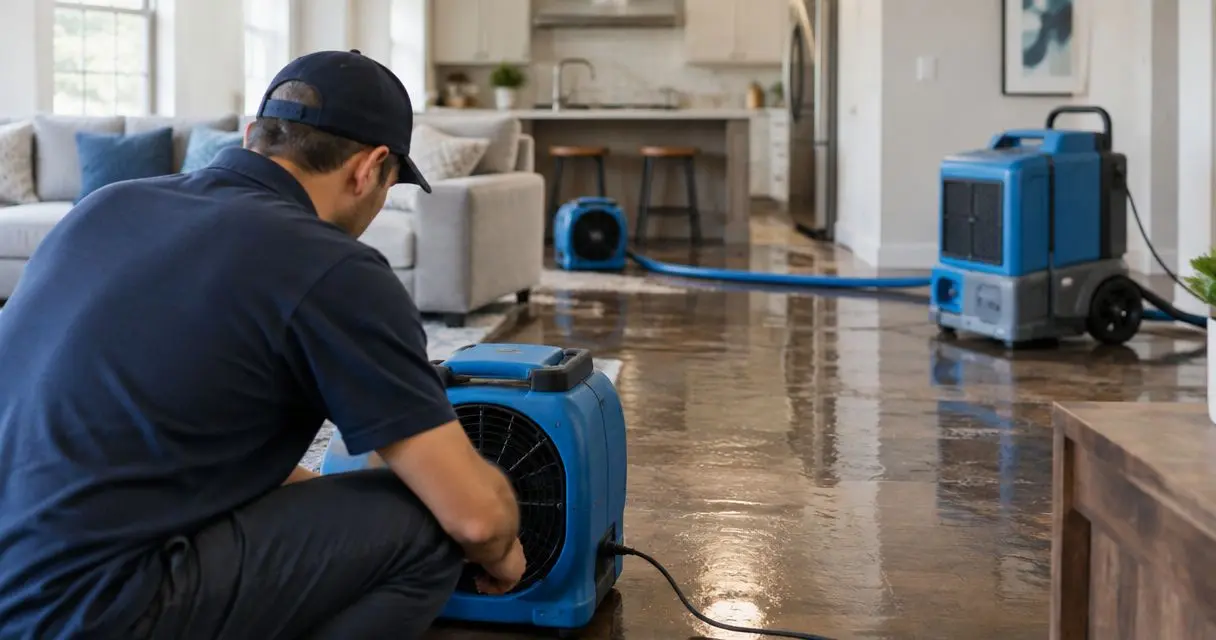
Water damage restoration takes as long as the property needs to reach verified drying goals and complete any necessary repairs; there is no single duration that fits every loss. Removing standing water does not finish the job, and the drying schedule does not include every repair or insurance decision. For a usable completion estimate, ask for separate timelines for water removal, structural drying, and repairs.
- How long does water damage restoration take? Separate water removal, structural drying, and repairs before accepting a completion estimate.
- Phoenix Restoration Group provides 24/7 emergency water damage restoration in Carlisle, Des Moines, and Central Iowa.
- Free inspections are available during business hours, 8am to 4:30pm, not around the clock.
- A dry-looking floor is not proof that concealed materials have reached drying goals.
How long does water damage restoration take?
A reliable restoration timeline comes from the condition of the building, not a standard number of days. The amount of water, affected materials, contamination, access, and repair scope determine what must happen before the property is ready for normal use.
Phoenix Restoration Group provides emergency water damage restoration for residential and commercial property owners in Carlisle, Des Moines, and Central Iowa. Emergency service operates 24 hours a day, 7 days a week; free inspections are available during business hours, 8am to 4:30pm. Those are service hours, not a promised arrival or completion time.
Use this breakdown when discussing a 2026 restoration estimate:
| Stage | What the work addresses | What determines completion |
|---|---|---|
| Assessment and source control | Safety concerns, water entry, and the affected area | A safe work plan and control of ongoing water entry |
| Water removal | Standing water and accessible excess water | Extraction is complete and the remaining moisture is identified |
| Cleaning and material decisions | Contamination and materials that need removal | The agreed cleaning and removal scope is complete |
| Structural drying | Moisture remaining in affected building materials | Measurements meet the project's drying goals |
| Repairs | Removed or damaged finishes and assemblies | The agreed repair scope is complete |
Some work overlaps, but the stages do not mean the same thing. Ask which stage a contractor means whenever someone says the job is nearly finished.
Why this matters
You need different information to plan temporary accommodation, reopen a business, or schedule flooring work. An estimate for drying equipment removal does not answer when a bathroom, basement, or office will be ready to use.
Ask what the completion date includes before planning around it. A useful answer identifies the current stage, the next decision, and the conditions that must be met before work advances.
For a 2026 project, keep the latest written scope beside the latest schedule. If the scope changes after concealed damage is exposed, request an updated explanation rather than relying on the original date.
Water removal: the first milestone, not the finish
Extraction removes standing water and accessible excess water. It does not establish that subfloors, wall cavities, insulation, or other affected materials are dry.
Before extraction begins, address safety and ongoing water entry. Do not enter standing water where electrical hazards or structural damage are possible; stay clear and seek appropriate emergency assistance.
Ask the restoration team:
- Is water still entering the property?
- Which rooms and materials are affected?
- Is the water source known, and does it change the cleanup approach?
- What remains to be checked after visible water is removed?
A floor without puddles is an important change, but it is not a completion test. Keep the distinction clear when updating tenants, employees, or family members.
Structural drying: measurements determine the endpoint
Structural drying addresses moisture left in building materials after extraction. Air movement and dehumidification support that process, while moisture checks show whether the affected materials are progressing toward the drying goals.
The equipment schedule should follow the condition of the property. Equipment running for a certain period does not, by itself, prove that drying is complete.
Ask what is being measured, where it is being measured, and what result will end drying. A useful progress update connects those observations to the next step instead of simply saying that equipment needs more time.
Do not switch off or move drying equipment without discussing it with the restoration team. If noise, access, or electrical concerns interfere with normal use, raise those concerns so the work plan can address them.
Repairs: a separate completion schedule
Repairs address materials and finishes that drying cannot restore or that must be removed to complete the work. Depending on the damage, the repair scope can include wall finishes, flooring, trim, or other affected building components.
Do not treat equipment removal as permission to close every cavity or install every finish. Confirm that the affected area is ready for the proposed repair and that any remaining moisture or contamination concerns have been addressed.
For your 2026 repair schedule, ask who is responsible for each remaining task. A drying completion date is not automatically a flooring installation date, an inspection date, or a return-to-use date.
Why water damage restoration timelines vary
The same room size does not produce the same restoration schedule. These factors change the work required:
- Ongoing water entry. Drying cannot resolve a leak, backup, or other source that continues adding water.
- Affected materials. Carpet, drywall, insulation, wood, and concrete require different assessment and drying decisions.
- Concealed moisture. Water beneath flooring or inside assemblies requires investigation beyond a surface inspection.
- Contamination. Sewage or other contaminated water changes cleaning, handling, and material-removal decisions.
- Access and building use. Occupied rooms, stored contents, and restricted work areas affect how work is organized.
- Repair scope. Replacing damaged assemblies adds work beyond extraction and drying, including any required approvals or inspections.
These are reasons to request a property-specific estimate, not reasons to accept an unexplained delay. Ask which factor is currently affecting your project and what action addresses it.
What should happen before you receive a completion estimate?
A useful estimate follows an assessment of the affected property. A phone conversation helps establish the immediate situation, but it does not reveal moisture behind a wall or underneath a floor.
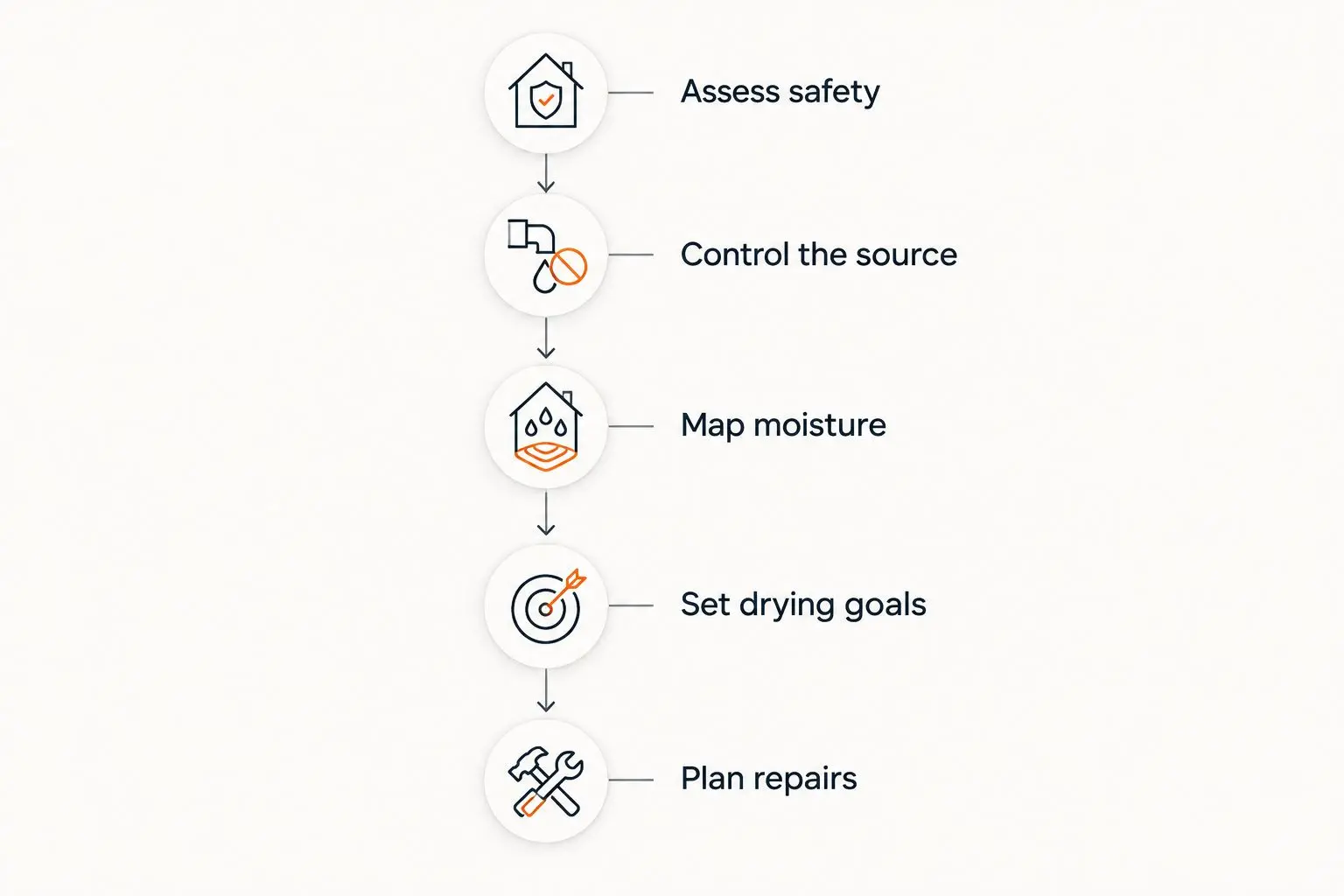
Use this sequence to organize the discussion:
- Assess safety. Identify restrictions on entry, utilities, and use of affected rooms.
- Control the source. Establish whether water entry has stopped and who handles any source repair.
- Map moisture. Identify the affected materials, including areas beyond visible staining or puddles.
- Set drying goals. Explain what measurements will indicate that drying is complete.
- Plan repairs. Separate restoration milestones from rebuilding and return-to-use decisions.
Each step answers a different scheduling question. If an estimate skips one, ask how that unresolved issue is being handled.
What should a restoration progress update include?
A useful progress update explains what changed since the previous assessment. You should understand whether the affected materials are drying as expected, whether additional work has been identified, and which decision comes next.
Ask for plain answers to these questions:
- What work is complete?
- Which materials still need attention?
- What do the latest moisture checks show?
- Has the scope changed, and why?
- What must happen before the next stage starts?
Keep dated photographs, written updates, and scope changes together. For a 2026 claim or repair project, this record helps you distinguish an earlier estimate from the current plan without relying on memory.
A changed date needs an explanation. Newly discovered wet insulation is a different issue from waiting for a repair authorization, and you need to know which problem is holding up the next step.
How should you compare restoration timeline promises?
Compare what a timeline covers, not just how short it sounds. One contractor might be discussing initial extraction while another is including drying and repairs, so the dates are not comparable until the scope matches.
Keep the service area in view as well. A list of Lafayette water damage restoration companies concerns a different local search from a property in Central Iowa; any provider still needs to confirm service coverage and assess the actual building before giving a project-specific schedule.
Ask each provider to identify the event that starts the estimate and the condition that ends it. Then ask what would trigger a revision, who communicates changes, and whether repairs are included.
Avoid treating emergency availability as a guaranteed dispatch time. Around-the-clock service describes when you can seek emergency help, not a fixed arrival window or a promise that restoration finishes within a set period.
When should you request emergency help instead of waiting?
Request emergency help when water is actively entering, spreading, or affecting safe use of the property. If you encounter electrical hazards, sewage, or signs of structural instability, keep people out of the affected area and seek the appropriate assistance.
Phoenix Restoration Group is best suited to Central Iowa property owners who need 24/7 emergency water damage restoration. The company serves Carlisle, Des Moines, and Central Iowa and keeps customers informed from the initial assessment through cleanup.
The scheduling distinction is specific: emergency service is available 24/7, while free inspections for all services take place during business hours, 8am to 4:30pm. Neither statement promises a particular arrival time or restoration duration.
Use the contact page to explain the water source, affected rooms, visible damage, and any immediate safety concerns. State whether water is still entering so the conversation starts with the current conditions.
Can I stay in my home during water damage restoration?
You can stay only if the affected property remains safe and the work can proceed without exposing occupants to hazards. The decision depends on contamination, electrical safety, access, usable facilities, and the separation of work areas.
Ask which rooms are restricted and whether essential areas remain usable. Do not assume that an unaffected-looking bedroom makes the whole building suitable for occupancy.
Does insurance approval mean restoration is finished?
Insurance approval does not establish that materials are dry or repairs are complete. Claim handling and physical restoration are separate processes, even when decisions in one affect scheduling in the other.
For a 2026 water damage claim, ask the insurer what documentation and authorization are required. Ask the restoration team separately what physical conditions remain unresolved; a payment decision is not a moisture reading.
When can flooring go back after water damage?
Flooring should go back only after the underlying conditions meet the requirements for the planned installation. Surface appearance alone does not establish that the substrate is ready.
Ask the restoration team and flooring installer to clarify who verifies readiness and which requirements apply. Installing finishes before resolving moisture risks concealing a problem rather than completing the repair.
FAQ
How long does water damage restoration take from start to finish?
Water damage restoration takes as long as the property needs to reach drying goals and complete the agreed repairs. Ask for separate estimates for extraction, structural drying, and repairs rather than treating them as one deadline.
Is water damage restoration finished when the carpet feels dry?
Water damage restoration is not finished just because carpet feels dry. Moisture can remain in underlying materials, so completion depends on assessment and measurements rather than touch alone.
Can I turn off drying equipment at night?
Do not turn off drying equipment without discussing it with the restoration team. Explain noise, access, or safety concerns so the team can address them within the work plan.
Does emergency water damage service mean someone arrives immediately?
Emergency service availability is not a guaranteed arrival time. Confirm dispatch expectations directly and explain any active water entry or immediate hazards.
Does Phoenix Restoration Group offer free water damage inspections?
Phoenix Restoration Group offers free inspections for all services during business hours, 8am to 4:30pm. Its 24/7 emergency restoration service is separate from that inspection schedule.
Why does the restoration completion date change?
A restoration completion date changes when the work scope or conditions change. Concealed moisture, additional material removal, unresolved water entry, or repair coordination can require an updated schedule.
What should I ask before drying equipment is removed?
Ask which drying goals have been met and what work remains before normal use or repairs. Equipment removal and full project completion are different milestones.
One last thing
Ask for the condition that ends drying, not just the date someone expects it to end. A calendar estimate helps you plan, but a stated drying goal explains how the team will decide the building is ready for the next step.
Before accepting a completion update, confirm whether it means extraction is finished, drying is verified, or all agreed repairs are complete. That distinction makes the answer to your original timeline question usable.