
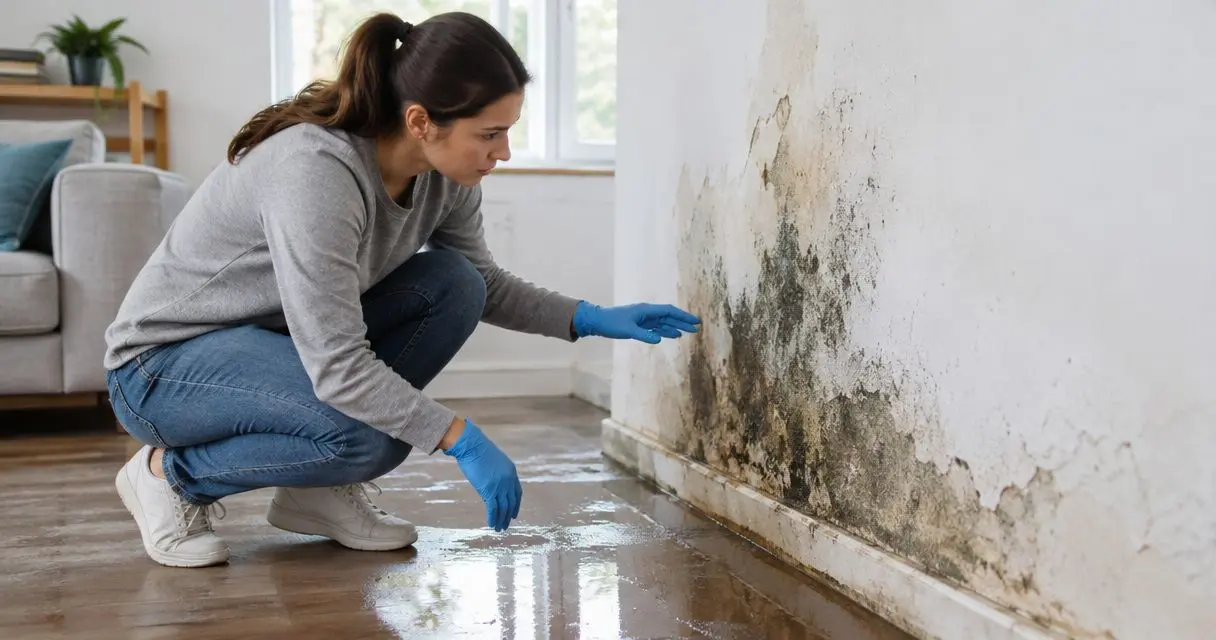
Mold can start growing within 24 to 48 hours after water damage when materials remain damp and conditions support growth. That does not mean you will see mold within that window, or that every wet surface will develop it. Start removing water and drying affected materials immediately rather than waiting for stains or a musty smell.
- How soon does mold start after water damage? Growth can begin within 24 to 48 hours on damp materials.
- The EPA recommends drying water-damaged materials within 24 to 48 hours to help prevent mold growth.
- Phoenix Restoration Group provides 24/7 emergency water and mold restoration in Carlisle, Des Moines, and Central Iowa.
- A dry surface does not prove that wall cavities, carpet padding, or subfloors are dry.
How soon after water damage does mold start growing?
Treat the first 24 to 48 hours as a prevention window, not a guaranteed mold-free period. The U.S. Environmental Protection Agency's A Brief Guide to Mold, Moisture and Your Home recommends drying water-damaged materials within that period to help prevent mold growth. This 2026 guide uses that recommendation as an action threshold, not a way to date a particular patch of mold.
| Condition after water damage | What it means | What you should do |
|---|---|---|
| Materials are still wet during the first 24 hours | Moisture is present even if mold is not visible | Stop the source safely and begin water removal and drying |
| Materials remain damp approaching 48 hours | The recommended prevention window is closing | Have hidden moisture and affected materials assessed |
| Wet materials have an unknown history | The discovery time does not establish when wetting began | Report the uncertainty instead of assuming the damage is new |
| Visible growth or a persistent musty odor is present | Drying alone does not address the whole concern | Arrange an assessment of the moisture source and suspected mold |
For active water damage in Central Iowa, contact Phoenix Restoration Group. Emergency restoration is available 24/7; free inspections for all services are available during business hours, 8am to 4:30pm. Those are different service windows.
Why this matters
Water can move beyond the area you can see. A small ceiling stain can accompany wet insulation, and a damp carpet can conceal moisture in the padding or subfloor. Waiting for visible mold gives hidden materials more time to stay wet.
The decision is not whether you can prove mold has started. It is whether the water source has stopped and the affected materials are drying. Act on moisture, not on the appearance of mold.
What should you do during the first 24 hours?
Start with safety, then limit further wetting and arrange drying. Do not enter standing water where electrical equipment, outlets, or wiring could be involved, and do not stand below a bulging ceiling.
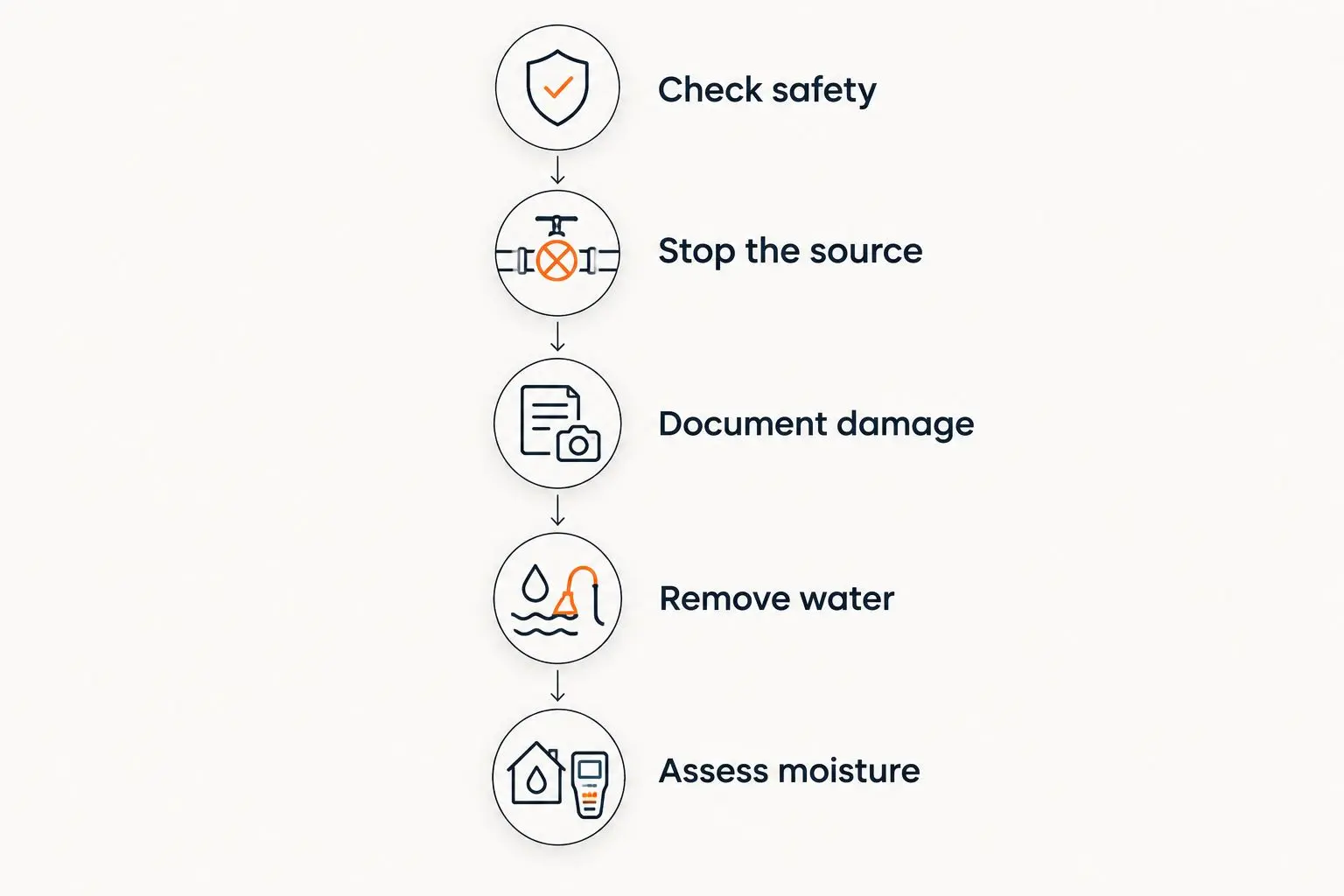
- Check safety. Keep people away from electrical hazards, unstable materials, and potentially contaminated water. Do not enter an unsafe area to retrieve belongings.
- Stop the source. Shut off a leaking fixture or the appropriate water supply only when you can reach it safely. Roof damage, sewage backups, and outside flooding require different responses.
- Document damage. Photograph affected rooms, wet materials, and the apparent source from a safe position. Record when you discovered the problem and when you last knew the area was dry.
- Remove water. Arrange extraction appropriate to the water source and affected materials. Do not use a household vacuum to collect water.
- Assess moisture. Identify wet materials beyond the visible puddle and determine what can be dried, cleaned, or needs removal.
These steps remain the starting point in 2026 whether the leak affects a home, apartment, or commercial property. Do not delay safe source control while trying to establish the exact hour mold might begin.
What if the water looks clean?
Clear water is not proof that the entire affected area is safe to handle. The source, materials it passed through, and time it remained in the building matter. Tell the restoration provider whether the water came from a supply pipe, appliance, drain, roof, or outside floodwater.
Water removal also does not complete drying. Carpet padding, wall cavities, and layered flooring need attention even after the visible water is gone.
What changes after 48 hours?
After 48 hours of continued dampness, assess the materials rather than assuming ordinary surface drying is enough. The elapsed time increases concern, but it does not establish that mold is present everywhere or that every affected item must be discarded.
Give the assessor the best timeline you have. If you discovered a leak after being away, distinguish the discovery date from the possible start date. An unknown timeline calls for inspection, not a guessed timestamp.
Avoid cutting open walls, pulling up affected carpet, or directing fans across visible growth before the situation is assessed. Disturbing mold can spread spores and contaminated dust into surrounding areas.
Can materials still be saved after 48 hours?
Some materials remain cleanable or dryable, while others require removal. The decision depends on contamination, material condition, access for drying, and whether mold has penetrated a porous material. A clock alone cannot make that decision.
Do not paint over staining or close a wall simply because the outside feels dry. Concealing the surface does not remove moisture or resolve growth underneath it.
Why mold growth timing varies
There is no universal countdown that predicts visible mold in every building. These factors explain why two water losses discovered on the same day can require different work:
- Time spent wet. A newly discovered leak can have an older wetting history. Repeated dampness also matters, even when each incident seems small.
- Material type. Paper-faced drywall, carpet backing, wood, and other porous materials provide different conditions from a clean, nonporous surface.
- Hidden moisture. Insulation, flooring layers, and enclosed cavities can remain wet after exposed surfaces feel dry.
- Temperature and humidity. Warm, damp conditions support growth. Humid air also makes drying more difficult.
- Continuing water entry. Drying equipment cannot resolve a pipe, roof, drainage, or condensation problem that keeps adding moisture.
- Drying access. Water trapped behind finishes or underneath flooring is harder to address than moisture on an accessible surface.
For your 2026 cleanup plan, focus on what remains wet and why. The useful question is not just how long a fan has been running, but whether the affected materials are actually drying.
How do you know whether hidden areas are still wet?
A dry-looking room is not the same as a dry assembly. Paint, flooring, or trim can conceal moisture in the materials behind or beneath them. Smell and appearance help identify concerns, but neither replaces a moisture assessment.
Ask where moisture was found, which surrounding areas were checked, and how the drying decision will be verified. Moisture meters help assess materials; they do not identify mold species or prove that a room contains no mold.
Keep a simple record of the findings and proposed work. Separate observations, such as wet insulation or lifted flooring, from assumptions about when the damage began. That distinction makes conversations with a landlord, property manager, contractor, or insurer clearer.
What should a property manager tell occupants?
Explain which rooms are affected, which areas occupants should avoid, and whom to contact if they notice additional wetness or odor. Do not describe a room as safe solely because its floor has been dried.
Occupied buildings also need a plan for access and separating affected work areas. In senior housing, mold remediation for senior living requires particular attention to resident exposure and access because older adults can have health conditions that increase their vulnerability to damp or moldy environments.
The CDC identifies people with asthma, chronic lung disease, or weakened immune systems as groups that need particular caution around mold. Keep those occupants away from cleanup work and seek medical advice for health concerns rather than trying to identify a health risk from mold color.
Can you dry the area yourself or do you need restoration?
Limited drying is different from handling an unknown leak, contaminated water, or suspected hidden growth. Use the water source, affected materials, and access conditions to decide what help you need. This 2026 comparison describes the trade-offs, not a substitute for assessing the property.
| Approach | Best for | Benefit | Limitation |
|---|---|---|---|
| Limited homeowner drying | A small, accessible clean-water incident without suspected hidden damage | Allows immediate action where conditions are safe | Can miss wet padding, cavities, and contamination |
| Professional water restoration | Standing water, inaccessible wet materials, or an uncertain extent of damage | Addresses extraction and drying as a coordinated process | Drying does not automatically resolve existing mold |
| Mold remediation assessment | Visible growth, persistent odor, or concerns about concealed mold | Establishes the affected area and appropriate cleanup approach | Cleanup will not prevent recurrence unless moisture is controlled |
Phoenix Restoration Group is suited to Central Iowa property owners who need 24/7 emergency water or mold restoration. The company serves Carlisle, Des Moines, and Central Iowa, with free inspections for all services during business hours, 8am to 4:30pm.
Phoenix Restoration Group keeps you informed from assessment through cleanup. Distinguish the inspection window from emergency availability when arranging service; neither establishes an exact arrival time or a fixed drying schedule.
Arrange a water damage assessment
24/7 emergency restoration. Free inspections during business hours, 8am to 4:30pm.
Does mold always appear within 48 hours?
48 hours is not a guarantee that mold will appear, or a guarantee that the area was safe before then. The commonly cited window supports prompt drying. Actual growth depends on moisture, materials, and environmental conditions.
A material can be wet without visible growth. Conversely, mold found soon after a new leak can relate to an older moisture problem that was already present.
Does a musty smell mean the water damage is old?
A musty smell cannot establish whether water damage is 24 hours old or much older. It is a reason to investigate moisture and possible concealed growth, especially when the smell persists after visible water is removed.
Do not use fragrance, paint, or odor treatment as proof that the underlying problem is resolved. Find and address the moisture source.
FAQ
How soon does mold start after water damage?
Mold can start growing within 24 to 48 hours when materials remain damp and conditions support growth. Begin water removal and drying immediately rather than waiting for visible mold.
Can mold grow before I can see it?
Yes, mold can begin growing before you can see it on an exposed surface. Wall cavities, carpet padding, and other concealed materials can stay damp after the room looks dry.
Is the first 24 hours a safe period before mold starts?
No, the first 24 hours is not a guaranteed safe period. The drying window is a prevention guideline, not permission to leave materials wet.
Will a fan prevent mold after a leak?
A fan alone does not establish that wet materials are dry or that mold has been prevented. Avoid directing airflow across suspected mold, and have hidden moisture assessed when the extent of damage is uncertain.
Do I need mold testing after every water leak?
No, mold testing is not automatically necessary after every leak. The immediate priorities are stopping the water source, identifying wet materials, and addressing visible or suspected growth.
Should I throw away every item that stayed wet for 48 hours?
No, 48 hours alone does not determine whether every item must be discarded. Material type, contamination, condition, and the ability to clean and dry it determine the appropriate action.
Can I get emergency restoration outside business hours?
Phoenix Restoration Group provides 24/7 emergency restoration in Carlisle, Des Moines, and Central Iowa. Free inspections for all services are available during business hours, 8am to 4:30pm, which is separate from emergency availability.
One last thing
Before you replace trim, reinstall flooring, or close a wall, ask what evidence supports that the concealed materials are dry. A finished surface can hide the same moisture problem that started the cleanup.
For water damage in 2026, make verified drying the checkpoint before rebuilding, not the absence of visible mold. Stopping the source and confirming the condition of affected materials matter more than guessing when growth began.