
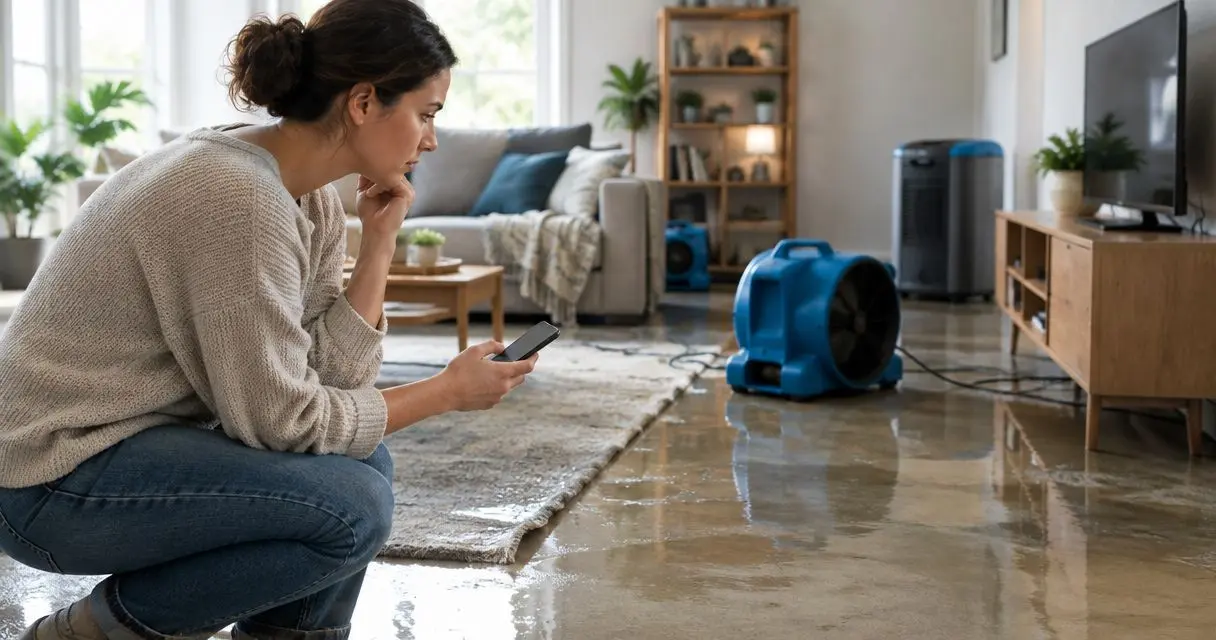
Homeowners insurance typically covers water damage restoration when a sudden, accidental event, such as a burst pipe, causes damage covered by your policy. You remain responsible for the deductible and excluded work; floodwater, gradual leaks, and sewer backups require separate attention because standard homeowners coverage generally excludes them or requires an endorsement.
- Does homeowners insurance cover water damage restoration? Typically yes for covered sudden accidents, not every water source.
- A burst pipe and a flooded basement can fall under different insurance provisions.
- Document damage, prevent further loss safely, and ask your insurer which restoration work is covered.
- Phoenix Restoration Group provides 24/7 emergency water damage restoration, distinct from business-hours free inspections.
Will homeowners insurance cover water damage restoration?
The cause of the water damage determines coverage, not simply the presence of water. A covered plumbing accident can include necessary water extraction, drying, and repairs to damaged building materials, subject to your policy. The failed pipe or appliance itself is a separate coverage question.
Use this comparison when reviewing a water loss under your 2026 policy. These are general coverage patterns, not a determination for an individual claim.
| Water damage situation | Typical homeowners coverage treatment | What to verify |
|---|---|---|
| Sudden burst pipe | Resulting damage is generally covered | Exclusions, deductible, and repair scope |
| Sudden appliance discharge | Resulting damage is generally covered | Whether the event meets the policy terms |
| Long-term leak or deterioration | Generally excluded | Repeated leakage and hidden-damage provisions |
| Water entering from outside flooding | Generally excluded | Separate flood insurance |
| Sewer backup or sump overflow | Often requires an endorsement | Water-backup coverage and its limits |
| Rain entering after covered storm damage | Resulting interior damage can be covered | How water entered and which event caused the opening |
For the sequence from reporting damage through payment, use the water damage claim to insurance payout workflow.
Why this matters
Water extraction, drying, demolition, plumbing repair, and reconstruction are different parts of a loss. An insurer can cover resulting damage without covering every task on a contractor's estimate. Separate those tasks before treating an estimated restoration bill as an expected insurance payment.
Your immediate safety decisions also differ from coverage decisions. Keep people away from electrical hazards, contaminated water, and unstable ceilings; do not enter an unsafe area to photograph damage or retrieve belongings.
Sudden plumbing or appliance damage
A pipe that suddenly bursts or a washing machine that unexpectedly releases water fits the general pattern of accidental discharge. Coverage still depends on your contract, including exclusions and duties after a loss. Describe what happened rather than assuming that every wet material qualifies for replacement.
Ask the adjuster to distinguish between repairing the failed component and repairing the damage it caused. For example, replacing a worn appliance is not the same coverage question as drying the floor beneath it.
Document the source, affected rooms, and visible damage separately. Those details help keep the claim focused on the event and its consequences rather than a broad description such as basement water.
Gradual leaks and maintenance problems
Homeowners policies generally exclude deterioration, wear, and repeated leakage under their stated terms. A slow leak behind a cabinet does not become a covered sudden event just because you discovered it suddenly. Hidden-damage provisions differ, so the actual policy language matters.
Record when you first noticed staining, dripping, odors, or damaged finishes. Preserve relevant maintenance records and describe the timeline accurately. Do not guess how long concealed moisture has been present.
For a claim reported in 2026, ask the insurer to identify the provision supporting any repeated-leakage exclusion. The date you discovered damage and the duration of the leak are separate facts.
Floodwater, sewer backups, and sump problems
Water entering from outside flooding is generally excluded from standard homeowners insurance. Separate flood insurance addresses a different category of loss and has its own terms. A basement filled with water is not enough information to identify the applicable coverage.
Sewer backup and sump overflow also need a specific policy review. Water-backup endorsements can provide coverage that a standard policy does not, but the endorsement's covered events, exclusions, and limits control.
Tell the insurer whether water came through a drain, over a foundation opening, through a wall, or from plumbing. If the source is uncertain, say so. Do not label every basement water loss a flood before the cause is established.
Why water damage coverage varies
Your neighbor's paid claim does not establish coverage for your property. Review these factors against the policy in force when your loss occurred:
- Water source: Plumbing discharge, surface flooding, and sewer backup fall under different provisions.
- Cause and duration: Sudden accidental damage differs from repeated leakage or deterioration.
- Policy exclusions: Maintenance, neglect, freezing, and other provisions can affect a claim.
- Added endorsements: Water-backup and other endorsements change the protection purchased.
- Limits and deductible: Covered work remains subject to the applicable financial terms.
- Documented scope: The insurer evaluates the cause, affected materials, and work needed to address covered damage.
Keep the declarations page, policy form, and endorsements together for your 2026 review. A declarations page summarizes coverage but does not replace the full contract.
What should you do before the adjuster arrives?
Protect people first, then preserve evidence and prevent further damage where safe. Do not postpone necessary protective action solely to keep the property unchanged for an inspection. Ask your insurer how to document emergency work and what damaged materials it wants retained.
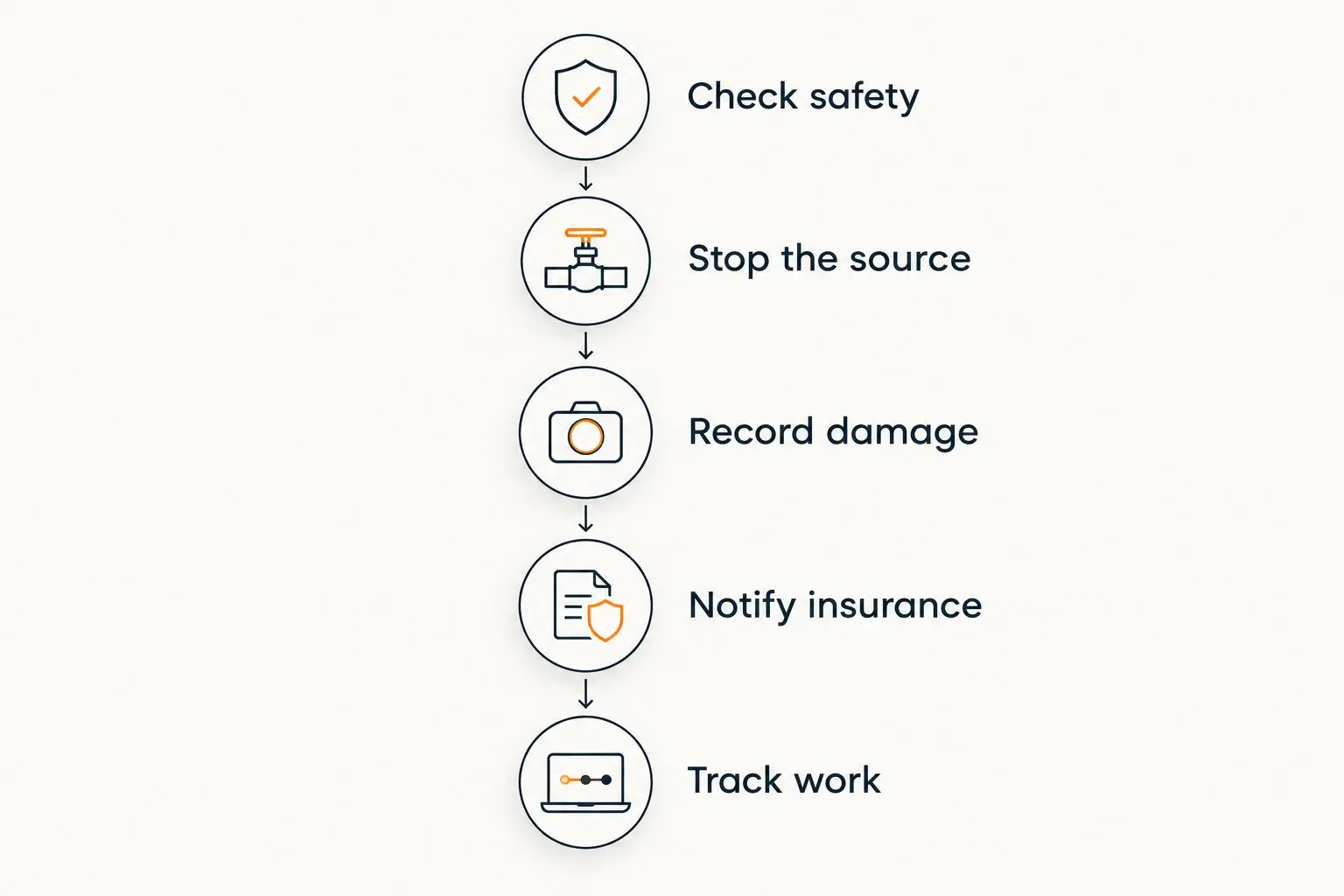
- Check safety. Stay out of standing water near electrical equipment. Avoid sewage and other contaminated water, and leave areas with sagging ceilings or other structural concerns.
- Stop the source. Shut off the water supply only if you can reach the valve safely. Arrange appropriate help when the source involves plumbing, electrical systems, or another hazard.
- Record damage. Photograph the source, affected rooms, belongings, and visible water lines before cleanup when safe. Keep original files and note when you discovered the problem.
- Notify insurance. Report the event promptly and request a claim number, contact person, and instructions for emergency mitigation. Ask about notice requirements in your policy.
- Track work. Keep estimates, authorizations, invoices, receipts, and communications. Ask contractors to separate emergency mitigation from later repair work.
This sequence organizes a claim; it does not establish coverage. Tell the insurer what has already happened and which decisions still need an answer.
What should you ask the insurer before authorizing repairs?
Ask which emergency tasks can proceed and which later repairs need additional review. A contractor's work authorization and an insurer's coverage decision are different documents. Read the payment terms before signing, including your responsibility for disputed or excluded work.
Use these questions during the claim call:
- Which cause of loss are you evaluating, and under which coverage?
- What deductible, coverage limit, or endorsement applies?
- What documentation do you need before damaged materials are removed?
- How should emergency extraction and drying be documented?
- Which parts of the estimate are approved, disputed, or awaiting review?
- How do I submit additional damage discovered during cleanup?
Keep the answers in writing when possible. If an estimate changes, ask for an explanation that separates newly discovered damage from changes in repair methods or quantities. This keeps a disagreement about scope from being confused with a denial of coverage.
When should you contact a restoration provider?
Contact a restoration provider when water removal, drying, or damage assessment requires professional help. The provider addresses property conditions; the insurer determines insurance coverage. Hiring a contractor does not establish that the insurer will pay the invoice.
Phoenix Restoration Group water damage restoration is best for residential and commercial property owners seeking 24/7 emergency service in Carlisle, Des Moines, and Central Iowa. The service addresses restoration needs, not insurance coverage decisions or guaranteed claim payment.
Phoenix Restoration Group offers free inspections for all services during business hours, 8am to 4:30pm. Those inspection hours are distinct from 24/7 emergency restoration availability. The team keeps you informed from the initial assessment through cleanup, without promising a specific arrival time.
Review the available restoration services and explain whether you need emergency assistance or a business-hours inspection. Describe the water source, affected areas, and any known safety concerns.
Discuss your water damage
24/7 emergency restoration. Free inspections for all services during business hours, 8am to 4:30pm.
Can I start drying before insurance approves the claim?
You should take reasonable steps to prevent further damage when it is safe, consistent with your policy's duties after a loss. Notify the insurer promptly, document conditions, and ask what records it requires for emergency mitigation.
Starting work does not guarantee reimbursement. Keep emergency protective work separate from permanent reconstruction, and understand the contractor's authorization before signing.
Will insurance cover mold after a water leak?
Mold coverage depends on the policy, the cause of the moisture, and any applicable exclusion, exception, endorsement, or limit. A covered water event does not automatically make every subsequent mold-related expense covered.
Report suspected mold and continued moisture promptly. Ask for a written coverage explanation that addresses mold specifically rather than assuming the initial water-damage decision answers both questions.
What if insurance denies my water damage claim?
Request the denial in writing, including the policy language and facts supporting it. Compare the explanation with your photographs, timeline, repair records, and policy endorsements before challenging a specific point.
Use the insurer's review process for missing evidence or disputed findings. Iowa homeowners can also contact the Iowa Insurance Division for consumer assistance; that does not replace reviewing the policy or obtaining legal advice when needed.
FAQ
Does homeowners insurance cover water damage restoration in 2026?
Homeowners insurance typically covers restoration for sudden, accidental water damage that meets the policy terms. Your 2026 policy's exclusions, deductible, limits, and endorsements determine the actual coverage.
Will insurance pay to replace the pipe that caused the damage?
Coverage for resulting water damage does not automatically include replacement of the failed pipe. Ask the insurer to separate source repair, access work, and resulting damage in its coverage explanation.
Is a flooded basement covered by homeowners insurance?
Basement water coverage depends on the source. A burst pipe, sewer backup, and outside floodwater receive different treatment under homeowners policies and any separate coverage.
Do I have to wait for an adjuster before removing water?
Do not leave an unsafe condition or allow avoidable damage solely to wait for an adjuster. Contact the insurer promptly, document conditions when safe, and ask for emergency mitigation instructions.
Does hiring a restoration company mean insurance approved the work?
Hiring a restoration company does not mean insurance approved coverage or payment. Review the contractor's authorization and obtain the insurer's position on the proposed scope separately.
Can I get a free water damage inspection in Central Iowa?
Phoenix Restoration Group offers free inspections for all services during business hours, 8am to 4:30pm. Its 24/7 emergency restoration service is separate from those business-hours inspections.
What should I check when reviewing my policy in 2026?
For a 2026 policy review, check water-damage exclusions, repeated-leakage provisions, water-backup endorsements, deductibles, and coverage limits. Read the full policy and endorsements rather than relying only on the declarations page.
One last thing
A covered event and an approved repair scope are separate decisions. If the insurer accepts the cause but disputes part of an estimate, ask which specific materials or tasks remain unresolved. That question is more useful than asking whether water damage is covered in general.
This article provides general insurance information, not a coverage determination or legal advice. Your policy and the facts of the loss control.