
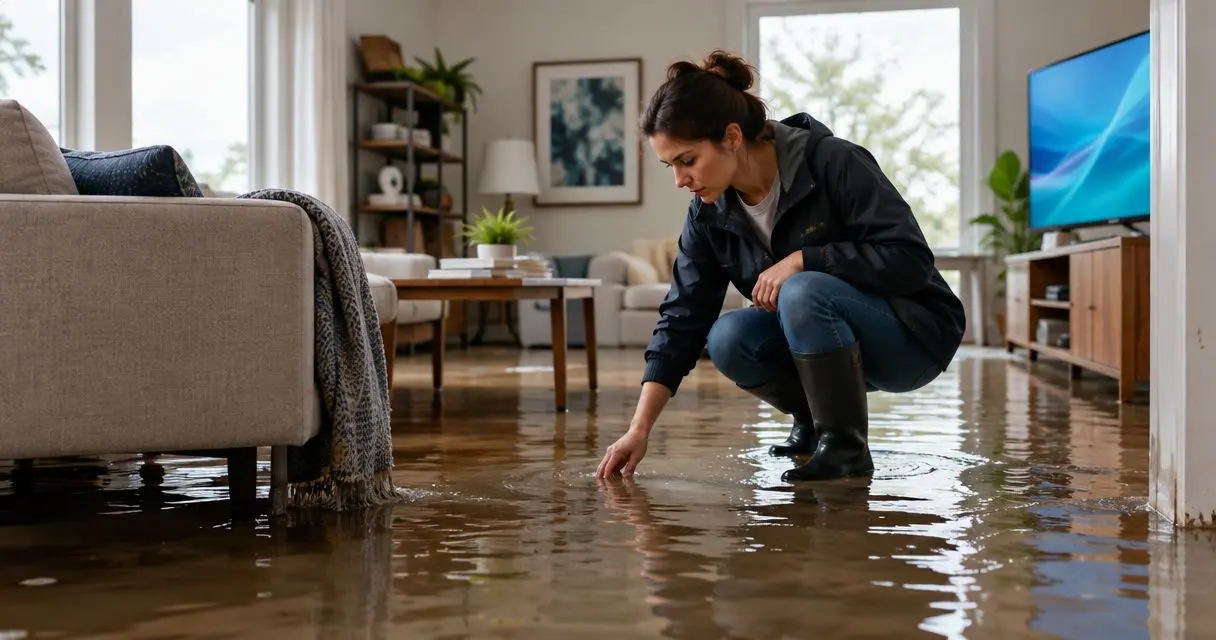
During the first 24 hours after a flood, get everyone to a safe location, avoid floodwater and electrical hazards, and arrange professional help before starting cleanup. Once access is safe, photograph the damage, notify your insurer, and begin coordinated water removal and drying. This 2026 checklist puts safety before salvage because contamination and damaged electrical systems can make a flooded building unsafe even after the water recedes.
- What to do first 24 hours after a flood: protect people, avoid electrical hazards, document damage, and arrange cleanup.
- Phoenix Restoration Group provides 24/7 emergency water damage restoration in Carlisle, Des Moines, and Central Iowa.
- Free inspections are available during business hours, 8am to 4:30pm, separately from emergency service.
- Do not enter floodwater, operate wet electrical equipment, or assume visible dryness means materials are dry.
What should I do in the first 24 hours after a flood?
Follow this order. Do not enter an unsafe building to take photographs, rescue belongings, or start a pump.
- Protect people. Follow evacuation instructions and keep children and pets away from floodwater. Call 911 for immediate danger or a medical emergency.
- Check access. Stay outside if you see structural damage, smell gas, or cannot reach the building without crossing floodwater.
- Address utilities. Ask the utility provider or a qualified electrician to address electrical hazards. Never reach a breaker panel by walking through water.
- Document damage. From a safe location, record affected rooms, water levels, and damaged belongings before moving items.
- Arrange cleanup. Notify your insurer and contact a restoration provider. Explain whether water is still entering and whether sewage is involved.
For local assistance, Phoenix Restoration Group provides 24/7 emergency restoration across Carlisle, Des Moines, and Central Iowa. Free inspections for all services are available during business hours, 8am to 4:30pm; those hours are separate from emergency availability.
Why this matters
Flood cleanup is not just a matter of removing visible water. Water can reach insulation, wall cavities, subfloors, and electrical components, while floodwater can carry sewage, chemicals, and debris.
For your 2026 flood response, separate three decisions: whether the building is safe to enter, what needs professional cleanup, and what your insurer requires. An insurance conversation does not establish electrical safety, and a dry-looking floor does not establish that the assembly underneath is dry.
Protect people before entering the building
Follow local evacuation orders and reentry instructions. Do not drive through flooded roads or walk through moving water to reach your property. If authorities have restricted access, wait until access is permitted.
Stay out if you notice leaning walls, a sagging ceiling, displaced foundation materials, or other signs of instability. A building can remain dangerous after standing water disappears. Ask the appropriate emergency service, building official, or qualified professional to assess the concern.
If you smell gas, leave the area without operating switches or creating a flame. Contact emergency services or the gas utility from a safe location. Do not return to investigate the source yourself.
Keep children, pets, and anyone not involved in the response away from the affected area. Avoid contact with floodwater, cover open wounds, and seek medical advice after an injury or concerning exposure.
Address electrical hazards before touching equipment
Do not touch outlets, cords, appliances, or a breaker panel while standing in water. Do not plug a pump, fan, or wet vacuum into a circuit that floodwater has affected.
If shutting off power requires entering water or approaching wet electrical equipment, leave that work to the utility provider or a qualified electrician. Have flood-exposed electrical equipment evaluated before reuse. The fact that a device turns on does not establish that it is safe.
If you use a portable generator, follow CDC guidance: operate it outdoors at least 20 feet from doors, windows, and vents, with exhaust directed away from the building. Never operate a generator inside a home, basement, garage, or other enclosed space, even with doors open.
Carbon monoxide creates a separate emergency during flood recovery. Leave immediately and seek emergency help if a carbon monoxide alarm sounds or people develop symptoms such as dizziness, headache, or nausea near fuel-burning equipment.
Document flood damage before cleanup in 2026
Once safe access is established, take wide photographs of each affected room and close-ups of damaged materials. Capture the visible waterline, flooring, wall surfaces, furniture, appliances, and the apparent entry point without entering hazardous areas.
Create a written inventory alongside the photographs. Record the item, its location, the visible damage, and any identifying information you can safely obtain. Preserve existing receipts and purchase records rather than guessing values.
Keep these records together:
- Photographs and videos taken before materials are moved.
- A room-by-room list of damaged belongings and building materials.
- The time you discovered the flooding and any known changes afterward.
- Claim information and notes from insurer conversations.
- Cleanup authorizations, invoices, and disposal records.
Document before disposal whenever it is safe to do so. Ask your insurer what evidence it requires for discarded items, but do not remain exposed to contamination or unstable materials to preserve a possession.
Arrange emergency cleanup or a business-hours inspection
Choose the service path based on the property's condition, not the time on the clock. Ongoing water entry, standing water, contamination, and unsafe access require prompt attention; an inspection appointment is not a substitute for emergency assistance.
| Service path | Best for | What it provides | Important limit |
|---|---|---|---|
| Emergency restoration | Property owners dealing with an active water damage incident | Access to 24/7 emergency restoration service | Availability does not establish an arrival time or make an unsafe building safe to enter |
| Business-hours inspection | Property owners arranging an assessment during business hours | A free inspection for all services from 8am to 4:30pm | Free inspection hours are separate from 24/7 emergency service |
Phoenix Restoration Group is best for property owners seeking local 24/7 emergency restoration in Carlisle, Des Moines, and Central Iowa. The company provides water, fire, mold, and biohazard restoration and keeps you informed from assessment through cleanup.
When you contact Phoenix Restoration Group, describe the water source, affected rooms, standing water, access restrictions, and any known sewage involvement. Request emergency service when that is what you need; do not assume a request for a free inspection communicates an emergency.
Request flood restoration help
24/7 emergency restoration. Free inspections for all services during business hours, 8am to 4:30pm.
Start water removal and drying only after safety checks
The practical sequence is safe access, assessment, water removal, then drying. Address the source of ongoing water entry when it can be done safely. Removing water while it continues entering does not resolve the incident.
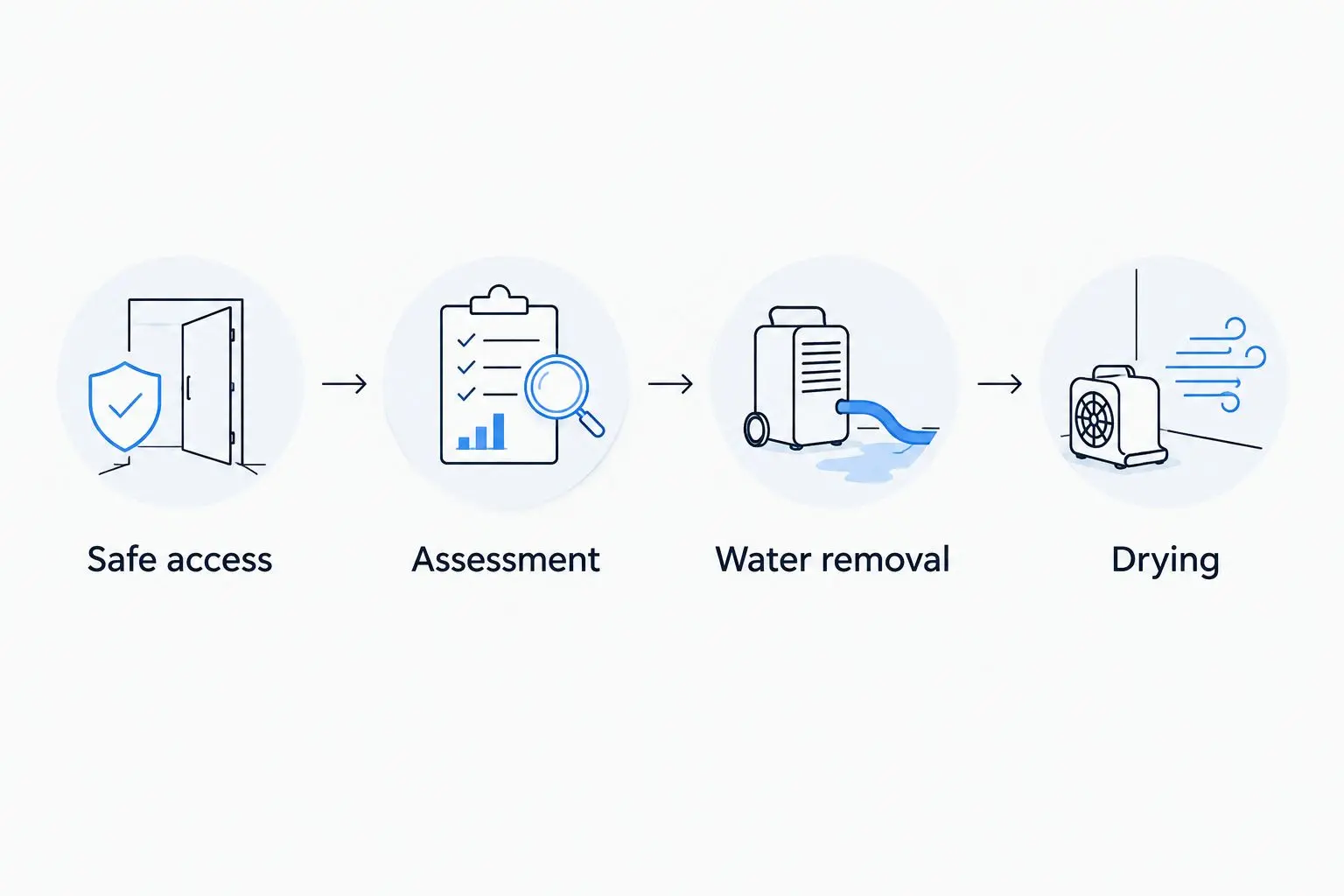
Do not use a household vacuum to collect water. Do not run fans across sewage-contaminated areas or visible mold, because air movement can spread contamination. Ask the restoration provider to determine the cleanup and drying approach for the affected materials.
A flooded basement also needs structural judgment. Do not rapidly pump out a deeply flooded basement while surrounding soil remains saturated without qualified guidance; pressure differences can damage foundation walls.
CDC mold-cleanup guidance recommends drying a flooded home and its contents within 24 to 48 hours when possible. That is a prevention goal, not a promise that every building can be completely dried within that period.
Ask how moisture will be checked in walls, floors, and other affected assemblies. Surface appearance alone is not enough to decide when to stop drying or begin repairs.
Why the first-day cleanup plan varies
Your first 24 hours should follow the same safety priorities, but the cleanup scope depends on the conditions at the property:
- Water source. Outdoor floodwater, sewage backup, and a plumbing leak present different contamination concerns.
- Continued entry. Water still entering the property must be addressed alongside removal.
- Electrical exposure. Wet wiring, outlets, panels, and appliances affect safe access and equipment use.
- Affected materials. Carpet, drywall, insulation, wood, and masonry absorb and release moisture differently.
- Hidden moisture. Water beneath flooring or inside wall cavities requires more than surface cleanup.
- Structural condition. Foundation damage, saturated ceilings, and unstable materials change where work can safely begin.
Give the restoration provider facts rather than a guessed damage category. Describe what happened, what you see, and what remains unknown. Do not label outdoor floodwater as clean because it looks clear.
Notify your insurer without delaying safety measures
For a flood claim in 2026, contact your insurer promptly and ask which policy applies to the event. Standard homeowners insurance generally excludes flood damage from rising outside water; coverage for other water damage depends on the policy and cause.
Ask what documentation is required, whether an adjuster needs to inspect before particular materials are discarded, and how emergency mitigation should be recorded. Keep the claim number and written instructions with your damage inventory.
Do not assume that contacting a restoration company establishes insurance coverage. Likewise, do not enter an unsafe area or leave an immediate hazard unaddressed while waiting for a coverage decision.
If you rent, notify your landlord or property manager promptly and document the notice. Building repairs and personal belongings can involve separate responsibilities and insurance policies.
Can I stay in my home after a flood?
The first 24 hours after a flood require a safety decision before an occupancy decision. Stay elsewhere if electrical hazards, sewage contamination, structural concerns, or official restrictions make the property unsafe.
A dry upstairs room does not establish that the building's utilities and access routes are safe. Seek specific guidance about the affected property rather than treating the absence of standing water as clearance to return.
How soon should I start drying after a flood?
The 24 to 48 hours identified in CDC guidance is a drying goal when possible, not a guaranteed completion time. Start coordinated drying promptly after safe access and contamination controls are established.
Do not wait for a musty smell before arranging an assessment. Materials can remain wet beneath an apparently dry surface, and odor alone cannot establish the extent of damage.
Should I throw away everything that got wet?
The first 24 hours should include documentation and material assessment, not automatic disposal of every possession. What can be cleaned depends on the material, contamination, and damage.
Flood-exposed food, medicines, electrical equipment, and porous furnishings require different decisions. Follow public-health guidance and qualified advice, and keep photographs and disposal records for your claim.
FAQ
What's the first thing I should do after my house floods?
Get everyone to safety and avoid floodwater and electrical hazards. Follow evacuation instructions, and call 911 for immediate danger or a medical emergency.
Can I turn off the electricity if my basement is flooded?
Do not enter water or approach wet electrical equipment to reach a breaker panel. Contact the utility provider or a qualified electrician when power cannot be isolated safely.
Should I call my insurer or a restoration company first?
Address immediate safety needs first, then notify your insurer and arrange restoration assistance promptly. Document damage safely and ask your insurer what records it requires for emergency work and disposal.
How quickly should a flooded home be dried?
CDC guidance recommends drying a flooded home and its contents within 24 to 48 hours when possible. Actual completion depends on safe access, contamination, affected materials, and moisture conditions.
Can I use fans after a flood?
Do not run fans across sewage-contaminated areas or visible mold. Establish electrical safety and ask the restoration provider to determine the appropriate drying approach.
Does Phoenix Restoration Group offer emergency flood cleanup?
Phoenix Restoration Group provides 24/7 emergency water damage restoration in Carlisle, Des Moines, and Central Iowa. Free inspections for all services are available during business hours, 8am to 4:30pm, separately from emergency service.
Is it safe to return home once the floodwater is gone?
Receding floodwater does not establish that a home is safe. Follow official reentry instructions and address electrical, structural, and contamination concerns before returning.
One last thing
Before repairs begin, ask one question: What confirms that the affected materials are dry? Fresh paint, replacement flooring, and the absence of puddles do not answer it. Keep moisture findings and cleanup records with your 2026 flood documentation so repair decisions reflect the building's condition, not its appearance.