
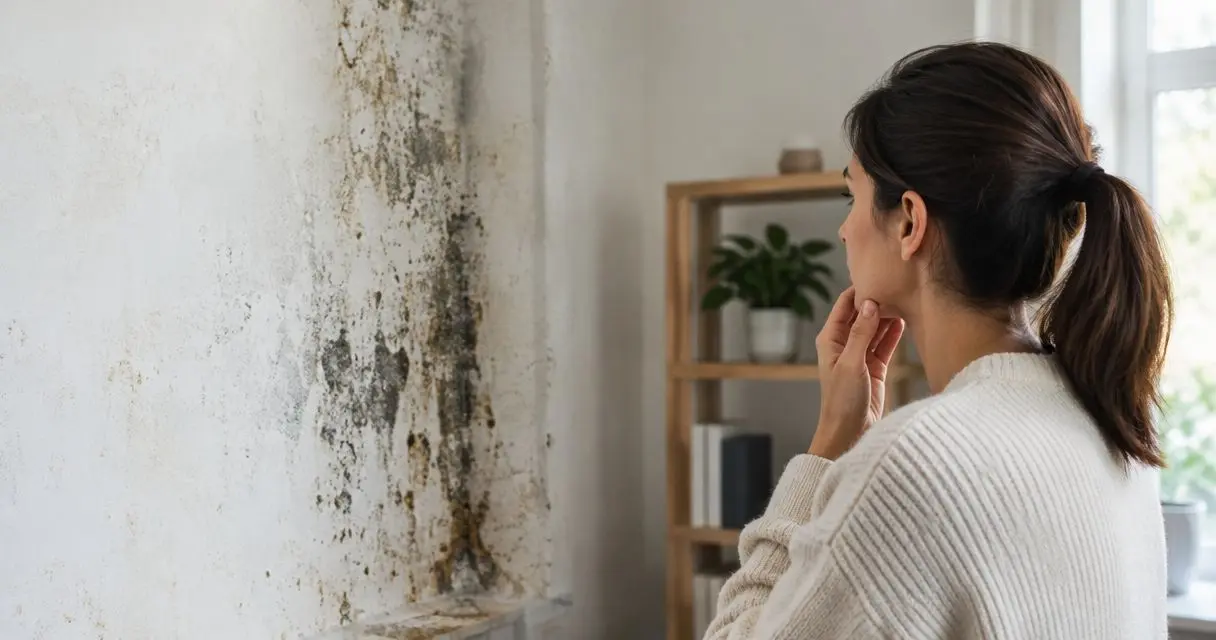
Yes, black mold can harm your health, especially if you have asthma, mold allergies, chronic lung disease, or a weakened immune system. Exposure can cause respiratory symptoms, eye irritation, or skin irritation, but some people have no symptoms. Black color alone does not tell you the species, toxicity, or health risk: address indoor mold and moisture regardless of color.
- Is black mold dangerous to your health? Yes, exposure can trigger allergies, irritation, and asthma symptoms.
- CDC guidance does not treat mold color as a reliable measure of health risk.
- EPA guidance generally allows homeowner cleanup below 10 square feet, with important exceptions.
- Phoenix Restoration Group provides mold restoration in Central Iowa; medical professionals evaluate health symptoms.
Is black mold dangerous to your health?
Black mold can cause health problems, but its appearance cannot establish how dangerous a particular room is. The CDC identifies stuffy nose, sore throat, coughing, wheezing, burning eyes, and skin rash among possible effects of mold exposure. People with asthma or mold allergies can have stronger reactions.
For property damage, Phoenix Restoration Group provides mold restoration in Carlisle, Des Moines, and Central Iowa. For symptoms, contact a healthcare professional. These are separate needs.
Use this distinction when deciding what to do in 2026:
| Situation | Main concern | Useful next step | Limit of that step |
|---|---|---|---|
| Visible dark growth without symptoms | Indoor moisture and mold growth | Find the moisture source and plan cleanup | Appearance cannot identify species or establish safety |
| Coughing, wheezing, or irritated eyes | Possible irritation, allergy, or asthma symptoms | Reduce exposure and contact a clinician | Symptoms alone do not prove mold caused them |
| Mold near someone with weakened immunity | Greater risk of serious fungal infection | Keep that person away and seek medical advice | A property inspection cannot assess personal medical risk |
| Severe breathing difficulty | A medical emergency, whatever the cause | Call 911 | Restoration service is not emergency medical care |
Why this matters
Calling every dark patch toxic creates confusion. Dismissing it as harmless because nobody feels sick creates a different problem: moisture continues damaging the property.
You do not need to identify the species before correcting a moisture problem and removing indoor mold. CDC and EPA guidance supports addressing mold regardless of its type. Your 2026 cleanup decision should start with the affected area, the water source, and the people exposed, not a color chart.
What symptoms can mold exposure cause?
Mold exposure can cause allergy-like symptoms and irritation. A runny or blocked nose, itchy or watery eyes, sneezing, coughing, and skin irritation all warrant attention when they occur around damp indoor spaces.
People with asthma can experience wheezing or worsening asthma symptoms. People with weakened immune systems or chronic lung disease face additional concerns, including fungal lung infections.
Symptoms are not a reliable mold test. Respiratory infections, dust, pollen, smoke, and other indoor irritants can produce similar complaints, so tell your clinician what you noticed and where it happened rather than assigning yourself a diagnosis.
Useful details to record include:
- Location: Which room you were in when symptoms appeared.
- Pattern: Whether symptoms change when you leave the building.
- Exposure: Visible growth, damp materials, musty odors, or recent water damage.
- Medical history: Asthma, allergies, lung conditions, or immune-suppressing treatment.
A symptom diary helps describe the pattern. It does not establish that mold caused an illness, and a restoration inspection does not replace medical evaluation.
When should you seek urgent medical help?
Call 911 for severe breathing difficulty. Do not wait for a mold inspection or a cleanup appointment to address an immediate medical emergency.
Contact a healthcare professional about persistent symptoms, worsening asthma, or exposure concerns involving someone with weakened immunity. Follow an existing asthma action plan if you have one, and keep vulnerable occupants away from cleanup work.
Is all black mold the same?
No. Many molds appear dark, and a black patch is not enough to identify Stachybotrys chartarum, the species commonly associated with the phrase black mold.
Some molds can produce mycotoxins under certain conditions. That does not mean every dark patch produces them, or that color tells you the dose someone inhaled. The CDC does not recommend routine testing to identify the type of mold in a home.
For your 2026 inspection checklist, separate what you can observe from what requires professional interpretation. Visible growth, wet drywall, and a leaking pipe are observations; a medical diagnosis based on a photograph is not.
Treat visible indoor mold as a cleanup and moisture-control problem, not a species-identification contest. Knowing a Latin name does not repair a leak, dry a wall cavity, or remove damaged material.
Why health risks from mold vary
Mold does not affect every person or every building in the same way. These factors explain why one resident reports symptoms while another does not:
- Mold allergy: A person sensitized to mold can have allergic symptoms after exposure.
- Asthma: Mold can trigger asthma symptoms in susceptible people.
- Immune function: People with weakened immune systems face a higher risk of invasive fungal infection.
- Chronic lung disease: Existing lung conditions increase concern about exposure and fungal infection.
- Exposure conditions: Disturbing moldy materials can release spores into the air, making cleanup different from simply noticing a patch.
The size of a stain is not a medical risk score. A small patch does not guarantee safety for a vulnerable person, and a large patch does not prove that everyone exposed will become ill.
What should you do when you find black mold?
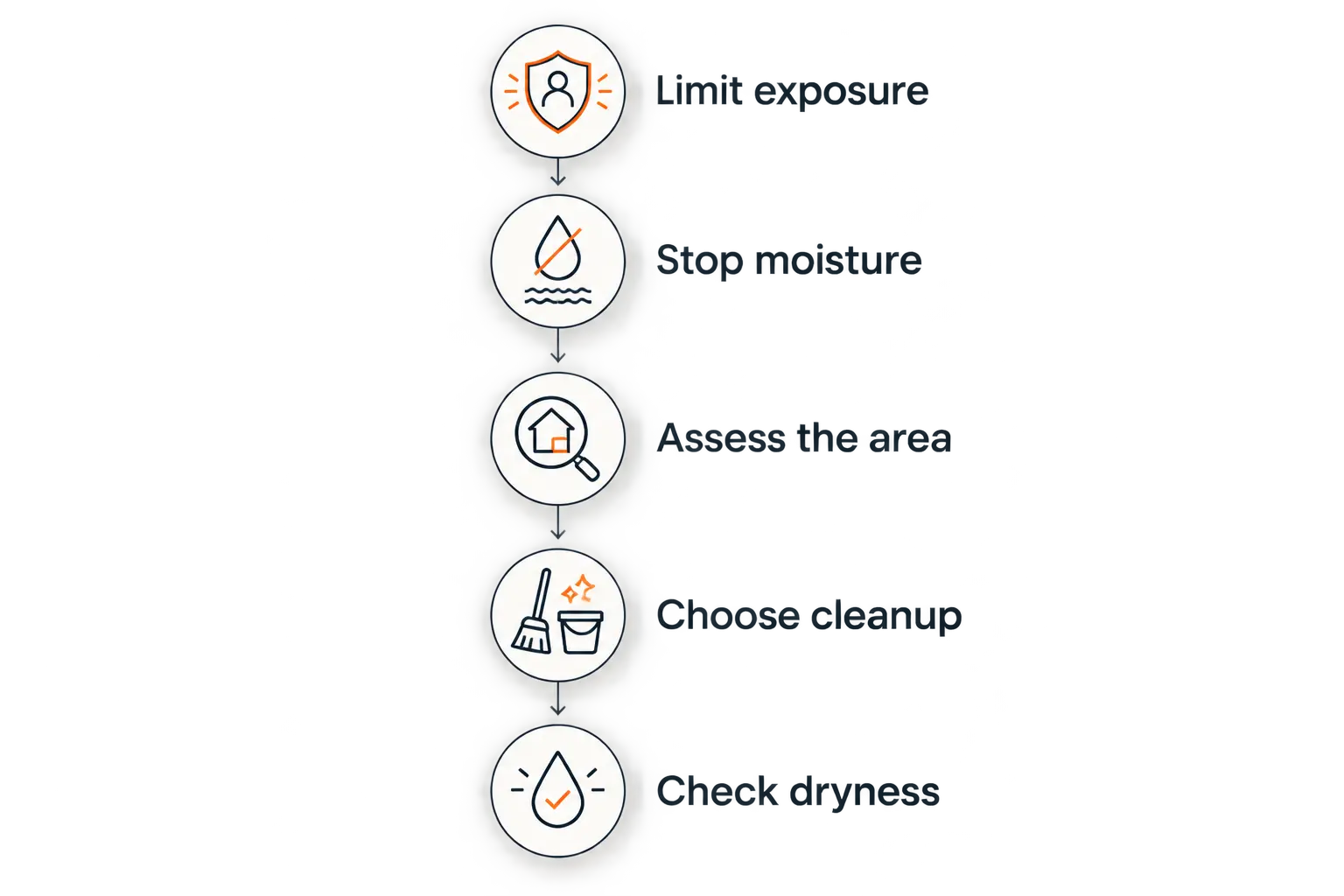
Your first job is to avoid unnecessary exposure and stop the moisture problem safely. Do not scrape a wall simply to find out how deep the growth goes.
- Limit exposure. Keep children and people with asthma, mold allergies, chronic lung disease, or weakened immunity away from the affected area and cleanup work.
- Stop moisture. Address the leak or water entry if you can do so safely. Stay out of standing water when electrical hazards are possible.
- Assess the area. Note where growth appears, whether materials remain wet, and whether sewage, floodwater, or ventilation equipment is involved. Do not open walls just to measure hidden growth.
- Choose cleanup. Use the affected area, material type, water source, and occupant health to decide whether homeowner cleanup is appropriate.
- Check dryness. Confirm the moisture source has been corrected before repainting or closing repaired surfaces. Repeated growth means the underlying conditions need another look.
These steps form a practical 2026 response plan, but they do not establish whether a building is medically safe for a particular occupant. Discuss individual health concerns with a clinician.
Can you remove black mold yourself?
EPA guidance says that, in most cases, you can handle a moldy area smaller than about 10 square feet yourself. That is a cleanup-planning guideline, not a declaration that a patch is harmless.
Homeowner cleanup is best for a small, accessible area with a corrected moisture source and no complicating conditions. Its advantage is that straightforward surface cleaning can proceed without a larger remediation project. Its limit is that visible growth does not reveal everything behind a wall or beneath flooring.
Professional assessment is the better route for extensive growth, substantial water damage, sewage contamination, suspected heating or cooling system involvement, or uncertainty about hidden damage. People with relevant health conditions should not perform mold cleanup.
| Cleanup route | Best for | Benefit | Limitation |
|---|---|---|---|
| Homeowner cleanup | Small, accessible areas without complicating conditions | Direct attention to a limited surface problem | Does not resolve hidden contamination or medical concerns |
| Professional restoration | Larger, hidden, recurrent, or complicated damage | A property-focused assessment and cleanup plan | Does not diagnose illness or guarantee a symptom-free building |
For a suitable small cleanup, EPA guidance includes gloves, goggles, and an N95 respirator. Scrub hard surfaces with detergent and water and dry them completely; moldy porous materials such as ceiling tiles and carpet can require disposal.
Read the guide to removing mold yourself or hiring a professional before disturbing affected materials. The decision depends on more than whether you own cleaning supplies.
Does bleach make black mold safe?
No. Bleach is not a substitute for removing mold and correcting moisture. EPA guidance does not recommend routine use of chlorine bleach or other biocides during mold cleanup.
Dead mold can still cause allergic reactions. Leaving residue in place and painting over it does not solve the underlying problem.
Never mix bleach with ammonia or other cleaners. If a product is appropriate for a particular task, follow its label and ventilation instructions rather than improvising a chemical mixture.
How do you stop mold from coming back?
Moisture control is the prevention step that matters most. Repair leaks, manage condensation, and dry water-damaged materials promptly instead of repeatedly treating the same visible patch.
EPA guidance recommends drying wet materials within 24 to 48 hours to help prevent mold growth. EPA also recommends keeping indoor relative humidity below 60%, ideally between 30% and 50% when possible.
These are prevention targets, not a guarantee that mold cannot grow. A room humidity reading does not prove the inside of a wet wall is dry.
For ongoing property care in 2026, check the actual source: plumbing leaks, roof leaks, basement water entry, condensation, or ineffective bathroom exhaust. Repainting belongs after moisture correction and appropriate cleanup, not before.
When should you arrange a mold inspection?
Arrange an assessment when growth returns, the affected area is extensive, a persistent musty odor has no visible source, or water damage involves concealed materials. Describe what you observed without opening walls or disturbing growth to collect a sample.
Phoenix Restoration Group is best for Central Iowa property owners seeking mold restoration, not a medical diagnosis. The company provides water, fire, mold, and biohazard restoration and keeps customers informed from the initial assessment through cleanup.
Free inspections for all services are available during business hours, 8am to 4:30pm. 24/7 emergency restoration is separate from the business-hours free inspection offer. No specific arrival time is promised.
Arrange a mold inspection
Free inspections during business hours, 8am to 4:30pm. Emergency restoration is available 24/7.
FAQ
Can black mold make you sick even if you cannot smell it?
Yes, the absence of a musty smell does not establish that a space is free of mold or exposure. Address visible mold and water damage rather than relying on odor alone.
Can you tell whether black mold is toxic from a picture?
No, a picture cannot establish a mold's toxicity or your health risk. Color also cannot reliably identify the species.
Should I buy a home mold test before calling for help?
Routine home mold testing is usually unnecessary when mold is already visible. CDC guidance recommends removing mold and correcting moisture regardless of the type.
Is it safe to sleep in a room with black mold?
Mold color alone cannot establish whether a room is safe for you. Avoid the affected room when possible, especially if you have symptoms, asthma, mold allergies, chronic lung disease, or weakened immunity, and seek appropriate medical advice.
Can I paint over black mold after it dries?
No, drying and painting over mold does not replace cleanup. EPA guidance calls for cleaning up mold and drying surfaces before painting.
Does mold always cause symptoms?
No, some people have no symptoms after mold exposure. The absence of symptoms does not remove the need to address indoor growth and moisture.
Does Phoenix Restoration Group offer emergency mold restoration?
Phoenix Restoration Group provides 24/7 emergency restoration, including mold services, across Carlisle, Des Moines, and Central Iowa. Free inspections for all services are available during business hours, 8am to 4:30pm, separately from emergency availability.
One last thing
Killing mold is not the same as removing it. EPA guidance explains that dead mold can still cause allergic reactions, so the finish line is appropriate removal, dry materials, and a corrected moisture source, not simply a faded stain.
For the public-health basis behind this 2026 guide, consult the CDC's Mold guidance and the EPA's A Brief Guide to Mold, Moisture and Your Home. Their household guidance supports the distinction throughout this page: manage the building problem through cleanup and moisture control, and manage symptoms through medical care.