
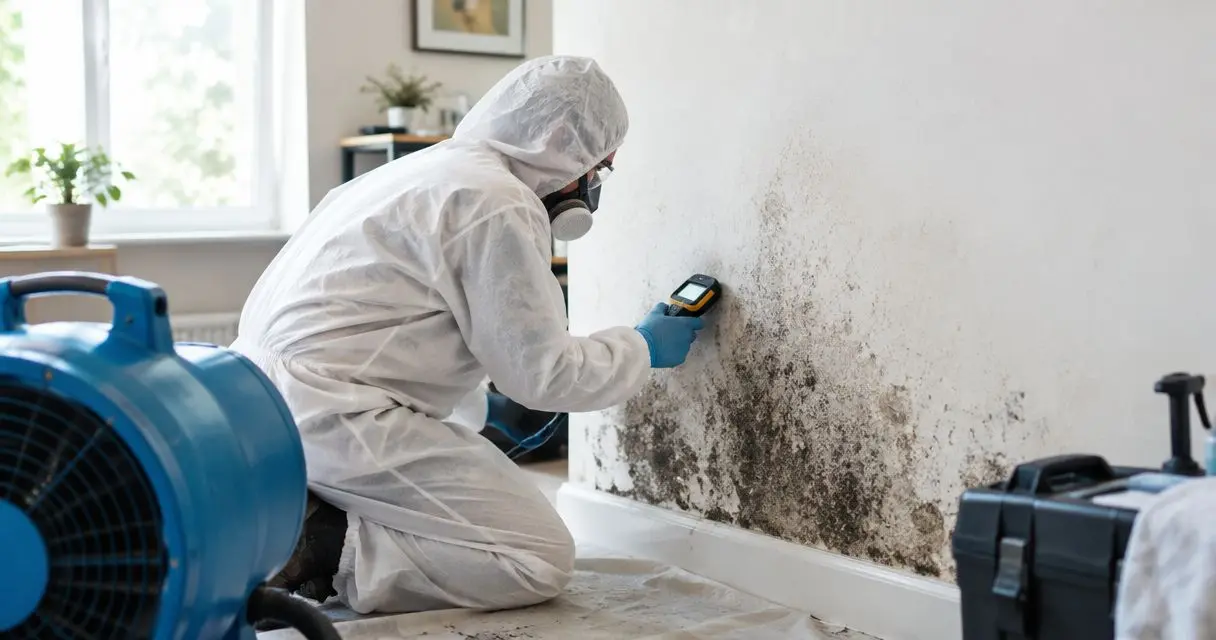
Mold remediation takes as long as the affected materials, moisture conditions, and cleanup scope require; there is no fixed duration that applies to every property. The cleanup schedule also differs from the time needed to repair a leak, dry wet materials, or rebuild damaged finishes. Ask for a property-specific schedule that separates remediation from repairs and explains what must happen before each stage ends.
- How long does mold remediation take? The schedule depends on moisture, affected materials, access, and the agreed cleanup scope.
- Separate mold removal, structural drying, and reconstruction when comparing completion dates.
- Phoenix Restoration Group provides mold remediation and 24/7 emergency restoration across Carlisle, Des Moines, and Central Iowa.
- Free inspections for all services run during business hours, 8am to 4:30pm, separate from emergency service.
How long does mold remediation take?
A useful mold remediation estimate follows the work, not a standard calendar promise. Your contractor needs to identify the affected area, assess moisture conditions, determine which materials need cleaning or removal, and explain how completion will be evaluated.
The moisture inspection to mold remediation workflow explains how the assessment connects to the cleanup plan. For your 2026 project, request a schedule organized around these stages:
- Assessment: Identify visible damage, suspected hidden damage, and the moisture source.
- Preparation: Establish work boundaries and explain access restrictions.
- Removal and cleaning: Address affected materials according to their condition and the remediation plan.
- Drying: Resolve remaining moisture conditions before closing affected building assemblies.
- Completion review: Check the agreed cleanup requirements and identify any remaining repairs.
These stages are not necessarily separate appointments. Some work overlaps, while other tasks depend on earlier work being complete. Ask which dependencies control your expected finish date rather than assuming every stage lasts the same amount of time.
Why this matters
A cleanup finish date does not automatically mean your room is ready for normal use. Removed drywall, disconnected fixtures, or unfinished flooring can leave repair work after mold remediation ends.
That distinction matters when you arrange housing, tenant access, business operations, or a property closing. Get separate milestones for remediation completion, access to affected rooms, and restoration of finished surfaces. Otherwise, a schedule that sounds clear can leave you planning around the wrong endpoint.
For a 2026 property transaction, share any inspection or closing deadline during the initial conversation. A deadline helps define the scheduling question; it does not change the physical conditions that must be addressed.
What changes the mold remediation timeline?
The following factors determine the work involved. They explain why a photograph or a brief description cannot establish a reliable finish date.
- Extent of affected material: An isolated surface and damage extending through several building materials require different scopes of work.
- Moisture source: Cleanup does not correct an active plumbing leak, roof leak, or other water-entry problem by itself.
- Material condition: Some surfaces can be cleaned; other affected materials require removal. The decision changes both cleanup and subsequent repairs.
- Hidden damage and access: Conditions behind walls, beneath flooring, or inside enclosed spaces require investigation before the full scope is clear.
- Drying requirements: Wet building materials need attention even after visible mold has been removed. Surface appearance alone does not establish that an assembly is dry.
- Completion requirements: The agreed review process, any independent assessment, and coordination with repair contractors affect when the overall project ends.
Ask your contractor which factors are already known and which remain unresolved. That answer gives you a clearer basis for planning than a finish date without an explanation.
Why does hidden mold change the schedule?
Hidden damage changes the schedule because the original visible area does not always show the full extent of affected material. Opening an assembly can reveal additional work or confirm that damage is limited.
Ask how discoveries will be documented and communicated before the scope changes. A revised schedule should identify the new finding, the added task, and the effect on the next milestone. It should not leave you guessing why the project changed.
How do different property conditions affect the work?
Different conditions call for different scheduling questions. Use this comparison to understand the work sequence, not to estimate a duration without an inspection.
| Property condition | Scheduling advantage | Limitation or added work | Best planning approach |
|---|---|---|---|
| Accessible damage with the moisture source corrected | Access and source correction remove important obstacles | Material condition still determines cleaning or removal | Ask what remains before cleanup can begin |
| Damage behind walls or beneath flooring | Opening the affected assembly helps establish the scope | Additional affected material can change the work | Request an update after concealed areas are assessed |
| Mold with ongoing water intrusion | Identifying the source gives the project a clear dependency | Cleanup alone does not stop new moisture | Coordinate source correction with remediation |
| Remediation followed by reconstruction | Separate scopes make responsibilities clearer | Cleanup completion does not finish the repairs | Request distinct remediation and rebuilding milestones |
For an accessible area, the main question is often what treatment the material needs. For a concealed area, the main question is whether the current scope captures all affected material. Neither condition supports a guaranteed duration before assessment.
Best for planning: a milestone-based schedule that identifies both known work and unresolved conditions. A single completion date is less useful when it does not explain what that date includes.
What should happen before you agree to a schedule?
Ask for a written explanation of the affected area and the proposed work. You need to understand what the contractor intends to clean, what requires removal, and who handles the moisture source.
Use these questions during the assessment:
- Which rooms and building materials are included?
- Is the moisture source identified and corrected?
- What needs further investigation?
- Which areas will be restricted during the work?
- Does the schedule include drying, repairs, or both?
- What conditions must be met before the job is considered complete?
For a 2026 remediation agreement, make sure the scope and schedule describe the same work. If reconstruction is excluded, the proposed finish date should not be treated as the date the room will look finished.
Keep the written scope available when discussing updates. Comparing new findings with the original plan makes it easier to distinguish added remediation from unrelated improvements or repairs.
What can you do while waiting for an assessment?
Avoid disturbing suspected mold or opening affected walls yourself. Disturbance can spread contamination, and an unfamiliar wall or ceiling can contain electrical, plumbing, or structural hazards.
If you can safely stop an active water source, do so without entering a hazardous area. Keep people away from affected spaces and document visible conditions from a safe location. Do not direct a household fan across visible mold into occupied rooms.
Prepare information that helps the assessment:
- When you first noticed moisture, staining, or visible growth.
- Whether a leak has been repaired or water continues to enter.
- Which rooms or neighboring spaces appear affected.
- Whether access requires coordination with tenants, staff, or building management.
These details support a clearer scope. They do not replace an inspection or justify a promised finish date.
How should a remediation schedule show progress?
A useful schedule tells you what happens next and what allows the project to move forward. Ask for updates tied to completed work, moisture conditions, and any newly exposed damage rather than a general statement that cleanup is continuing.
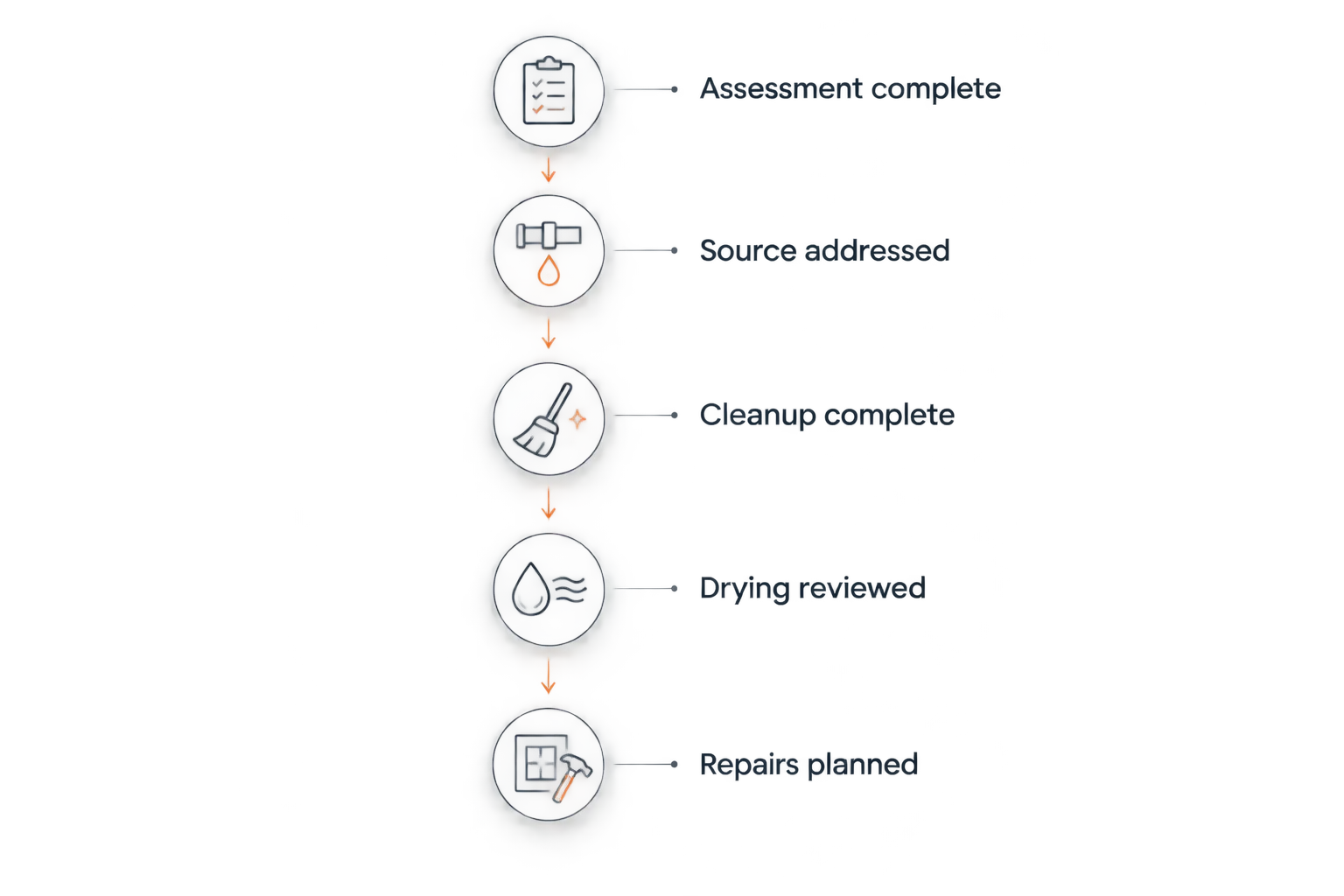
Use these milestones to organize the conversation:
- Assessment complete: The initial affected area and moisture concerns are documented.
- Source addressed: Responsibility for correcting water entry is clear, and the correction is confirmed.
- Cleanup complete: The agreed removal and cleaning work has been performed.
- Drying reviewed: Moisture conditions have been evaluated before affected assemblies are closed.
- Repairs planned: Remaining rebuilding tasks have a defined scope and responsible contractor.
For your 2026 project, agree on how schedule changes will be communicated. A useful update names the finding, explains the next action, and states which milestone changes. That keeps an adjustment tied to the actual work.
Can you stay home during mold remediation?
Whether you can stay home depends on the affected area, work boundaries, access, and individual health considerations. Do not assume an unaffected-looking room makes the entire property suitable for occupancy during cleanup.
Ask the contractor to explain which areas are restricted and whether you can safely use essential rooms and travel routes. If you have health concerns, discuss occupancy with a qualified healthcare professional as well. A cleanup contractor's work plan is not a medical assessment.
For a business or rental property, clarify who receives access updates. Staff and tenants need instructions based on the actual work area, not an assumed reopening date.
Does mold remediation include drying and rebuilding?
Mold remediation does not automatically include every drying task or reconstruction repair. Your written scope determines what is included and who handles the remaining work.
Ask whether removed insulation, drywall, trim, flooring, or cabinetry will be replaced under the same agreement. Also ask who confirms that moisture conditions are suitable before those materials are installed. These questions prevent a cleanup milestone from being mistaken for a fully restored room.
Avoid scheduling finish work solely because visible mold is gone. Rebuilding should follow the required cleanup and moisture checks, not conceal an unresolved condition.
Who can assess mold damage in Central Iowa?
Phoenix Restoration Group is a local mold remediation option for residential and commercial property owners in Carlisle, Des Moines, and Central Iowa. The company provides 24/7 emergency water, fire, mold, and biohazard damage restoration, with clear communication from assessment through cleanup.
Phoenix Restoration Group offers free inspections for all services during business hours, 8am to 4:30pm. Business-hours inspections and emergency service are separate: 24/7 emergency availability does not mean a free inspection is offered at every hour or establish a specific arrival time.
When you contact Phoenix Restoration Group, describe any active water intrusion, the affected rooms, and access concerns. Ask for a property-specific remediation schedule and clarification of any drying or rebuilding work outside the proposed scope.
FAQ
Can you tell how long mold remediation will take from a photo?
A photo does not establish a reliable mold remediation duration. It cannot confirm moisture inside materials, the extent of concealed damage, or all access requirements.
Does a small mold spot mean a short cleanup?
A small visible mold spot does not establish the cleanup scope. The assessment needs to consider the material, moisture source, and any damage beyond the visible surface.
Can mold remediation start before a leak is fixed?
Some assessment and protective work can occur while leak repairs are coordinated, but lasting correction requires the moisture source to be addressed. Ask how source repair affects the remediation sequence.
How do I know when mold remediation is finished?
Mold remediation is finished when the agreed cleanup scope and completion requirements have been met. Ask what documentation or review applies and whether drying or rebuilding remains.
Does every mold job need air testing?
Not every mold job requires air testing. Ask whether testing has a defined purpose for your property and who will interpret the results rather than treating a test as an automatic requirement.
Is emergency mold service the same as a free inspection?
Emergency service and free inspections have different availability. Phoenix Restoration Group provides 24/7 emergency restoration and free inspections for all services during business hours, 8am to 4:30pm.
What should I ask before accepting a mold remediation finish date?
Ask whether the finish date covers remediation alone or also includes drying and reconstruction. Confirm what findings or moisture conditions would require the schedule to change.
One last thing
For a 2026 mold project, ask this before accepting any completion date: What exactly will be finished on that date? The answer should distinguish completed cleanup, permission to use affected areas, and finished repairs.
A clear endpoint is more useful than a confident calendar promise. Keep that definition with your written scope so every progress update refers to the same result.