
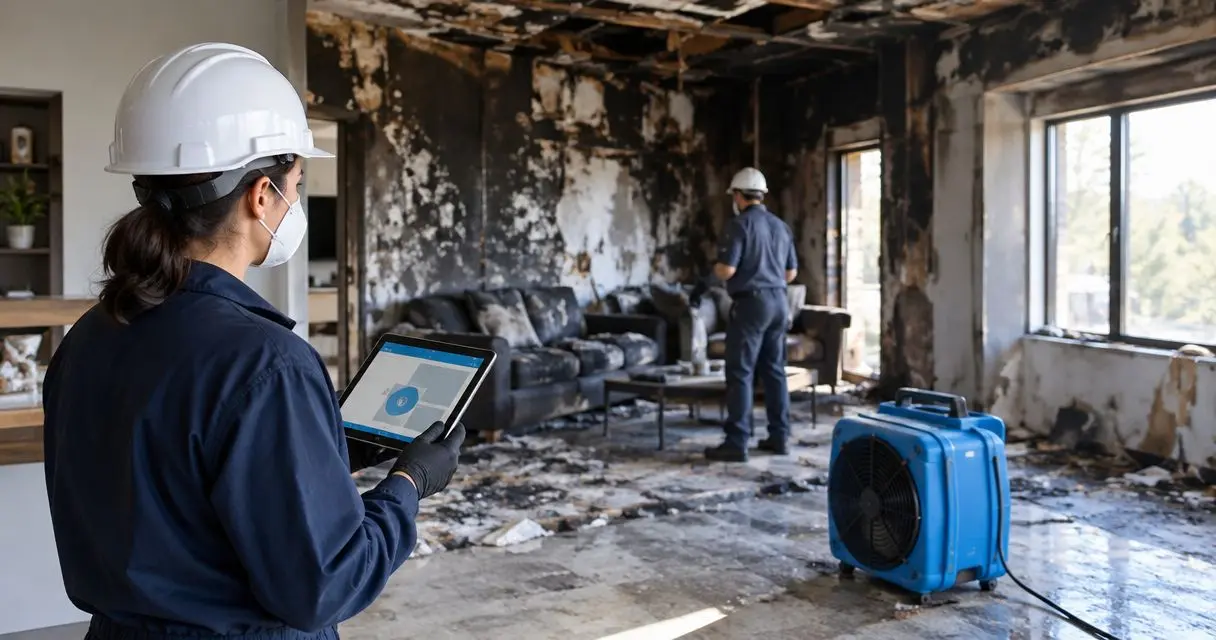
Fire damage restoration takes as long as the property's assessed cleanup, drying, repair, and safety requirements demand; there is no reliable fixed completion time before inspection. Emergency stabilization is only the beginning, not the date you can move back in or reopen. This 2026 guide explains which milestones determine the schedule and what to ask before accepting a completion estimate.
- How long does fire damage restoration take? The answer depends on assessed damage and the work needed before reoccupancy.
- Separate emergency stabilization, smoke cleanup, water removal, repairs, and permission to return when reviewing a schedule.
- Phoenix Restoration Group offers 24/7 emergency restoration; free inspections run during business hours, 8am to 4:30pm.
- Ask for completion milestones and dependencies, not an unsupported move-back date.
Why this matters
You need a schedule that answers the right question. A building can be secured while smoke cleanup remains unfinished, and cleanup can be complete while repairs still prevent normal use.
When discussing restoration services, specify whether you need emergency help, an assessment, cleanup, or a plan for returning to the property. Those requests describe different stages of the same loss. Emergency availability does not establish the total restoration timeline.
For a 2026 restoration plan, keep temporary accommodation, business operations, and repair decisions tied to documented milestones. A calendar date without a defined scope gives you little basis for planning.
How long does fire damage restoration take?
The restoration timeline depends on what must happen before the property is safe and usable again. A contained fire with limited affected materials presents a different scope from a fire involving structural damage, widespread smoke residue, and water used during firefighting.
Use the following milestones to understand an estimate. They describe work categories, not a universal sequence or a promise that every property needs every task.
| Milestone | What it addresses | What determines the next step |
|---|---|---|
| Safety assessment | Access restrictions, damaged systems, and immediate hazards | Which areas professionals determine can be entered or worked in |
| Emergency stabilization | Protection against further exposure or unauthorized entry | Whether the affected property is secured |
| Water removal and drying | Water introduced during firefighting or through damaged openings | Moisture conditions and the materials affected |
| Fire and smoke cleanup | Residue, affected surfaces, contents, and odors | The cleanup scope and whether materials are restorable |
| Repairs | Damaged building components and systems | Repair requirements, materials, inspections, and approvals |
| Return to use | Occupancy or operational readiness | Applicable safety, utility, and building requirements |
Some tasks can overlap. Others have a dependency: enclosing wet materials before addressing moisture, for example, does not make the underlying problem disappear.
Ask which milestone an estimated finish date describes. “Cleanup complete” and “ready to occupy” are not interchangeable, particularly when electrical systems, structural components, or building approvals remain unresolved.
What happens during fire damage restoration?
A useful schedule connects each task to the condition that allows the next task to begin. Ask the restoration provider to explain those connections in plain language.
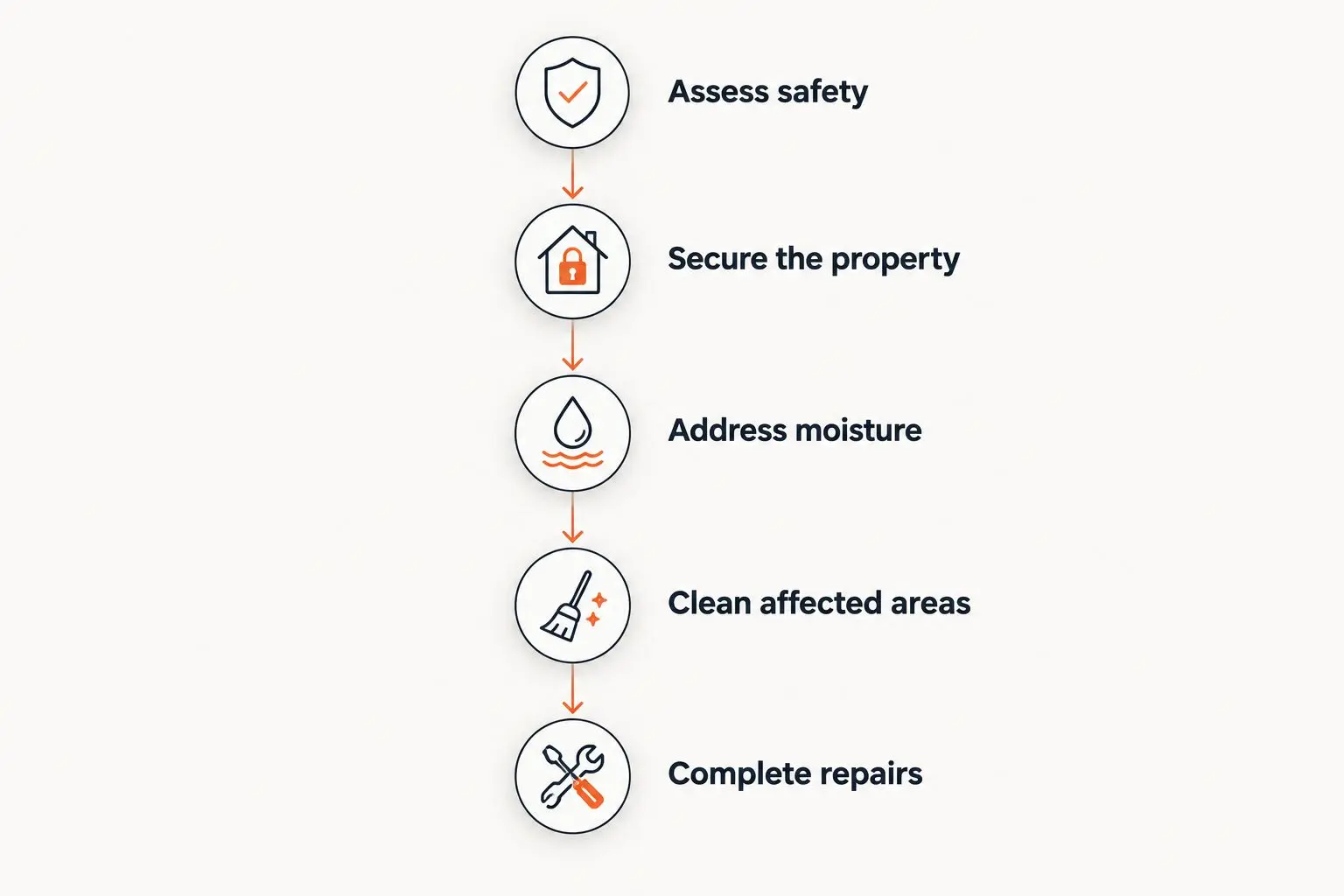
- Assess safety. Follow fire department restrictions and obtain the appropriate professional assessment before entering damaged areas. Do not treat an extinguished fire as permission to return.
- Secure the property. Identify exposed openings and other immediate protection needs. The method depends on damage and safe access.
- Address moisture. Determine where firefighting water or weather exposure has affected materials. Drying decisions should reflect those conditions rather than appearance alone.
- Clean affected areas. Establish which surfaces and contents need smoke or soot cleanup and which materials need removal. Separate cleaning decisions from replacement decisions.
- Complete repairs. Identify the building work, specialist trades, and applicable inspections required before normal use resumes. Confirm who is responsible for each remaining task.
The assessment can change the scope when professionals gain access to previously concealed damage. Ask for an updated explanation of the affected work, not just a replacement completion date.
Why fire damage restoration timelines vary
The extent of visible charring is not enough to establish a schedule. Smoke movement, water exposure, and the condition of building systems also affect the work.
- Damage extent. A localized loss and damage across multiple rooms require different cleanup and repair scopes.
- Smoke and soot distribution. Residue in adjoining spaces, concealed areas, or affected contents changes what needs assessment and treatment.
- Water exposure. Firefighting water and rain entering damaged openings introduce moisture work alongside fire cleanup.
- Material condition. Cleaning a restorable surface is different from removing and replacing a damaged assembly.
- Building and utility requirements. Structural, electrical, or other system damage introduces work beyond surface cleaning.
- Work dependencies. Owner decisions, claim documentation, material procurement, specialist scheduling, and required inspections affect when dependent tasks can proceed.
Ask which factors apply to your property. A long list of possible complications is not a substitute for a property-specific explanation.
For your 2026 schedule, distinguish confirmed work from work that remains subject to inspection or approval. That distinction makes revisions easier to understand and helps you avoid arranging a move or reopening around an unresolved assumption.
Is smoke-only damage faster to restore?
Smoke-only damage does not establish a completion time by itself. The schedule depends on where residue traveled, which materials were affected, and what cleanup or replacement is necessary.
The absence of major visible burning is an advantage when it means less physical reconstruction. The limitation is that a quick visual inspection does not establish the full smoke cleanup scope.
Ask whether the assessment covers adjoining rooms, contents, and affected ventilation components. Do not assume repainting addresses every residue or odor problem.
For planning purposes, request a clear separation between surface cleanup, contents work, odor treatment, and any necessary repairs. You can then see whether an outstanding task affects the whole property or only a particular area.
Does firefighting water extend the restoration schedule?
Firefighting water adds moisture assessment and, where needed, extraction and drying to the fire restoration scope. Those tasks must be accounted for even when the original incident was a fire rather than a plumbing failure.
Wet insulation, flooring, wall assemblies, and contents require decisions based on their condition. Covering damage with new finishes is not evidence that the underlying materials are ready.
Ask what conditions must be met before repair work encloses an affected area. A drying milestone should describe material readiness, not simply the removal of drying equipment.
Keep the water-related work visible in the schedule. Otherwise, an estimate described only as “fire cleanup” can leave you unclear about a necessary part of the job.
How do property protection and repairs affect the finish date?
Securing a damaged building and restoring it for use are separate objectives. Temporary protection addresses exposure and access; permanent repairs address the damaged building itself.
For a commercial property, commercial board-up timelines belong in the stabilization portion of the schedule, not as a substitute for the full restoration timeline. The number and condition of damaged openings, access constraints, and building layout are relevant to that protection work.
Ask the provider to identify what temporary measures accomplish and what they leave unresolved. A secured entrance does not establish that the building's wiring, interior surfaces, or structural components are ready for normal use.
Repairs need their own scope. Confirm whether the quoted work includes reconstruction or ends after mitigation and cleanup; do not assume a restoration estimate covers every trade involved in returning the property to use.
This distinction is especially important when you coordinate a landlord, tenant, insurer, and separate repair contractors. Each party needs to know which handoff is next and who authorizes it.
What should a written restoration schedule include?
A usable 2026 schedule should tell you what happens next, what blocks it, and what counts as complete. It should also distinguish an estimate from a confirmed appointment or approval.
Request these details before making commitments that depend on the finish date:
- Current scope: The rooms, materials, contents, and systems included in the work.
- Next milestone: The immediate objective, such as completing assessment or finishing a defined cleanup area.
- Dependencies: The decision, material, inspection, or preceding task required before work advances.
- Responsibility: The person or company responsible for each outstanding item.
- Completion criteria: The condition used to determine that a task is finished.
- Update process: Who tells you about changes and how revised dates will be communicated.
Ask for explanations you can act on. “Repairs are waiting on an electrical assessment” identifies a dependency; “the project is delayed” does not.
Keep your own record of scope changes and decisions. Documenting what changed helps separate newly identified damage from a task that was already included but remains unfinished.
When should you contact a restoration company?
Contact a restoration company when emergency damage needs attention, while following emergency responders' access restrictions. Do not delay reporting exposed openings or water intrusion while trying to calculate the entire project duration yourself.
Phoenix Restoration Group is best for property owners seeking 24/7 emergency fire damage restoration in Carlisle, Des Moines, and Central Iowa. The company also provides water, mold, and biohazard restoration, and keeps customers informed from assessment through cleanup.
Phoenix Restoration Group offers free inspections for all services during business hours, 8am to 4:30pm. Those inspection hours are separate from 24/7 emergency service; neither establishes a specific arrival time or project completion date.
Use the contact page to explain the location, known damage, access restrictions, and whether you need emergency assistance or a business-hours inspection. Ask what information is needed to establish the next step.
FAQ
How long does fire damage restoration take in 2026?
Fire damage restoration in 2026 has no reliable fixed duration before the property's damage and required work are assessed. Ask for separate milestones for stabilization, moisture work, cleanup, repairs, and return to use.
Does 24/7 emergency restoration mean my home will be restored immediately?
24/7 emergency restoration describes service availability, not immediate project completion. Securing the property and addressing urgent damage are separate from completing cleanup, repairs, and occupancy requirements.
Can I stay in my house during fire damage restoration?
You should stay only when the appropriate authorities and qualified professionals have determined that occupancy is safe. Access restrictions, damaged utilities, smoke contamination, and active work areas all matter to that decision.
Can smoke damage take longer than visible fire damage to address?
Visible fire damage alone does not determine which work takes longer. Smoke residue distribution, affected contents, material condition, and repair needs determine the actual scope.
Will insurance approval determine when restoration is finished?
Insurance decisions can affect the authorization and coordination of covered work, but they do not determine physical completion by themselves. Ask your insurer and restoration provider which specific decisions are outstanding and which tasks depend on them.
When does Phoenix Restoration Group offer free fire damage inspections?
Phoenix Restoration Group offers free inspections for all services during business hours, 8am to 4:30pm. Its 24/7 emergency restoration service is separate from those free inspection hours.
How do I know when I can reopen my business after a fire?
Reopen only after the required safety, utility, building, and operational conditions have been addressed. Ask which approvals apply to your property and distinguish permission to enter from permission to resume normal operations.
One last thing
Ask for the next decision date as well as the estimated completion date. You cannot act on a finish date alone, but you can act on a request to approve a defined scope, arrange access, or resolve a repair decision.
Before ending a project update, ask: What is complete, what is next, and what is preventing that next task from starting? Those answers make the timeline useful without turning an estimate into a promise.