
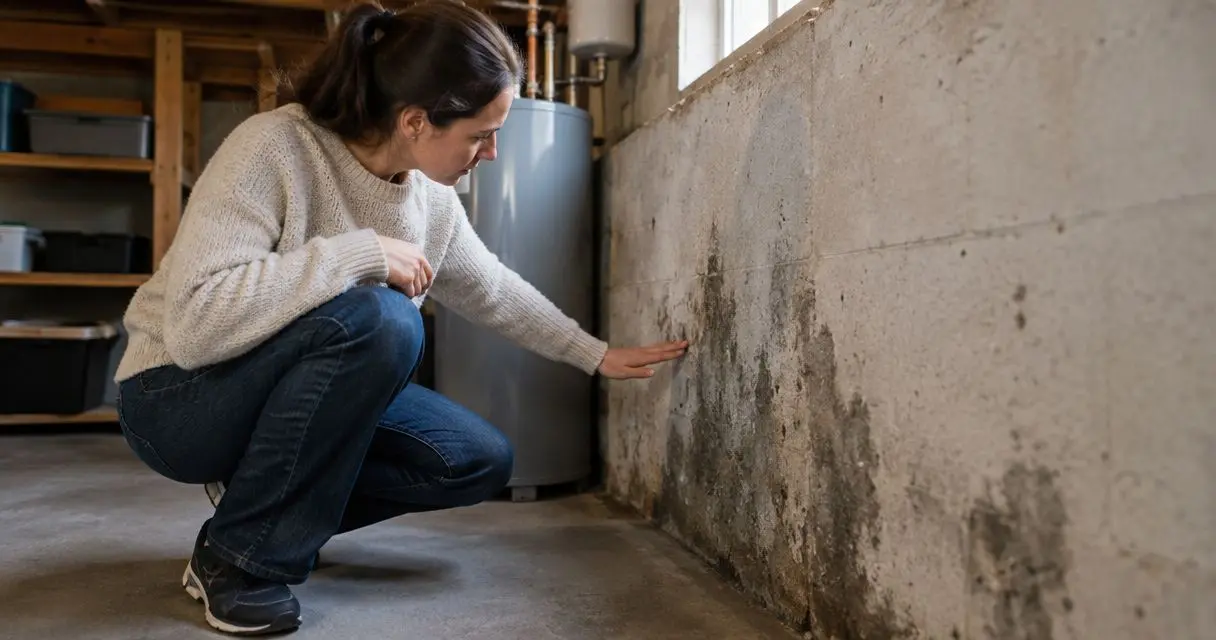
A persistent musty smell, recurring dampness, water stains, or damaged drywall can point to hidden basement mold, but none proves mold is present behind a wall. Check accessible areas and trace the moisture source without opening suspect materials; arrange an inspection when the signs persist or affected spaces are inaccessible.
- How to know if you have hidden mold in basement: trace moisture, inspect accessible surfaces, and investigate persistent musty odors.
- Phoenix Restoration Group provides mold restoration for residential and commercial property owners in Central Iowa.
- A moisture meter locates damp materials; it does not identify mold.
- Free inspections run during business hours, 8am to 4:30pm; emergency restoration is available 24/7.
How do I know if I have mold hidden in my basement?
Look for a pattern rather than a single stain: a moisture source, affected building materials, and an odor or visible growth nearby. Hidden mold can occur behind finished walls, beneath flooring, inside insulation, or around concealed plumbing leaks.
A moisture inspection to mold remediation workflow connects those observations to the next decision: locate dampness first, then determine what requires further investigation. A dry-looking room does not establish that the materials behind its finishes are dry.
Use these checks to organize what you find:
| Check | Best for | What it tells you | Limitation |
|---|---|---|---|
| Visual inspection | Accessible walls, joists, and stored items | Shows staining, deterioration, and visible growth | Cannot rule out growth behind finishes |
| Odor check | Locating a recurring musty area | Helps narrow where to investigate | Smell alone does not confirm mold |
| Humidity reading | Tracking basement air conditions | Shows whether indoor air needs moisture control | Does not measure moisture inside walls |
| Moisture meter | Comparing suspect building materials | Helps locate elevated material moisture | Does not identify mold or its species |
| Professional inspection | Persistent or inaccessible problems | Supports decisions about investigation and cleanup | Concealed conditions can require additional access |
Why this matters
Cleaning a visible spot without correcting its moisture source leaves the underlying problem unresolved. Painting over staining also conceals a clue that would otherwise help you track a recurring leak.
For your 2026 basement check, separate three questions: Is water entering? Are materials still damp? Is mold present? Each question needs its own evidence, and a single air reading cannot answer all of them.
Check these basement areas without disturbing materials
Start where water has entered before. Walk the accessible perimeter, then examine plumbing routes and stored belongings without pulling apart finishes or handling suspected growth.
Finished walls and baseboards
Look for peeling paint, swollen trim, soft drywall, and stains along the bottom edge of walls. Compare the affected area with nearby surfaces that have no known water history.
These changes establish that something needs investigation, not that mold is definitely behind the wall. Note whether the damage follows a pipe, exterior wall, window, or previous flood line.
Floor coverings and stored belongings
Look at exposed carpet edges, accessible flooring transitions, and boxes resting against exterior walls. Damp cardboard and musty belongings help identify where moisture is accumulating.
Do not pull up suspect carpet or move visibly moldy boxes through clean rooms just to inspect underneath. Keep people away from affected materials until you have a cleanup plan.
Exposed framing and utility areas
Use a flashlight to examine accessible joists, the underside of stairs, plumbing penetrations, and areas around equipment that handles water. Look for condensation, active drips, staining, and surface changes.
Wood discoloration is not automatically mold. Record its location and associated moisture evidence rather than trying to identify it by color.
Foundation walls and windows
Check for water tracks, damp corners, and staining beneath basement windows. White, powdery deposits on masonry can be mineral efflorescence rather than mold.
Efflorescence still deserves attention because it indicates moisture movement through masonry. Its presence does not tell you whether nearby wood, drywall, or insulation is affected.
Follow this safe inspection sequence in 2026
Stop before entering standing water or an area with electrical hazards, sewage, or unstable materials. A hidden-mold check is not a reason to enter an unsafe basement.
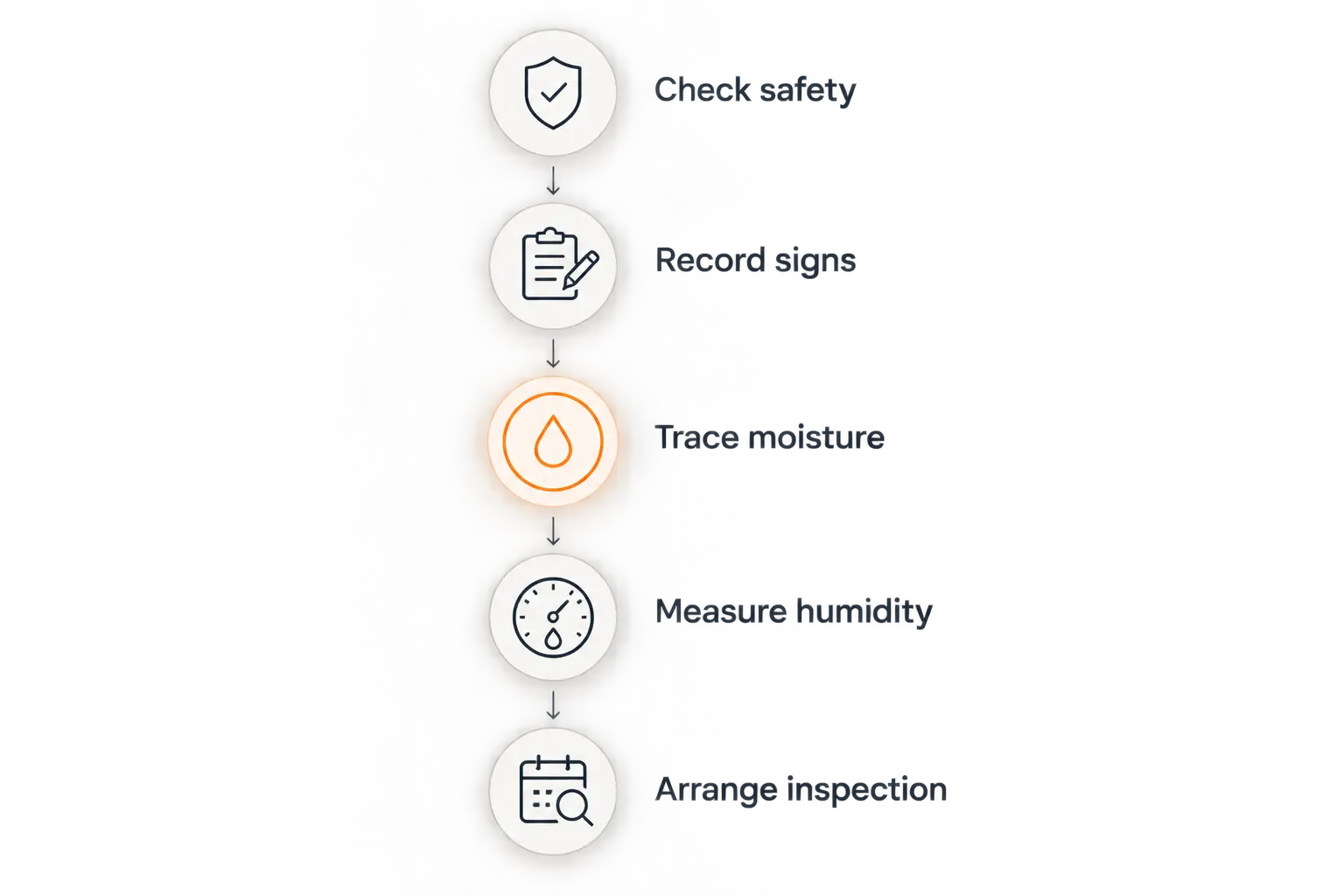
- Check safety. Inspect from a safe, accessible position. Keep children and pets away from suspected contamination.
- Record signs. Photograph stains and damaged finishes without touching suspected growth. Write down where odors are strongest.
- Trace moisture. Look for visible plumbing leaks, window seepage, condensation, or evidence of earlier flooding. Do not open walls to follow the trail yourself.
- Measure humidity. Use a hygrometer to track room conditions. Record readings alongside weather, water use, and any dehumidifier operation.
- Arrange inspection. Seek an assessment when odors persist, dampness returns, or the suspected area is concealed.
This sequence separates observations you can safely make from work that disturbs building materials. Bring the photographs and moisture history to the inspection so the discussion starts with specific locations.
What humidity readings actually tell you
For this 2026 checklist, the EPA's residential mold guidance provides a practical reference: keep indoor relative humidity below 60%, ideally between 30% and 50%. Those figures describe indoor air conditions, not a test for mold inside a wall.
A room reading within that range does not clear a previously soaked wall cavity. Likewise, a high reading signals a moisture-control problem but does not prove that mold is growing.
Check whether the reading changes after rain, during humid weather, or when equipment runs. A dehumidifier can reduce airborne moisture, but it does not repair a leaking pipe or stop water entering through a window.
The EPA also recommends drying water-damaged materials within 24 to 48 hours to help prevent mold growth. That drying window is a prevention target, not a countdown that proves when mold started.
Why signs of hidden basement mold vary
Basements do not all show moisture damage in the same way. These factors affect what you can observe:
- Moisture source: Plumbing leaks, groundwater entry, and condensation leave different patterns.
- Wall construction: Finished walls conceal surfaces that remain visible in an unfinished basement.
- Material type: Drywall, wood, concrete, and carpet show moisture damage differently.
- Air movement: Odors can travel away from their source, so the strongest smell is not conclusive evidence of the exact location.
- Water history: A previous leak matters even when the visible surface has dried.
- Stored contents: Boxes and furnishings can block your view of damp walls and floors.
Give an inspector this context instead of asking for a conclusion based on a photograph alone. Photos show visible conditions; they do not reveal everything behind the surface.
Does a musty smell mean there is mold behind the wall?
A musty smell is a reason to investigate moisture, not proof of mold behind a wall. Damp stored items, drains, and other odor sources also need consideration.
Record whether the smell returns after rain, becomes stronger near a particular wall, or persists after you remove an unrelated odor source. Do not press your face against suspect materials or sniff them at close range.
Should I use a home mold test before calling someone?
A home mold test does not replace an inspection of moisture sources and affected materials. Mold spores occur naturally, so detecting spores alone does not establish the location or extent of hidden growth.
Ask what decision a proposed test will change. An inspection should explain why sampling is needed, if it is needed, and how the result will affect the work rather than treating every basement as the same testing problem.
What happens if an inspection finds concealed damage?
An inspection should distinguish what is visible from what remains uncertain. Before anyone removes trim, opens drywall, or lifts flooring, ask which evidence justifies that access and how the work area will be protected.
The scope of affected materials matters more than the size of the stain you can see. Discussions about mold remediation costs should account for access, affected materials, and containment rather than relying on a visible patch as the whole job.
Ask for a clear explanation of the proposed sequence: address the water source, investigate affected materials, perform the necessary cleanup, and explain how completion will be assessed. Confirm who handles repairs to plumbing, drainage, or finishes instead of assuming every task belongs to the restoration scope.
For your 2026 inspection record, keep photographs, descriptions of prior leaks, and notes about recurring odors together. That record helps you distinguish an old stain from a condition that has returned.
When should I arrange an inspection or request emergency service?
Arrange an inspection when a musty odor persists, drywall keeps staining, flooring remains damp, or a previous leak affected an inaccessible area. You do not need to identify a mold species before asking for an assessment.
Active flooding, a continuing water release, sewage contamination, or an unsafe electrical condition requires a different response from investigating an old stain. Stay out of hazardous areas and seek the appropriate emergency assistance rather than continuing your inspection.
Phoenix Restoration Group is best for Central Iowa property owners seeking local mold restoration with 24/7 emergency service. Its service area includes Carlisle and Des Moines, and its team keeps property owners informed from assessment through cleanup.
Phoenix Restoration Group offers free inspections for all services during business hours, 8am to 4:30pm. The distinction matters: 24/7 emergency restoration does not mean free inspections are offered around the clock, and an inspection does not guarantee that concealed conditions can be resolved without further access.
Request a basement inspection
Free inspections during business hours, 8am to 4:30pm. Emergency restoration is available 24/7.
FAQ
Can I have mold in my basement without seeing it?
Yes, mold can grow on concealed materials when moisture is present. Persistent odors, recurring dampness, and a history of leaks justify investigation, but they do not confirm hidden growth by themselves.
What does hidden basement mold smell like?
Hidden mold can be associated with a musty or earthy odor, but smell does not establish the source. Investigate nearby moisture and other possible odor sources rather than diagnosing mold from smell alone.
What humidity should I keep my basement at in 2026?
Keep indoor relative humidity below 60%, ideally between 30% and 50%, following EPA residential mold guidance. A suitable room reading does not prove that concealed building materials are dry.
Can a moisture meter tell me whether I have mold?
No, a moisture meter measures material moisture rather than identifying mold. Its readings help locate areas that need closer investigation and must be interpreted for the material being checked.
Should I cut a hole in drywall to look for mold?
Do not cut into suspect drywall just to look for mold. Opening a cavity can disturb contamination and concealed utilities, so arrange an assessment before destructive investigation.
Can I paint over a basement mold stain?
Painting over a suspect stain does not correct moisture or remove mold. Identify the cause and determine the appropriate cleanup before repairing the finish.
Does Phoenix Restoration Group offer free basement inspections?
Phoenix Restoration Group offers free inspections for all services during business hours, 8am to 4:30pm. Emergency water, fire, mold, and biohazard restoration is available 24/7 across Carlisle, Des Moines, and Central Iowa.
One last thing
Before cleaning or repainting a recurring stain, photograph it and record when it changes. A stain that returns after rain or plumbing use gives you a specific moisture pattern to investigate, even when the surface looks dry between events.
Use your 2026 basement record to track the cause, not just the appearance. The next move is to resolve the water problem and assess the affected materials, not cover the evidence.