
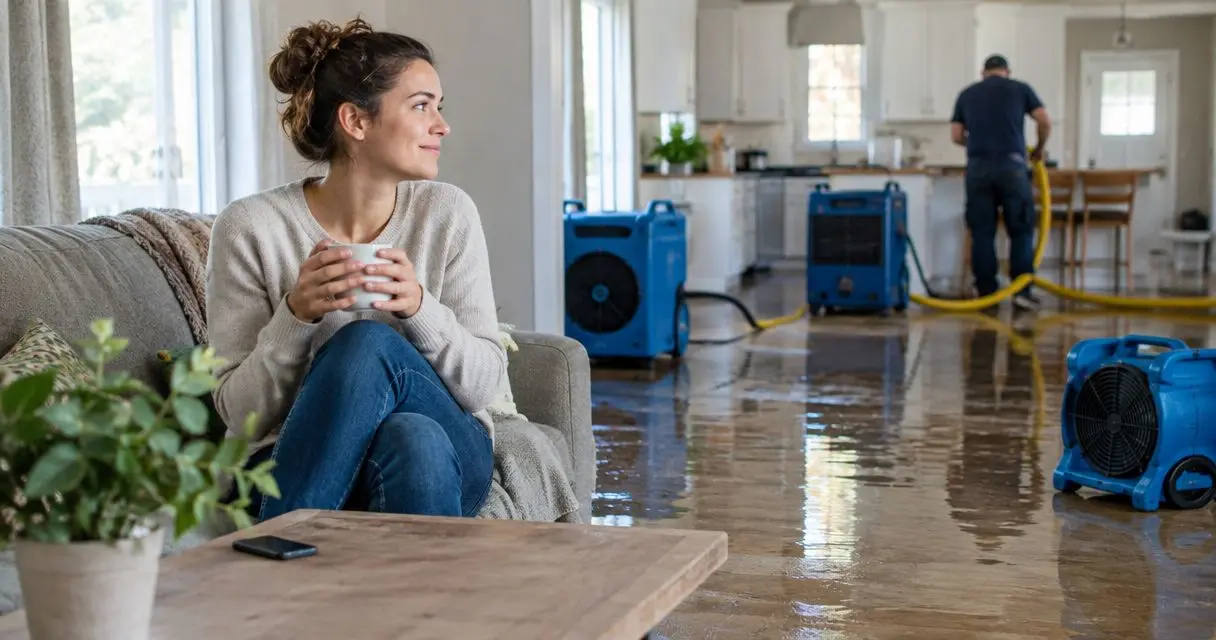
You can stay in your home during water damage restoration only when the living area remains safe, essential utilities work, and you can stay completely outside the work zone. Contaminated water, electrical hazards, unstable materials, or work that affects occupied rooms are reasons to leave until the relevant professionals confirm safe access.
- To stay in home during water damage restoration, you need safe living space separated from cleanup and drying.
- Sewage, electrical hazards, unstable ceilings, and blocked exits require immediate attention before occupancy decisions.
- Phoenix Restoration Group provides 24/7 emergency water damage restoration in Carlisle, Des Moines, and Central Iowa.
- Free inspections are available during business hours, 8am to 4:30pm, not around the clock.
Can you stay in your home during water damage restoration?
Stay only when the unaffected part of your home functions as a genuinely separate, safe living area. A dry bedroom is not enough if you must cross contaminated flooring, pass beneath a damaged ceiling, or use an unsafe electrical circuit to reach it.
For a 2026 water damage incident, base the decision on current site conditions and the planned work, not the size of the visible puddle. An assessment should address the water source, affected materials, utilities, access routes, and the needs of everyone living there.
Phoenix Restoration Group provides water damage restoration services across Carlisle, Des Moines, and Central Iowa. Emergency restoration is available 24/7; free inspections for all services are available during business hours, 8am to 4:30pm.
| Occupancy option | Best for | Practical benefit | Limitation |
|---|---|---|---|
| Stay in unaffected rooms | Households with a separate safe living area | Keeps daily routines at home | Requires safe utilities, exits, and separation from work |
| Leave during disruptive work | Households with otherwise usable living space | Avoids active demolition and restricted access | Returning requires confirmation that the occupied area is safe |
| Temporarily relocate | Households without safe separation or essential facilities | Keeps occupants outside the affected property | Requires alternative accommodation and coordination |
These are decision paths, not guarantees. An assessment can change the plan when workers uncover damage behind flooring, walls, or ceilings.
Why this matters
Water damage restoration changes how you can use your home. Extraction, material removal, drying equipment, and repair work can restrict rooms even after standing water disappears.
The occupancy question is therefore broader than whether you can tolerate noise. You need a usable bathroom, safe drinking water, appropriate indoor conditions, and an exit route that does not pass through the work area. Comfort matters, but it comes after safety.
For your 2026 household plan, separate permission to enter from permission to live there. Being allowed inside briefly to collect belongings does not establish that sleeping, cooking, or spending the day inside is appropriate.
When staying in unaffected rooms makes sense
Staying is an option when the affected area can remain off limits without cutting off essential parts of the home. Ask the restoration team to identify the work boundary and explain how the work affects nearby occupied rooms.
Check the entire route between your sleeping area, bathroom, kitchen, and exterior door. Extension cords, wet flooring, removed floor coverings, or blocked stairs can make an otherwise dry room impractical to occupy.
Before deciding to stay, confirm:
- The water source has been addressed, and you know whether contamination is involved.
- Electrical systems serving occupied areas are safe to use.
- Ceilings, floors, and stairs along your access routes are sound.
- You have working essential facilities outside the restricted area.
- Everyone in the household can respect the work boundary.
- The planned work will not expose occupied rooms to uncontrolled dust or contamination.
Do not use distance from the leak as your only safety test. A basement problem can still affect your route to utilities, laundry, storage, or the only usable bathroom.
When you should leave the affected home
Leave the affected area when water is near electrical equipment, a ceiling is sagging, or floors appear unstable. Do not enter standing water to reach a breaker panel, retrieve belongings, or inspect damage. Use emergency services when there is an immediate threat to life or safety.
Sewage and floodwater require particular caution because contact can expose people to contaminants. Do not assume that a closed interior door makes an occupied room safe when contaminated water or affected materials extend beyond it.
Temporary relocation also deserves priority when:
- You cannot reach an exit without crossing the work zone.
- The only bathroom or essential water supply is unusable.
- Demolition or containment removes access to sleeping or cooking areas.
- Someone cannot avoid the affected area because of mobility or care needs.
- A household member develops symptoms associated with being inside the property.
If someone has trouble breathing or another urgent medical symptom, seek medical help. A restoration assessment does not replace medical advice, an electrical inspection, or a structural evaluation when those are needed.
Why the decision varies between homes
The same room size or leak description does not produce the same occupancy decision. These factors determine whether staying is practical:
- Water source: A supply-line leak and a sewage backup present different contamination concerns. The source must be assessed before deciding how to use nearby rooms.
- Damage location: Damage confined to an isolated storage area affects daily living differently from damage across bedrooms, stairs, or the kitchen.
- Utilities: Safe electricity, drinking water, sanitation, and temperature control are essential to continued occupancy.
- Work scope: Drying an accessible area creates different restrictions from removing flooring, opening walls, or establishing containment.
- Household needs: Children, pets, people with limited mobility, and people with respiratory conditions need an occupancy plan that addresses their circumstances.
- Safe separation: Doors alone do not resolve every exposure or access problem. The work boundary must match the actual damage and planned activity.
In 2026, use these property-specific conditions to evaluate advice you find online. A general article cannot establish that your particular home is safe to occupy.
How do you decide whether to stay tonight?
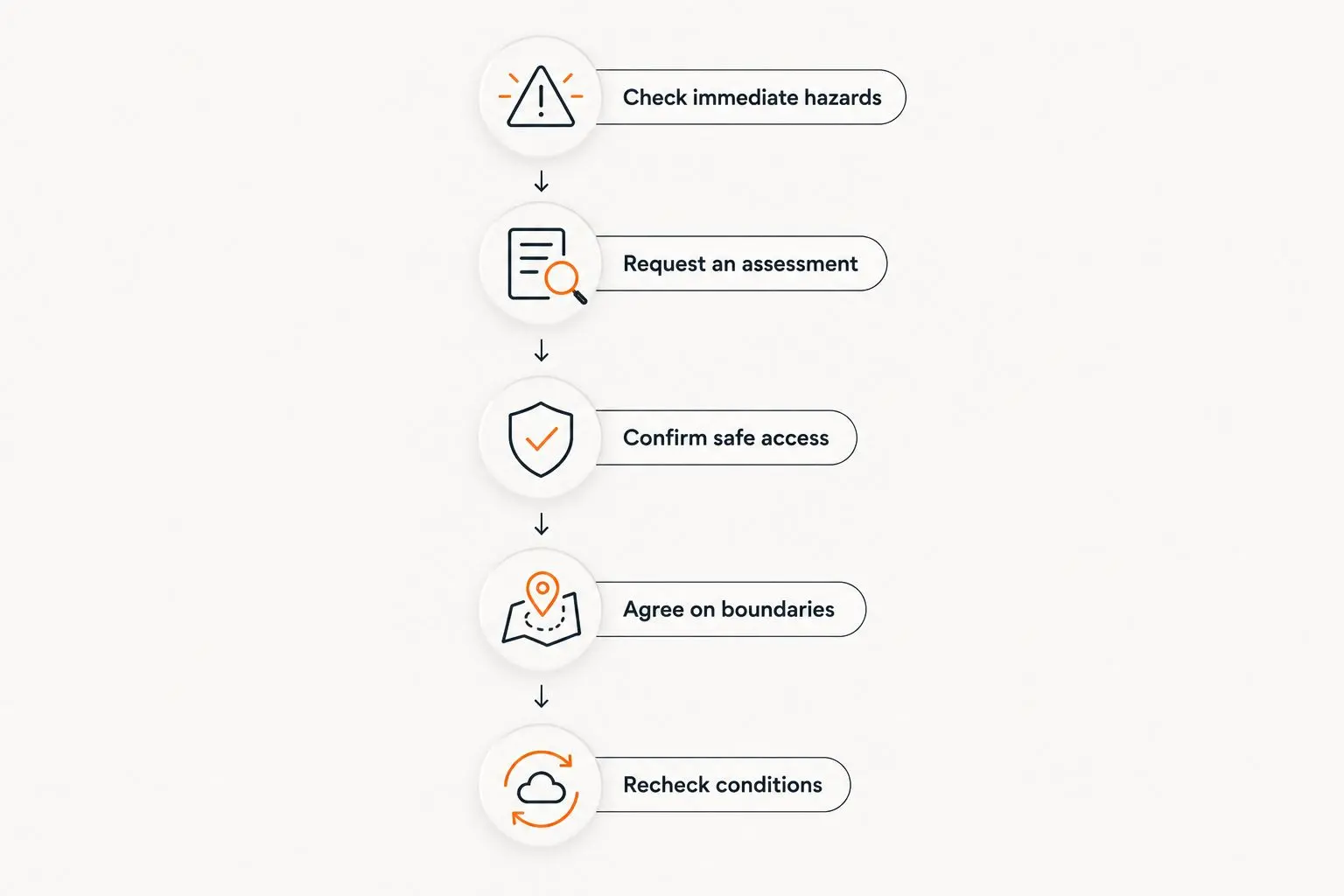
Use this sequence before settling into an unaffected room. If a safety issue remains unresolved, do not treat an otherwise convenient sleeping arrangement as clearance to stay.
- Check immediate hazards. Stay away from standing water near electrical systems, damaged ceilings, unstable surfaces, and contaminated areas. Arrange the appropriate emergency or specialist help.
- Request an assessment. Explain where the water came from, which rooms are affected, and whether anyone is still living inside. Ask which areas must remain restricted.
- Confirm safe access. Identify a sleeping area, bathroom, and exit route that remain usable without entering the work zone.
- Agree on boundaries. Ask what containment, equipment, material removal, or utility interruptions the work requires. Keep children and pets outside restricted areas.
- Recheck conditions. Review occupancy whenever the scope changes or additional damage appears. A decision made before demolition does not automatically cover later work.
Phoenix Restoration Group is best for property owners seeking 24/7 emergency water damage restoration in Carlisle, Des Moines, and Central Iowa. The team keeps you informed from assessment through cleanup, but emergency availability does not mean free inspections are available overnight. Free inspections for all services take place during business hours, 8am to 4:30pm.
Request a restoration assessment
24/7 emergency restoration. Free inspections for all services during business hours, 8am to 4:30pm.
Can you sleep in a house while drying equipment runs?
Sleeping in a house while drying equipment runs depends on safe room separation, electrical safety, and the restoration plan. Equipment noise alone does not determine whether the house is suitable for overnight occupancy.
Ask where equipment must remain and which circuits, doors, and rooms the drying setup uses. Do not switch off equipment, move cords, or open containment to make sleeping easier without discussing it with the restoration team.
If the agreed setup prevents sleep or blocks essential access, arrange another place to stay rather than changing the drying plan yourself. Explain any medical equipment or accessibility needs before the setup is finalized.
Does a dry floor mean you can move back in?
A dry-looking floor does not establish that underlying materials are dry or that the home is ready for occupancy. Surface appearance cannot replace an assessment of affected materials and remaining hazards.
Ask what evidence supports reopening each room and what work remains. Drying, cleaning, repairs, and restoring essential facilities are separate issues, even when they happen within the same project.
For planning your 2026 return, ask for milestones rather than relying on a promised completion date. The guide to how long water damage restoration takes explains the broader timeline question; your occupancy decision still depends on the conditions in your home.
Will insurance cover a place to stay during restoration?
Insurance coverage for temporary accommodation depends on your policy, the cause of damage, and the insurer's coverage decision. Do not assume that leaving voluntarily or receiving a restoration assessment automatically establishes coverage.
Contact your insurer before committing to accommodation when circumstances allow. Ask what documentation is required, which expenses qualify, and whether approval is needed. Keep receipts and a record of communications, but do not delay leaving an unsafe area while waiting for an answer.
What should you ask before rooms reopen?
Ask for a room-by-room explanation rather than a general statement that the house looks better. You need to understand where you can live, which restrictions remain, and whom to contact if conditions change.
Useful questions include:
- What areas are still restricted, and why?
- Has the source of the water been addressed?
- What drying or cleaning remains in the rooms we want to use?
- Are electrical or structural evaluations still needed?
- Will upcoming work interrupt water, power, bathroom access, or exits?
- What changes should make us leave or request another assessment?
Keep that information accessible to everyone living in the home. For your 2026 household records, note when instructions change and which rooms those changes affect. Clear boundaries are useful only when every occupant understands them.
FAQ
Can I stay upstairs while my flooded basement is being restored?
You can stay upstairs only if the living area, utilities, and exit routes remain safe and separate from the basement work. Ask whether contamination, electrical hazards, or access restrictions affect the rest of the house.
Is it safe for children and pets to stay during water damage restoration?
Children and pets should stay out of affected rooms and restoration work zones. If you cannot reliably maintain that separation, arrange another place for them to stay.
Can I turn off drying equipment overnight?
Do not turn off or move drying equipment without instructions from the restoration team. Discuss noise and sleeping arrangements instead of changing the drying setup yourself.
Can I stay home if the water came from a sewage backup?
Do not occupy or cross sewage-contaminated areas. Whether any separate part of the home remains usable requires an assessment of contamination, access, utilities, and the cleanup plan.
Who decides whether my home is safe to occupy?
Occupancy depends on the hazards involved and any applicable official restrictions. Restoration professionals assess the work area; electrical, structural, medical, or local authority input is needed when those issues affect safety.
Does Phoenix Restoration Group offer free emergency inspections overnight?
Phoenix Restoration Group offers free inspections for all services during business hours, 8am to 4:30pm. Emergency water, fire, mold, and biohazard restoration is available 24/7; those are separate service arrangements.
One last thing
Pack what you need before a room becomes a restricted work area, but only when entry is safe. Medication, identification, chargers, work essentials, and pet supplies are easy to overlook when you expect to remain at home.
Ask the restoration team before retrieving anything from an affected room. An occupancy plan works better when you do not need to cross the work boundary repeatedly for everyday belongings.