
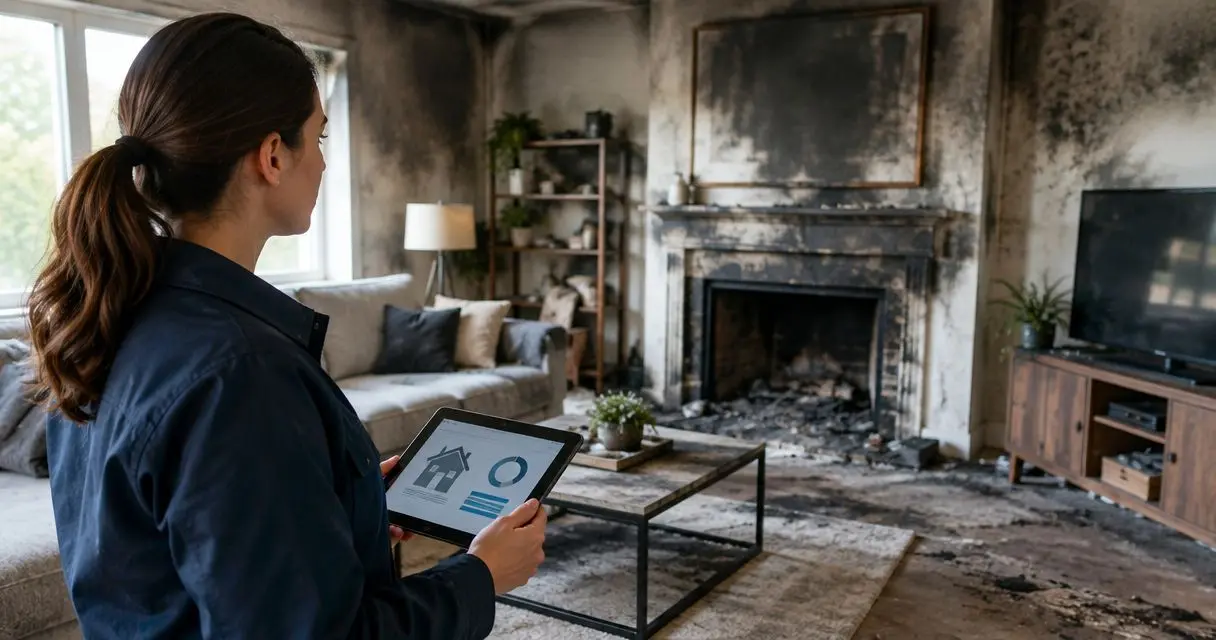
Insurance generally covers smoke damage cleanup when the smoke results from a covered event, such as an accidental house fire, subject to your policy’s exclusions and limits. Your deductible and any work outside the approved claim remain your responsibility. For a claim in 2026, report the loss promptly, document the damage before cleanup when safe, and ask your insurer which emergency measures and restoration work it will authorize.
- Does insurance cover smoke damage cleanup? Generally yes after a covered fire, subject to policy terms and deductibles.
- Document soot, smoke odor, damaged belongings, and emergency expenses before discarding materials when safe.
- Phoenix Restoration Group is best for Central Iowa property owners needing local, 24/7 emergency fire restoration.
- An inspection identifies restoration needs; your insurer determines coverage and claim payment.
Why this matters
Coverage and cleanup authorization are different decisions. A policy that covers fire damage does not automatically approve every proposed cleaning method, replacement item, or temporary living expense. You need a documented scope that connects the work to the covered loss.
Smoke damage also extends beyond visibly burned materials. Soot, residue, and odor can affect rooms and belongings away from the fire, so describe the full affected area when requesting restoration services. For your 2026 claim, keep the policy in force on the date of loss with your claim records.
Will insurance cover smoke damage cleanup?
Generally, yes, when a covered event causes the smoke damage. The deciding questions are what caused the loss, which property was affected, and what your policy covers. A restoration assessment documents damage; it does not establish insurance coverage.
The following coverage categories serve different purposes. Confirm the applicable terms with your adjuster rather than treating them as interchangeable.
| Coverage category | Best for addressing | What to confirm | Main limitation |
|---|---|---|---|
| Dwelling or building coverage | Smoke damage to the insured structure | Whether affected walls, ceilings, flooring, and attached components fall within coverage | Exclusions, limits, and the approved repair scope still apply |
| Personal property coverage | Smoke-damaged belongings | How to document contents and whether cleaning or replacement is appropriate | Settlement terms and item-specific limits can affect payment |
| Additional living expenses | Qualifying extra living expenses when a covered loss makes a home uninhabitable | Which expenses qualify and what documentation is required | Ordinary household expenses are not automatically reimbursable |
| Commercial property coverage | Covered damage to insured business premises and property | Which building components, contents, and locations are insured | Business income protection is a separate coverage question |
A homeowner, tenant, landlord, and business owner can face different responsibilities after the same fire. Tenants should notify their renters insurer about belongings and potential temporary living expenses; the property owner should address the building through the applicable property policy.
What does an approved cleanup scope need to explain?
A useful scope identifies the affected areas, materials, proposed work, and reasons for that work. A general statement that a building smells smoky is less specific than a room-by-room record of residue, odor, and affected contents.
Ask whether the proposed work addresses surface cleaning, contents, odor treatment, and any affected building systems. Not every loss requires every service. The assessment should explain what is necessary for your property rather than treating every fire as the same job.
What should you do before smoke damage cleanup starts?
Protect people first, preserve evidence when safe, and separate emergency measures from permanent restoration. Do not enter an unsafe building or disturb damaged electrical equipment to collect photographs. Follow emergency officials’ instructions about access.
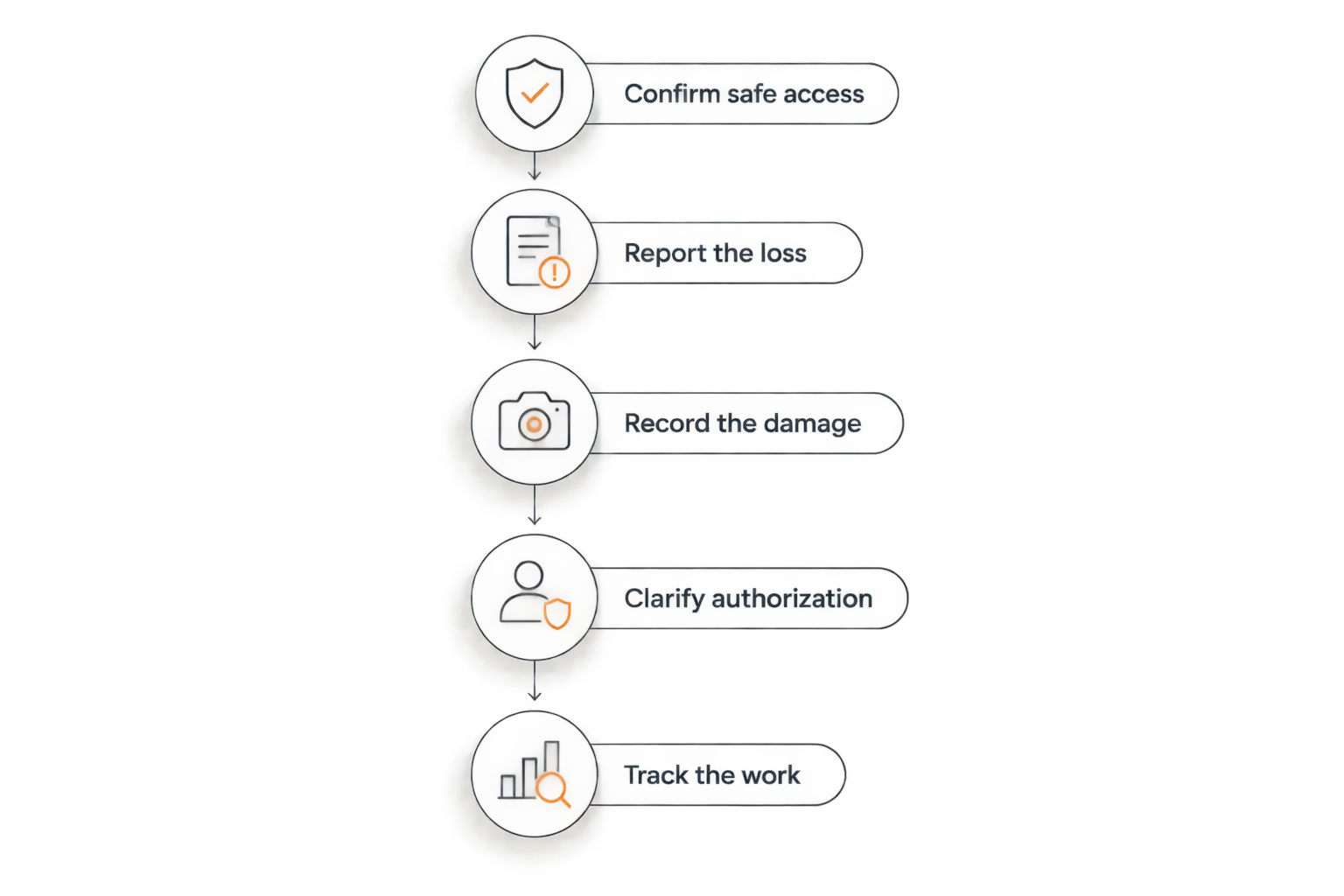
- Confirm safe access. Ask the responsible authorities whether you can enter. Permission to enter does not mean every room, utility, or damaged component is safe to use.
- Report the loss. Contact your insurer promptly, obtain the claim number, and ask how to submit photographs, inventories, estimates, and receipts.
- Record the damage. Photograph affected rooms and belongings before cleaning when safe. Include wide views showing location and close views showing residue or damage.
- Clarify authorization. Ask what immediate protective work should proceed and what needs an adjuster’s review. Request written confirmation of instructions.
- Track the work. Keep assessments, estimates, authorizations, invoices, receipts, and messages together. Record changes to the scope as additional damage is identified.
Do not throw away damaged belongings merely to clear space before the insurer has given instructions. If safety requires disposal, document the items and the reason, and notify the adjuster. Keep available purchase records without inventing dates or replacement details you cannot verify.
For a 2026 smoke damage claim, use a dated room-by-room inventory rather than relying on memory during an adjuster’s visit. Record each item’s description, location, visible condition, and supporting photographs. Keep uncertain details identified as uncertain.
Why smoke damage insurance coverage varies
Coverage depends on the contract and circumstances, not just the presence of soot. These factors explain why separate properties affected by smoke can receive different claim decisions:
- Cause of loss. The insurer evaluates the event that produced the smoke and whether the policy covers it. Describe what happened without guessing about an unconfirmed cause.
- Policy exclusions. Read the exclusions and conditions alongside the coverage section. A general reference to fire or smoke coverage does not cancel those terms.
- Property and occupancy. Owner-occupied homes, rentals, and commercial premises have different coverage arrangements. Identify who owns the affected building and contents.
- Limits and deductibles. Coverage limits and your deductible affect the settlement even when the loss is covered. Ask which coverage applies to each part of the claim.
- Evidence and scope. Photographs, inventories, inspection findings, and itemized estimates help connect proposed work to documented damage. Unclear descriptions leave more questions unresolved.
- Claim duties. Policies commonly require prompt notice, reasonable protection against further damage, and cooperation with the claim investigation. Ask your insurer how to meet those duties safely.
An adjuster’s request for more documentation is not the same as a denial. Ask exactly what is missing and who needs to supply it. If the insurer denies a portion of the work, request the decision and relevant policy language in writing.
How should you document cleaning versus replacement?
Document why cleaning is appropriate or why an item needs replacement. A visible stain alone does not establish that an entire room needs rebuilding, and a clean-looking surface does not establish that smoke effects are resolved.
For each disputed item, ask the restoration provider to describe the material, observed damage, proposed treatment, and expected result. Ask the adjuster whether an inspection, additional photographs, or a revised estimate is needed before proceeding. Keep the damage assessment separate from any preference to upgrade the property.
For contents, identify individual items or clearly defined groups instead of recording only a broad category such as furniture. Note which items remain on site and which have been moved. This helps you account for property during cleanup without confusing the inventory with the insurer’s settlement decision.
Odor deserves its own documentation. Record where you notice it, whether it remains after work, and when you reported it. Avoid covering the smell with fragrance before an assessment because masking an odor does not establish that its source has been removed.
How does preventing another fire differ from proving this claim?
Prevention and claim evidence have different jobs. For a cooking-related fire, Thanksgiving cooking safety tips address preventing another incident; the current claim still depends on evidence of the actual loss and the applicable policy terms. General safety advice does not establish what caused a particular fire.
Keep your incident description factual. Record what you observed, when you noticed smoke, and which areas were affected, but leave technical cause determinations to the appropriate investigators. Do not alter your account to match an assumed coverage outcome.
Discuss future safety changes separately from the restoration estimate. Replacing a damaged component and choosing an unrelated improvement are different requests, and the insurer needs to understand which work addresses the covered damage. Clear separation also helps you understand what you are authorizing personally.
What should you ask before authorizing restoration work?
Before signing, confirm what work the document authorizes and who is responsible for payment. Do not treat a contractor’s estimate as an insurer’s promise to reimburse you. Ask for explanations of any terms you do not understand.
Use these questions to keep the scope clear:
- Which rooms, surfaces, and belongings are included?
- What emergency protection is needed before the full assessment is complete?
- Which work has the insurer approved, and where is that approval recorded?
- What happens if additional damage is found during cleanup?
- Who communicates scope changes to you and the adjuster?
- What records will you receive when the work is complete?
Phoenix Restoration Group provides 24/7 emergency fire restoration across Carlisle, Des Moines, and Central Iowa, with communication from the initial assessment through cleanup. Free inspections for all services are available during business hours, 8am to 4:30pm. Emergency availability does not mean business-hours free inspections are available around the clock, and an inspection does not guarantee insurance payment.
Use the contact page to discuss your property’s condition and inspection needs. Describe immediate hazards and any access restrictions rather than assuming a specific arrival time.
Can you start cleanup before the insurance adjuster visits?
Necessary emergency protection should not wait when delay would expose people or property to further harm. Contact your insurer promptly for instructions, document conditions when safe, and distinguish immediate protective measures from permanent repairs.
Ask whether photographs, a remote review, or an initial assessment will satisfy the insurer’s documentation needs before work begins. Do not assume permission for limited emergency work also authorizes the entire restoration scope. Keep records of who gave instructions and what they approved.
Does insurance cover smoke damage if there was no fire inside your home?
Smoke entering from a nearby fire can qualify for coverage, but your policy and the documented circumstances control the decision. Report where the smoke came from if known, which areas were affected, and what damage or odor you observed.
Do not rule out a claim solely because your belongings did not burn. Equally, smoke exposure alone does not establish that every requested cleaning service is covered. Ask for an assessment tied to the actual condition of the property.
FAQ
Does insurance cover smoke damage cleanup after a kitchen fire?
Insurance generally covers smoke damage cleanup after a kitchen fire when the event is covered by your policy. Your deductible, exclusions, limits, and approved scope still apply.
Will insurance pay to remove smoke odor from my house?
Smoke odor treatment can fall within a covered loss when the work addresses documented damage from that event. Ask your adjuster which proposed treatments are authorized and what supporting assessment is needed.
Does renters insurance cover smoke-damaged belongings?
Renters insurance generally covers personal belongings damaged by a covered fire or smoke event, subject to policy terms. Building repairs are a separate responsibility from the tenant’s personal property claim.
Should I clean soot before the adjuster sees it?
Document soot before cleaning when safe, and ask your insurer what emergency work should proceed. Do not delay necessary protective measures solely to preserve evidence, but retain photographs and work records.
Can I throw away smoke-damaged furniture before filing a claim?
Ask your insurer for disposal instructions before discarding furniture when safe. If immediate disposal is necessary for safety, document the item and the reason and notify the adjuster.
Does a restoration inspection mean my insurance claim is approved?
A restoration inspection does not approve an insurance claim. The restoration provider assesses damage and proposed work; your insurer determines coverage under your policy.
Does Phoenix Restoration Group offer emergency fire restoration at night?
Phoenix Restoration Group provides 24/7 emergency fire restoration in Carlisle, Des Moines, and Central Iowa. Free inspections for all services are available during business hours, 8am to 4:30pm, separately from emergency availability.
One last thing
Ask for the coverage decision and the cleanup scope as separate written records. One explains what your insurer accepts under the policy; the other explains what work your property needs. Comparing them exposes unresolved questions before you authorize additional work.
For your 2026 claim file, keep the original estimate alongside approved revisions rather than replacing earlier versions. That record preserves what changed, why it changed, and which questions still need an answer.