

Homeowners insurance covers mold remediation when your policy includes coverage for mold resulting from a covered event, such as a sudden pipe leak, subject to exclusions and limits. In 2026, a covered water-damage claim does not automatically mean every mold-related expense is covered; gradual leaks, maintenance problems, and mold exclusions can change the outcome.
- Does homeowners insurance cover mold remediation? Coverage depends on the moisture source, policy exclusions, and applicable mold limits.
- Document water damage and mold before cleanup when safe; report the loss promptly and prevent further damage.
- Phoenix Restoration Group provides mold remediation and 24/7 emergency restoration in Carlisle, Des Moines, and Central Iowa.
- Free inspections are available during business hours, 8am to 4:30pm, separately from 24/7 emergency service.
Will homeowners insurance cover mold remediation?
The cause of the moisture and the policy wording determine mold coverage, not the presence of mold alone. Start with the event that introduced water, then check how your policy treats the resulting mold.
| Situation | Coverage issue | What to document |
|---|---|---|
| Sudden pipe leak followed by mold | Whether the leak is covered and resulting mold is included | Discovery date, plumbing findings, affected materials |
| Long-term leak behind a wall | Gradual-damage exclusions and any hidden-damage exceptions | Repair history, earlier warning signs, discovery details |
| Persistent indoor humidity | Maintenance, ventilation, and mold exclusions | Condensation, moisture readings, affected rooms |
| Water entering from outside flooding | Flood exclusions and any separate flood policy | Water source, entry points, flood-policy documents |
| Sewer or drain backup | Whether a backup endorsement applies and includes mold | Backup source, endorsement, cleanup records |
These are coverage questions, not claim approvals. For the underlying loss, the guide to homeowners insurance and water damage restoration explains the distinction between water cleanup and the event that caused it.
Why this matters
Mold cleanup, water extraction, plumbing repairs, and rebuilding are different parts of a loss. An insurer can accept one part while disputing another, so a general statement that water damage is covered is not enough.
Ask which specific work the insurer accepts and which policy provision controls that decision. You need a written explanation of mold coverage, not just a claim number.
Do not treat an open claim as permission to leave active water damage untreated. Notify your insurer promptly, take reasonable steps to prevent additional damage when safe, and keep records of those steps.
Mold after a sudden water leak
A sudden plumbing failure presents a different coverage question from a leak that has continued over time. If the initial water loss is covered, the next question is whether the policy covers resulting mold or restricts it through an exclusion or endorsement.
Describe what you actually observed. Record when you found the water, where it appeared, and what a plumber or restoration professional identified. Do not guess how long a concealed leak existed or describe an uncertain cause as established fact.
Ask your adjuster to address these items separately:
- Emergency water removal and drying.
- Investigation of concealed moisture.
- Mold containment and removal.
- Removal and replacement of affected building materials.
- Repair of the failed pipe or other source.
The failed component and the damage it caused are separate coverage questions. A covered water-loss claim is not a promise that insurance will pay to replace the item that failed.
Mold from gradual leaks or humidity
Standard homeowners policies generally exclude damage caused by wear, deterioration, or ongoing maintenance problems. Mold connected to repeated leakage, persistent condensation, or unresolved moisture therefore raises different issues from mold following a sudden covered loss.
A concealed leak still requires a policy-specific review. Some policies contain provisions addressing hidden water damage, and the wording matters more than whether the damaged area was visible from the room.
Do not assume hidden mold is automatically covered or automatically excluded. Ask the insurer to identify the provision that applies to the actual circumstances.
For a 2026 claim, use the policy and endorsements in effect on the date of loss. A current online policy summary or a neighbor's claim experience does not establish what your contract covers.
Mold after flooding or a sewer backup
Standard homeowners insurance generally excludes outside flooding. A separate flood policy has its own terms, and having that policy does not establish that every mold-related expense is covered.
Water backup also requires a separate review. Check whether your homeowners policy includes an applicable endorsement and whether it addresses the resulting mold, not merely the initial backup.
Use precise descriptions when reporting the damage. Water from a supply pipe, water coming up through a drain, and surface water entering through a doorway are different loss scenarios.
Photograph entry points from a safe location and preserve professional findings about the source. Do not enter standing water or approach electrical equipment to collect evidence.
Why mold remediation coverage varies
Your neighbor's approval does not predict your claim. These factors determine which questions the insurer must resolve:
- Moisture source: A plumbing failure, outside flood, and ongoing condensation are different causes with different policy treatment.
- Policy exclusions: Mold, repeated seepage, deterioration, and other exclusions can restrict coverage.
- Endorsements: Added coverage can change the standard policy, but only within its stated conditions.
- Mold limits: A separate limit can apply to mold-related work even when the underlying water loss is covered.
- Notice and mitigation: Policy duties concerning reporting and preventing further damage affect how a claim is evaluated.
- Evidence: Photos, repair findings, discovery dates, and itemized records help establish what happened and what work addresses it.
A deductible is another separate issue. Ask which deductible applies and how it interacts with any mold-specific limit before assuming an approved scope means full reimbursement.
What should you do before mold cleanup begins?
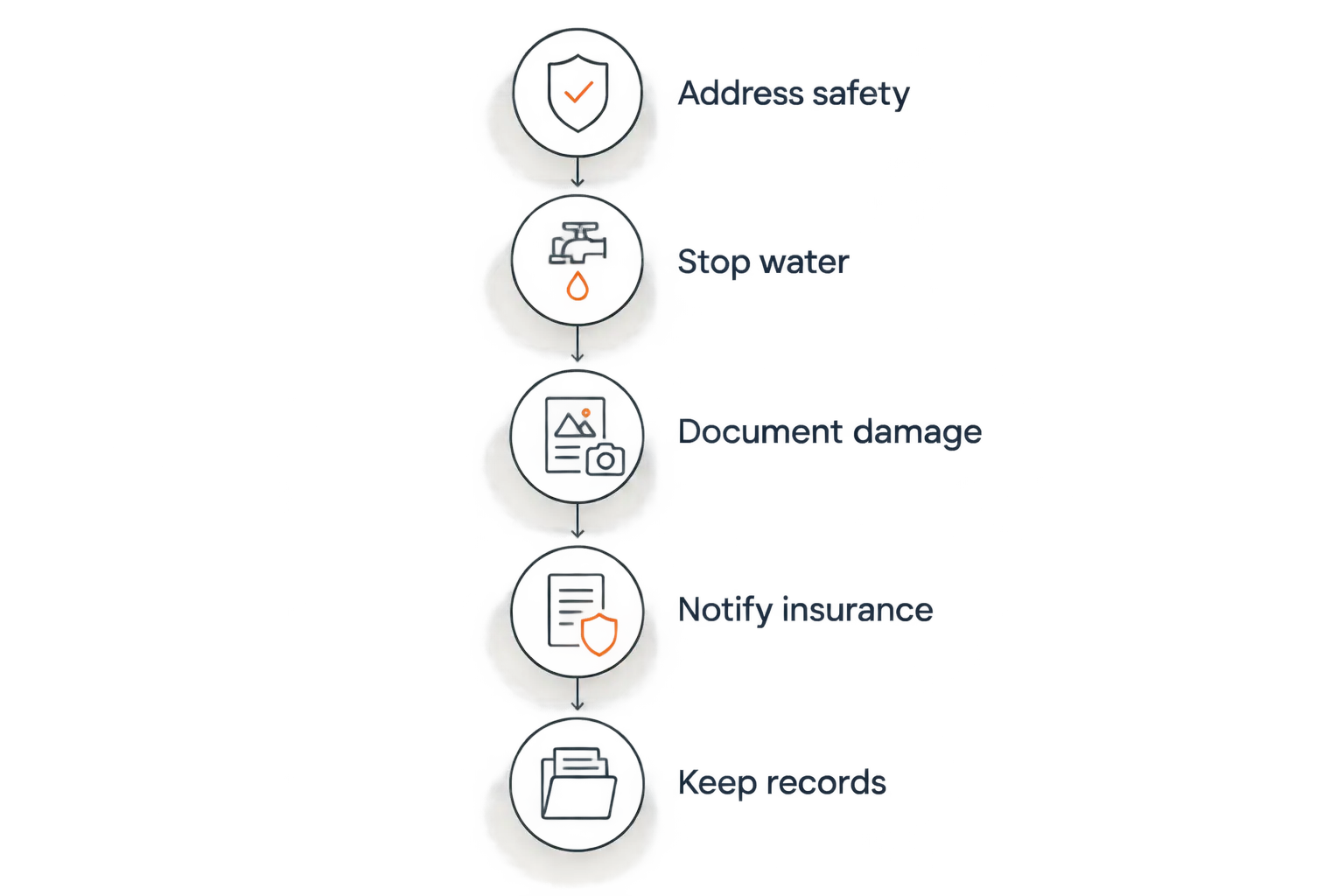
Keep safety, documentation, and damage prevention moving together. Waiting for a final coverage decision is not a reason to ignore an active leak.
- Address safety. Stay away from unstable materials, contaminated water, and wet electrical equipment. Do not disturb suspect materials just to expose the damage.
- Stop water. Shut off the source if you can do so safely, or arrange qualified help. Document the repair findings.
- Document damage. Photograph affected rooms and materials before cleanup when safe. Record when you first noticed water, staining, odors, or visible mold.
- Notify insurance. Report the facts, request claim instructions, and ask whether an inspection is needed before damaged materials are removed.
- Keep records. Save communications, estimates, invoices, photographs, and explanations of emergency work.
Before discarding damaged property, ask your insurer what evidence it needs. Where materials must be removed for safety or mitigation, retain photographs, descriptions, and the contractor's explanation rather than keeping unsafe items inside your home.
For your 2026 claim file, keep the original photographs alongside any annotated copies. A simple chronology helps distinguish your observations from later professional findings.
What should a mold remediation estimate explain?
Ask for an itemized scope rather than a single description of mold cleanup. The estimate should explain the affected areas, proposed work, and the moisture issue that must be addressed.
Look for clear distinctions between inspection, containment, removal, drying, cleaning, and rebuilding where those tasks apply. Do not assume that an estimate includes testing, source repairs, or reconstruction unless those items are stated.
Separate findings from coverage decisions. A restoration professional can describe conditions and proposed work; the insurer determines coverage under the policy, subject to your rights to question that decision.
Before signing, ask who pays if the insurer denies part of the work and how changes require your authorization. A restoration agreement and an insurance approval are not interchangeable.
Who should you contact for mold remediation in Central Iowa?
Phoenix Restoration Group is best for property owners in Carlisle, Des Moines, and Central Iowa who need local mold remediation and access to 24/7 emergency restoration. The company provides water, fire, mold, and biohazard damage restoration for residential and commercial properties.
Phoenix Restoration Group offers free inspections for all services during business hours, 8am to 4:30pm, and keeps you informed from assessment through cleanup. Business-hours free inspections are separate from 24/7 emergency restoration; neither establishes insurance coverage or guarantees a particular arrival time.
The practical benefit is access to assessment and restoration services. The limitation is equally important: choosing a restoration provider does not replace a written coverage decision from your insurer.
Request a mold inspection
Free inspections during business hours, 8am to 4:30pm. Emergency restoration is available 24/7.
Does insurance cover mold if the water damage was covered?
Not automatically. A covered water loss can still be subject to a mold exclusion, separate mold limit, or conditions governing the resulting damage.
Ask the adjuster to confirm mold coverage specifically and identify the applicable policy language. An approval for drying alone does not answer whether removal of mold-affected materials is included.
Can you start remediation before insurance approves it?
You still need to take reasonable steps to prevent further damage, but starting work does not guarantee reimbursement. Notify the insurer promptly, request inspection instructions, and document why any emergency work cannot wait.
Distinguish urgent stabilization from broader demolition or reconstruction. Ask what evidence the insurer needs before nonemergency removal begins.
What can you do if the insurer denies mold coverage?
Request a written denial identifying the policy provisions and factual reasons. Compare that explanation with the policy, endorsements, photographs, and professional findings rather than relying on a verbal summary.
If you dispute the decision, ask about the insurer's review process and applicable deadlines. Iowa homeowners can also contact the Iowa Insurance Division for consumer assistance; a complaint does not itself establish coverage.
FAQ
Does homeowners insurance cover mold remediation in 2026?
Homeowners insurance covers mold remediation only when the policy provides coverage for the circumstances of the loss. Check the moisture source, exclusions, endorsements, and any mold-specific limit in the policy effective on the loss date.
Will insurance cover mold from a pipe that burst?
Mold following a burst pipe can be covered when the water loss and resulting mold fall within the policy's terms. Ask the insurer to confirm mold coverage separately from water removal and drying.
Is mold behind a wall automatically covered?
Hidden mold is not automatically covered. The insurer must evaluate the moisture source and policy wording, including any provisions addressing concealed water damage.
Does regular homeowners insurance cover mold after a flood?
Standard homeowners insurance generally excludes outside flooding. Any separate flood policy must be reviewed for its own mold-related terms and conditions.
Should I remove mold before the insurance adjuster visits?
Ask the insurer for inspection and documentation instructions before nonemergency removal. Do not delay safe measures needed to prevent further damage, and document any work that cannot wait.
Does an inspection prove that insurance will pay for remediation?
An inspection does not establish insurance coverage. Findings describe property conditions; coverage depends on the insurance contract and the circumstances of the loss.
When does Phoenix Restoration Group offer free mold inspections?
Phoenix Restoration Group offers free inspections for all services during business hours, 8am to 4:30pm. Its 24/7 emergency restoration service is separate from those inspection hours.
One last thing
The most useful claim question is not simply whether mold is covered. Ask which specific mold-related tasks are covered, under which provision, and subject to which limit. That wording separates an approval for emergency drying from an approval for remediation or rebuilding.
For a loss discovered in 2026, save the policy version, endorsements, and written coverage correspondence together. If the scope changes after concealed damage is exposed, request an updated written decision rather than assuming the original approval extends to everything found later.