
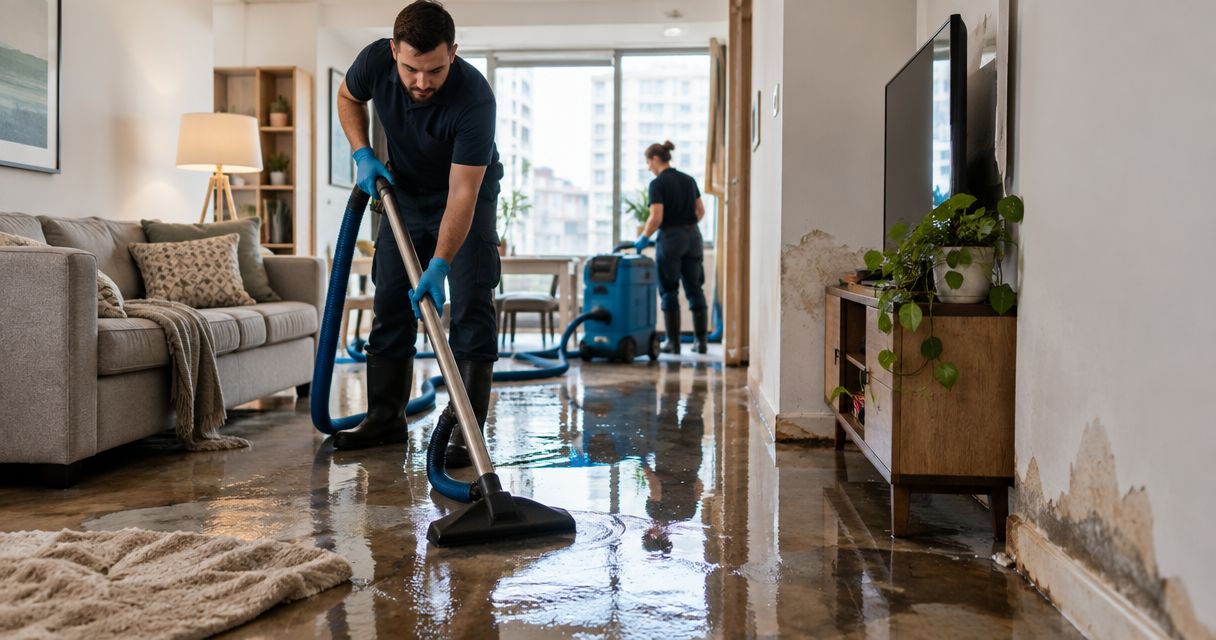
Apartment owners' water damage restoration is the process of removing water, drying affected building materials, and addressing damage with the aim of returning rental housing to safe use. Shared plumbing, occupied units, and damage between floors make apartment losses a building-wide coordination problem, not just a cleanup task.
- Water damage restoration for apartment owners starts with resident safety, source control, and checking adjoining units.
- Phoenix Restoration Group provides 24/7 emergency restoration in Carlisle, Des Moines, and Central Iowa.
- Separate leak repair, building drying, resident communication, and insurance documentation into clearly assigned tasks.
- Free inspections run during business hours, 8am to 4:30pm; emergency service is available 24/7.
Why water damage restoration matters for apartment owners
A leak in an apartment building does not stop at the lease boundary. Water can move through ceiling assemblies, wall cavities, and plumbing openings into neighboring homes. The unit reporting the problem is the starting point for inspection, not the assumed limit of damage.
Your 2026 response plan needs to connect building access, resident safety, maintenance decisions, and restoration work. Phoenix Restoration Group is best for apartment owners needing 24/7 emergency water damage restoration in Carlisle, Des Moines, and Central Iowa. Its restoration services also include fire, mold, and biohazard damage restoration.
Treat the incident as separate but connected assignments. A plumber addresses a failed pipe; restoration addresses the water and affected materials. Neither assignment replaces communication with residents or decisions about safe occupancy.
How to manage apartment water damage in 2026
Protect residents before entering affected areas
Start with a direct safety check. Ask residents about standing water, ceiling movement, sewage, and electrical exposure without asking them to investigate dangerous areas. Keep people away from sagging ceilings, wet electrical equipment, and contaminated water.
Do not enter standing water to reach a breaker panel. Use emergency services when there is an immediate threat to life, and have qualified personnel evaluate electrical or structural hazards. A resident's photograph helps establish conditions, but it does not establish that entry is safe.
- Restrict access to visibly unsafe rooms and corridors.
- Ask residents to avoid wet outlets and electrical equipment.
- Identify anyone who needs assistance leaving an affected area.
- Keep safe exit routes open and unobstructed.
- Record which units require a safety assessment before entry.
Stop the source and map the affected units
Use your maintenance records and shutoff map to identify the source before making changes. If trained staff can safely isolate a known supply leak, do so. Do not send an untrained employee into a hazardous space to save time.
Check the reporting unit, the unit below, adjoining rooms, and shared spaces along the suspected water path. A ceiling stain identifies visible damage; it does not establish how far moisture has spread. Arrange qualified leak repair separately from the assessment of wet materials.
- Record the reporting unit and the suspected source location.
- Identify the relevant fixture, branch, or building shutoff.
- Check spaces below and beside the visible damage.
- Document any service interruption caused by isolation.
- Assign a qualified person to repair the failed component.
Separate emergency restoration from routine assessment
Begin with the information your staff can collect safely: the source, affected addresses, access restrictions, photographs, and resident contact details. Then arrange professional assessment when water affects building materials, reaches concealed spaces, or involves contamination. Do not treat routine maintenance cleanup as a substitute for assessing an apartment loss.
Phoenix Restoration Group provides 24/7 emergency water damage restoration and free inspections for all services during business hours, 8am to 4:30pm. Business-hours free inspections and round-the-clock emergency service are different arrangements. Confirm the scope and access requirements when you contact the restoration team; availability does not establish a specific arrival time.
- Describe whether water is still entering the building.
- Report suspected sewage or other contamination immediately.
- Identify occupied units and available access contacts.
- Ask what assessment and cleanup work the proposed scope includes.
- Confirm who can authorize work on the owner's behalf.
Build a unit-by-unit damage record
A shared spreadsheet, photographs, and a dated incident log provide a practical starting point. Create a separate entry for each affected unit and common area. Keep source observations distinct from conclusions about responsibility or insurance coverage.
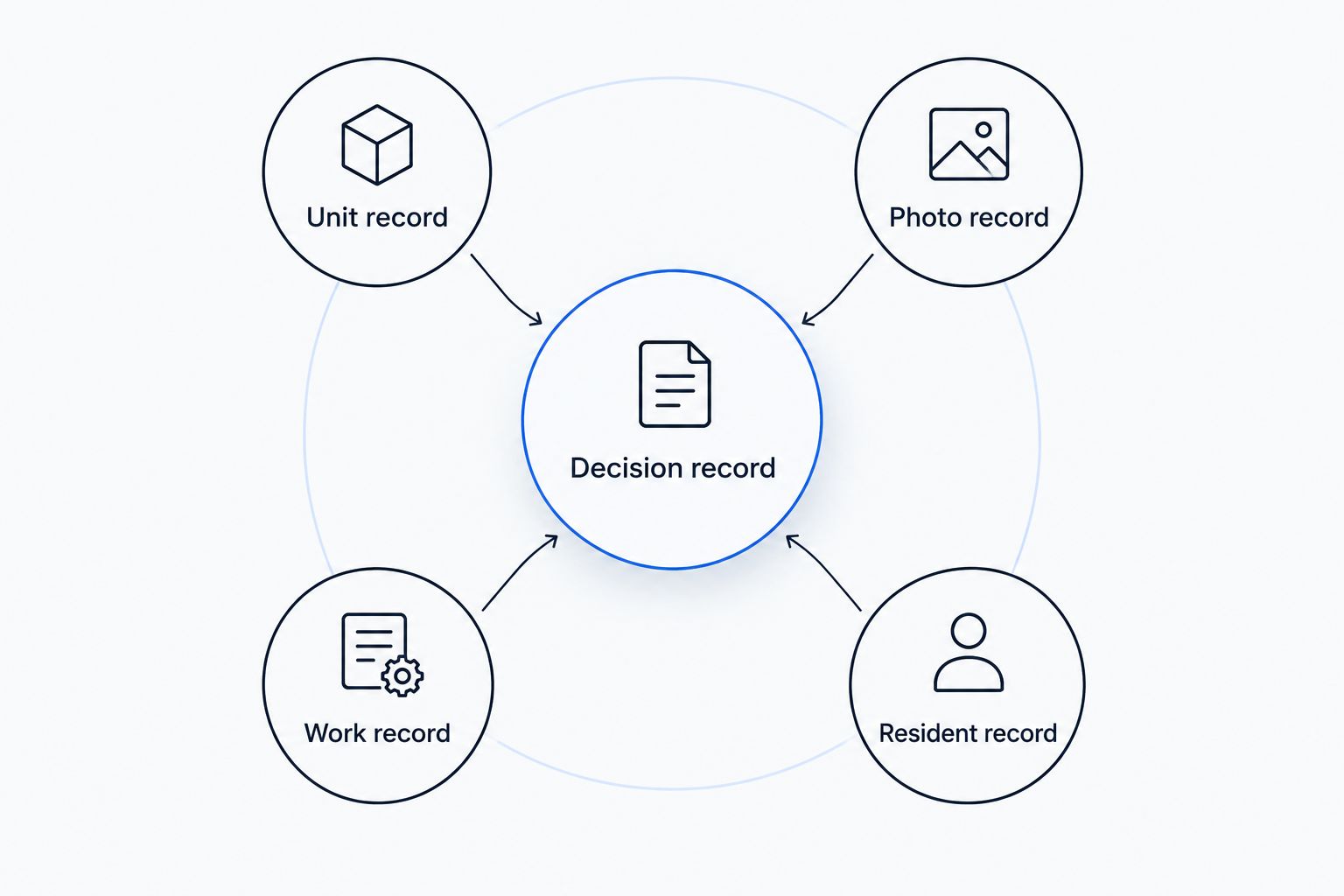
For your 2026 incident file, use the same room names across photographs, inspection notes, and work documents. Label a photograph by unit and location rather than leaving it as an unnamed attachment. Consistent records help residents, maintenance staff, contractors, and insurers discuss the same damage without confusing neighboring apartments.
- Unit record: Record the unit, room, date, and observed condition.
- Photo record: Photograph damage before removal when safe.
- Work record: Save scopes, authorizations, and repair documents.
- Resident record: Log access arrangements and reported concerns.
- Decision record: Identify who approved each significant action.
Coordinate access and communicate the next action
Use a written access schedule before relying on repeated calls between residents and contractors. Check lease terms and applicable entry requirements rather than assuming an emergency authorizes every later visit. Separate urgent access from scheduled inspections and follow-up work.
Tell residents what is known, what remains under assessment, and what happens next. Avoid declaring a unit safe or promising completion before qualified assessment supports the statement. Explain how residents should report new dripping, odors, or changes in ceiling condition without entering restricted areas.
- Name the person responsible for resident updates.
- Record access permission, keys, and any entry restrictions.
- Explain equipment access and restrictions without promising a completion date.
- Keep unaffected residents informed about shared service interruptions.
- Document requests involving belongings or temporary accommodation.
Verify drying before closing walls or replacing finishes
Start with the inspection notes and the proposed drying scope. Ask the restoration provider how moisture conditions will be checked, which materials need further evaluation, and what evidence will support completion. Dry-looking paint and a stopped leak are not proof that concealed building materials are dry.
Do not remove equipment solely because it is inconvenient or because the surface feels dry. Coordinate necessary adjustments with the people responsible for drying. Before covering affected areas, resolve whether the work record supports that decision and whether plumbing or other source repairs are complete.
- Ask which materials and locations are being monitored.
- Request documented moisture findings and completion criteria.
- Keep required equipment access clear during the work.
- Separate drying completion from cosmetic repair completion.
- Record unresolved conditions before approving reconstruction.
Reduce repeat losses with targeted detection
Begin with a manual review of the incident: where water started, how residents noticed it, and which shutoff or access problem delayed action. Update inspection routes and maintenance records around that actual failure. Buying sensors without assigning an alert recipient leaves the response process unfinished.
For a connected building, automated water damage alerts belong in the same response plan as shutoff locations, access instructions, and escalation contacts. Detection reports a condition; someone still needs to verify it and arrange safe action. Include that responsibility in your 2026 maintenance plan rather than treating a notification as a completed response.
- Inspect the failed component and related maintenance history.
- Update shutoff labels and access instructions after repairs.
- Place detection where a documented water risk justifies it.
- Assign an alert recipient and a backup contact.
- Test the notification route and record the result.
Compare apartment water damage response options
Choose each option for its role, not as an interchangeable substitute for the others. In-house staff can coordinate access and document conditions, while leak repair and restoration address different parts of the loss. The right combination depends on the source, affected materials, and hazards found during assessment.
| Option | Best for | Practical advantage | Key limitation |
|---|---|---|---|
| In-house maintenance coordination | Initial reporting, safe isolation within staff competence, and access management | Uses existing knowledge of the building | Does not replace qualified assessment of concealed moisture or contamination |
| Qualified plumbing repair | Stopping a failed plumbing source | Addresses the component causing the leak | Repairing the source does not dry affected walls, ceilings, or floors |
| Phoenix Restoration Group water damage restoration | Apartment owners needing emergency restoration in Carlisle, Des Moines, and Central Iowa | Provides 24/7 emergency service and communication from assessment through cleanup | Free inspections are limited to business hours, 8am to 4:30pm; no specific arrival time is stated |
| Building monitoring and alerts | Identifying water conditions between scheduled inspections | Connects detection to an assigned response process | Does not stop every source or replace cleanup and drying |
Assign the work by function: stop the source, assess the damage, manage access, and document completion. Do not assume one contractor's completed task means the entire apartment incident is resolved.
Common mistakes apartment owners make
Limiting the inspection to the resident who called
The first complaint often identifies where water became visible, not every affected space. Check the likely path through adjoining units and shared assemblies, and record which areas were assessed. Do not close the file merely because the reporting resident no longer sees dripping.
Treating tenant belongings as building materials
Keep the building scope separate from residents' personal property. Record reported damage without promising replacement, assigning fault, or determining insurance coverage. Direct residents to their insurer for policy-specific questions and document any agreed access arrangements for belongings.
Waiting for a coverage decision before addressing hazards
Safety decisions and insurance decisions answer different questions. Report the incident promptly, preserve evidence when safe, and follow policy requirements without leaving an immediate hazard unaddressed. Do not promise that a restoration invoice, temporary accommodation, or lost rent will be covered.
Approving finishes before reviewing the drying record
Repainting a ceiling hides a stain; it does not establish the condition of the assembly behind it. Ask for the relevant moisture findings before approving closure or finish work. Keep source repair, drying, and reconstruction as separate completion decisions in the 2026 property file.
FAQ
What should an apartment owner do first after discovering water damage?
Protect residents from immediate hazards and stop the source only when it is safe to do so. Arrange assessment of affected units and shared spaces, and document conditions without entering unsafe areas.
Can apartment maintenance staff handle water damage cleanup?
Maintenance staff can handle reporting, access coordination, and safe tasks within their training. Concealed moisture, contaminated water, electrical hazards, and damaged building materials require qualified assessment rather than a routine cleanup assumption.
Who handles water damage that spreads between apartments?
The apartment owner or designated property manager should coordinate the building response across affected units. Responsibility for particular losses depends on the facts, lease terms, applicable law, and insurance policies, so do not assign liability from the location of the first complaint.
Does fixing a leaking pipe finish the restoration?
No, fixing a leaking pipe stops that source but does not establish that affected materials are dry. Assess the water path and complete the necessary drying and repair work before closing the incident.
Does Phoenix Restoration Group provide emergency apartment restoration?
Phoenix Restoration Group provides 24/7 emergency water damage restoration in Carlisle, Des Moines, and Central Iowa. Free inspections for all services are available during business hours, 8am to 4:30pm, which is separate from emergency service availability.
Can tenants remain in an apartment during water damage restoration?
Occupancy requires a case-specific safety assessment. Electrical conditions, contamination, structural concerns, usable exits, and the work area all affect that decision; do not promise continued occupancy before those conditions are evaluated.
What records should apartment owners keep after water damage?
Keep dated photographs, unit-by-unit observations, source repair documents, work authorizations, resident communications, and drying documentation. Separate observed conditions from assumptions about fault or insurance coverage.
One last thing
Build the contact and shutoff record before the next leak, not during it. Add a building-specific access sheet to your 2026 response plan showing shutoff locations, restricted utility areas, authorized decision-makers, and resident communication responsibilities. A contractor cannot assess a locked neighboring unit until someone resolves access, even when the visible leak has stopped.