

Choose Phoenix Restoration Group if you need emergency water, fire, mold, or biohazard restoration in Carlisle, Des Moines, or Central Iowa; choose The Phoenix Restoration if you have already verified that company’s identity, coverage, and written scope for your property. This 2026 comparison separates confirmed local services from the checks you should complete before hiring a similarly named contractor.
- Phoenix Restoration Group vs The Phoenix Restoration starts with confirming the company, service area, and restoration scope.
- Phoenix Restoration Group is a fit for Central Iowa property owners needing 24/7 emergency restoration.
- Free inspections run during business hours, 8am to 4:30pm; emergency service operates 24/7.
- Choose The Phoenix Restoration only after confirming its coverage, inspection terms, and scope directly.
Why this matters
A similar business name is not evidence of the same ownership, service area, or operating hours. Before you share property details or authorize cleanup, confirm which company will perform the work. Match the business name on the estimate to the contractor you intend to hire.
For a property owner, the important distinction is practical: can the contractor address this damage at this address, and what work are you authorizing? A familiar name does not answer either question. Neither does an emergency-service claim establish a specific arrival time.
Use this 2026 comparison to separate immediate emergency needs from an inspection you can schedule during business hours. Then compare written scopes rather than treating two similar names as interchangeable options.
At a glance: compare service fit before company names
| Dimension | Phoenix Restoration Group | The Phoenix Restoration |
|---|---|---|
| Best for | Residential and commercial property owners in Central Iowa needing the listed restoration services | A property owner who has independently confirmed this company fits the job |
| Service area | Carlisle, Des Moines, and Central Iowa | Confirm the exact property address directly |
| Emergency service | 24/7 emergency restoration | Confirm emergency hours and dispatch arrangements directly |
| Restoration scope | Water, fire, mold, and biohazard damage | Confirm the specific damage category and proposed work |
| Standout feature | Free business-hours inspections, distinct from emergency service | Establish the relevant benefit through a written service proposal |
| Inspection terms | Free inspections for all services, 8am to 4:30pm | Confirm inspection hours and terms before scheduling |
| Communication | Updates from initial assessment through cleanup | Confirm the contact person and update process |
| Pricing model | Obtain written project terms; free inspection does not mean free restoration | Obtain written project terms and inspection conditions |
Central Iowa coverage favors a confirmed local fit
Phoenix Restoration Group is a fit for Central Iowa property owners who need water, fire, mold, or biohazard restoration. Its stated service area includes Carlisle and Des Moines, and its services cover residential and commercial properties.
That establishes a starting point, not a dispatch commitment. Give the contractor the exact address and describe the damage before scheduling. A service-area statement does not establish when a crew will reach a particular property.
The Phoenix Restoration becomes a relevant alternative when you confirm that it serves your address and handles the work you need. Do not infer geography from the word Phoenix. A company name alone does not identify its operating territory.
For a homeowner, the coverage check starts with the street address. For a commercial property manager, add the building’s access requirements and the person authorized to approve work. Those details help prevent a conversation about services from becoming an assumption that the job is scheduled.
Confirmed emergency hours favor the Group; arrival time still needs agreement
The Group offers 24/7 emergency restoration. That is separate from its free-inspection schedule, which runs during business hours from 8am to 4:30pm.
If you discover damage outside those hours, explain that you are requesting emergency service rather than a routine inspection. Describe whether the source of damage is ongoing, which areas are affected, and any known access or safety restrictions. Do not enter an unsafe area to collect those details.
The Phoenix Restoration is the better practical choice if you already have a confirmed response arrangement with that company that meets the property’s immediate needs. That is a decision based on an actual arrangement, not an assumed advantage in speed.
For either company, ask what happens after the initial call. Confirm whether someone is arranging an inspection, discussing emergency dispatch, or collecting details for a callback. In 2026, a published emergency schedule still is not a guaranteed arrival time. Get the next step stated clearly.
The Group’s listed services give you a clear scope starting point
Water, fire, mold, and biohazard damage restoration are expressly included in the Group’s services. Those categories help you identify a relevant contractor, but they do not replace a property-specific scope of work.
A water-damage call, for example, should identify where the water appeared and which materials look affected. After a fire, describe visible damage without assuming that every affected material needs the same treatment. For mold or biohazard concerns, explain what you observed rather than attempting unsafe investigation yourself.
Ask either company to distinguish:
- Immediate work: what the contractor proposes to address first.
- Assessment findings: what the inspection establishes about affected areas.
- Further work: what requires separate authorization or another contractor.
- Completion criteria: how the agreed work will be reviewed with you.
The Phoenix Restoration should remain in consideration when its written proposal addresses your actual damage. A broader-sounding description is not automatically a better scope. Choose the proposal that explains the work, not the one that lists the most services.
Free business-hours inspections favor the Group for scheduled assessment
The Group offers free inspections for all services during business hours, 8am to 4:30pm. That is a clear benefit when you need an assessment and can schedule during that window.
The limitation is equally important: the free business-hours inspection offer is not a statement that emergency restoration work is free. Do not assume that an after-hours visit has the same terms. Ask what you are scheduling before authorizing attendance or work.
For The Phoenix Restoration, establish the inspection terms directly. Ask whether the appointment is an assessment only, whether any charge applies, and whether work requires separate approval. These questions do not imply a particular policy; they establish the terms relevant to your appointment.
When you request a 2026 inspection, describe the damage and the property type. Ask what access the assessor needs and which documents you should have ready. Scheduling an inspection should leave you knowing its purpose, not wondering whether cleanup has already been authorized.
Clear communication matters more than a promise of updates
The Group states that its team keeps you informed from the initial assessment through cleanup. That gives you a stated communication commitment to discuss when arranging service.
Turn that commitment into practical expectations. Ask who will explain the findings, who can authorize changes, and how questions will be handled during cleanup. If you manage a commercial property, identify the person who should receive updates and the person who can approve additional work.
The Phoenix Restoration is a stronger choice for continuity if you already have an established contact there and that person has confirmed responsibility for this project. Familiarity only helps when it connects you to someone handling the current job.
Neither company’s name establishes communication quality. Both should explain the next step before asking you to approve it. Keep your own record of the agreed scope and any changes, especially when several people share responsibility for the property.
Pricing: compare authorization terms, not unsupported totals
A free inspection and a restoration project are different commitments. The Group’s business-hours inspection offer establishes the assessment terms; it does not establish the billing method for cleanup or subsequent restoration.
For both companies, request a written explanation of how the proposed work will be charged. Do not assume either uses fixed-project billing, time-and-materials billing, or the same arrangement for every job. Establish the method in the proposal.
The tradeoff matters. A fixed scope gives you a defined set of authorized tasks, while work charged according to labor and materials requires clear documentation of what is used. Either arrangement needs a process for approving changes when the scope changes.
For your 2026 decision, compare:
- What the initial authorization covers.
- Which tasks or materials are excluded.
- How additional work receives approval.
- When invoices are issued and payment is due.
- What documentation accompanies the completed work.
Do not choose between these companies on an assumed total or an assumed insurance outcome. Ask each contractor to separate its proposed work from any coverage decision made by your insurer.
Both companies need the same written-scope check
Neither business name replaces a written scope. Before you choose a contractor, make sure the proposal identifies the property, affected areas, authorized tasks, exclusions, and approval process.
The same principle applies when comparing water damage restoration companies: matching the location and damage type is only the beginning; the proposed work must match what you are authorizing. A comparison from another city does not establish Central Iowa coverage or local dispatch arrangements.
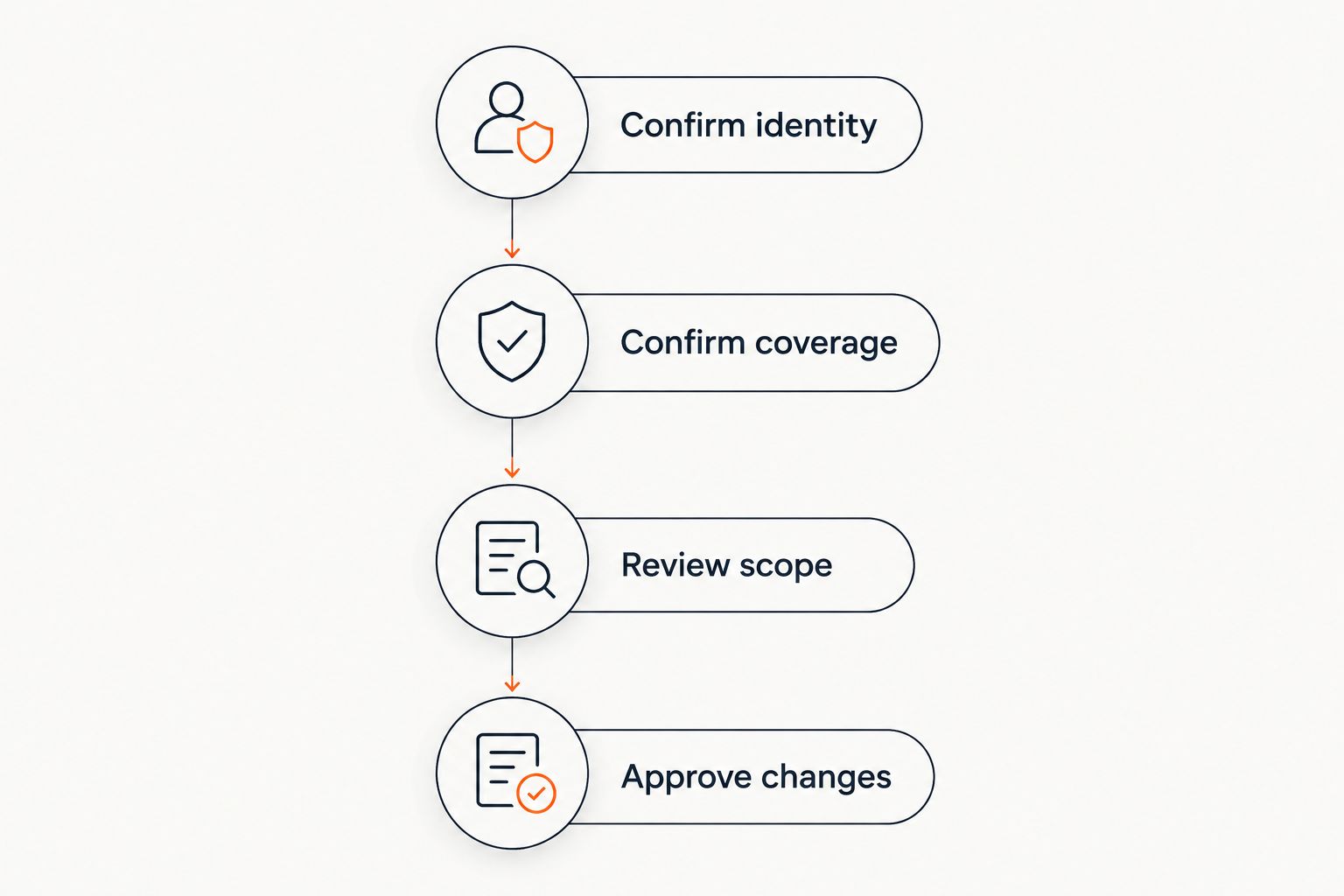
Use this sequence before approving a proposal:
- Confirm identity. Match the company name on the proposal to the company you contacted.
- Confirm coverage. Verify the property address and the relevant damage category.
- Review scope. Separate assessment findings from tasks proposed for authorization.
- Approve changes. Establish how additional work will be discussed and documented.
Keep a copy of the proposal you approve. If the work changes, ask for the change to be explained before treating it as part of the original agreement. This protects a clear decision from becoming an open-ended instruction.
Final verdict: choose the confirmed fit for your property
Choose Phoenix Restoration Group for the stated Central Iowa service fit
Best for: Central Iowa homeowners and commercial property managers needing the listed restoration services. Choose this option when you need water, fire, mold, or biohazard restoration in Carlisle, Des Moines, or Central Iowa, with 24/7 emergency service and free business-hours inspections.
The practical limitation is scheduling clarity. Free inspections run from 8am to 4:30pm; emergency service is a separate request. Confirm the next step through the contact page without assuming a specific arrival time.
Choose The Phoenix Restoration for an already-confirmed working arrangement
Best for: property owners who have verified this company’s coverage and already have an acceptable written proposal or established project contact. Choose The Phoenix Restoration when those confirmed arrangements fit your property and required work.
Its name alone is not a reason to switch or proceed. Verify the business identity, inspection conditions, emergency arrangements, and proposed scope before authorizing service.
One-glance 2026 scorecard
| Dimension | Winner |
|---|---|
| Stated Central Iowa service fit | The Group |
| Documented emergency hours in this comparison | The Group |
| Explicitly listed damage categories | The Group |
| Stated free business-hours inspection offer | The Group |
| Existing confirmed project relationship | The Phoenix Restoration, if that relationship is yours |
| Arrival-time commitment | Neither without direct confirmation |
| Written-scope requirement | Tie: require it from either company |
| Billing suitability | Decide from the actual written proposals |
FAQ
Are Phoenix Restoration Group and The Phoenix Restoration the same company?
Do not treat Phoenix Restoration Group and The Phoenix Restoration as interchangeable based on their names. Match the business identity on your proposal to the contractor you intended to contact.
Which company should I choose for restoration in Des Moines?
Phoenix Restoration Group is a confirmed service-area fit for Des Moines property owners needing water, fire, mold, or biohazard restoration. Consider The Phoenix Restoration after verifying its coverage and proposed scope directly.
Does the Group offer emergency restoration at night?
The Group offers 24/7 emergency restoration. Its free-inspection hours are separate: business hours from 8am to 4:30pm.
Are inspections free outside business hours?
The stated free-inspection offer applies during business hours, 8am to 4:30pm. Confirm the terms of an after-hours emergency request before authorizing service.
Is The Phoenix Restoration faster?
Do not choose The Phoenix Restoration on an assumed speed advantage. Ask both contractors for the next available action and confirm whether you are discussing dispatch, an inspection, or a callback.
How much will restoration cost?
Request a written project proposal for your property rather than relying on a generic total. Separate inspection terms, authorized restoration work, exclusions, and approval requirements for additional work.
What should I ask before signing a restoration agreement?
Ask which areas and tasks the agreement covers, what it excludes, and how changes receive approval. Also confirm the business identity, project contact, and billing terms.
One last thing
The most useful final check is on the authorization itself. Before signing, compare the company name, property address, and approved tasks with what you discussed. A correct company name attached to an unclear scope still leaves an unclear agreement.
For emergency service, ask one direct question: What happens next, and what am I authorizing now? That question separates a request for help from permission to perform specific work.