
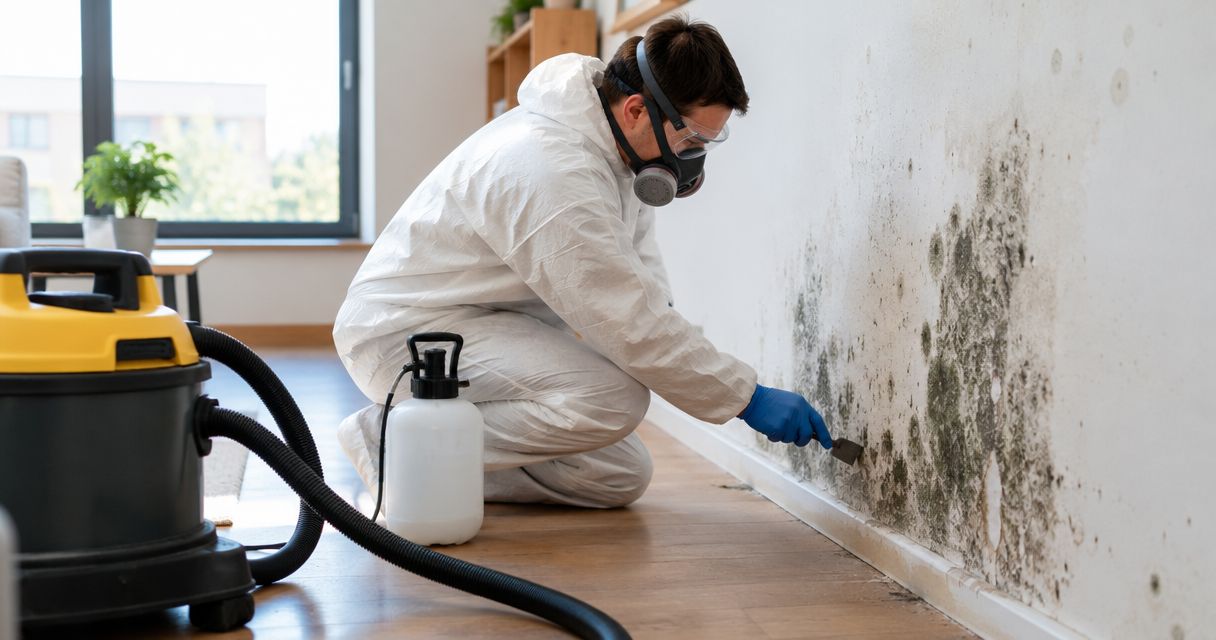
Mold removal for landlords is the process of correcting moisture problems and removing mold-contaminated material to restore usable rental space. Unlike an owner-occupied cleanup, rental-property work also requires tenant communication, access coordination, documentation, and a clear decision about whether affected rooms can remain in use.
- Mold removal for landlords starts with moisture control, not painting over stains.
- Phoenix Restoration Group is best for landlords seeking local mold restoration in Carlisle, Des Moines, and Central Iowa.
- Keep tenant reports, repair records, and remediation documentation together for each rental property.
- Free inspections run during business hours, 8am to 4:30pm; emergency restoration is available 24/7.
Why mold removal matters for landlords
Your job is to resolve the building problem and manage the occupied space, not simply erase a visible stain. A leaking pipe, damp basement, or ineffective exhaust fan can leave the same room vulnerable after surface cleaning. Treat the moisture source and contaminated materials as connected work.
Rental properties add a coordination problem. Tenants report what they can see or smell, but landlords arrange access, authorize repairs, and retain the records. A clear report-to-closeout process prevents a maintenance request from disappearing between a tenant, property manager, plumber, and restoration contractor.
For your 2026 maintenance plan, separate routine inspection scheduling from emergency response. Phoenix Restoration Group provides mold restoration across Carlisle, Des Moines, and Central Iowa, with free inspections during business hours, 8am to 4:30pm. Its 24/7 emergency restoration service is separate from those inspection hours.
Review the available restoration services before deciding which work belongs in a routine maintenance visit and which requires restoration assessment. Do not wait for a scheduled inspection when an active leak or other emergency requires attention.
Build a landlord mold-removal workflow for 2026
Record the tenant’s report before assigning work
Start with a written maintenance entry. Email, a tenant portal, or a simple property log is enough to capture the report without buying a separate system. Record the tenant’s observations rather than converting an odor or stain into a confirmed diagnosis.
Ask where the problem appears, whether water is still entering, and whether it returns after cleaning. A photograph helps establish location, but it does not reveal moisture behind a wall or determine whether a space is safe to occupy.
Give the tenant a named contact and the next action. Do not substitute a vague promise to investigate for an access request or inspection arrangement. Keep health concerns in the record without trying to diagnose their cause.
- Record the reporting date, unit, room, and exact location.
- Save photographs provided by the tenant.
- Ask about leaks, condensation, odors, and previous occurrences.
- Note reported health concerns without making medical conclusions.
- Confirm the next communication and access arrangements in writing.
Stop the moisture source before cosmetic repairs
Begin with safe observation and existing maintenance records. Check whether the affected area lines up with plumbing, a roof opening, exterior drainage, or a room that stays damp. Do not ask tenants or maintenance staff to open suspect wall cavities just to investigate.
Drying and source repair belong ahead of painting or replacing finishes. The U.S. Environmental Protection Agency recommends drying water-damaged materials within 24 to 48 hours to help prevent mold growth. That prevention guidance is not a guarantee that every material remains salvageable within that period.
Where water contacts electrical equipment or ceilings appear unstable, keep people away and arrange qualified help. The repair plan should identify who stops the water and who assesses the resulting damage, rather than assuming one contractor handles both.
- Identify whether water entry is active or historical.
- Arrange appropriate plumbing, roofing, or drainage repairs.
- Restrict access around electrical or structural hazards.
- Document the source repair separately from surface cleanup.
- Delay finish work until moisture conditions have been checked.
Match the cleanup scope to the actual damage
For a limited surface issue, begin by measuring the visible affected area and checking the material involved. EPA guidance says areas smaller than about 10 square feet can usually be handled by the property owner, subject to its cleanup precautions and exceptions. Size alone does not establish that a rental-property cleanup is suitable for maintenance staff.
Hidden damage, sewage exposure, recurring growth, suspected ventilation contamination, and occupant concerns change the decision. Do not expand a small cleaning task into demolition without reassessing the scope.
Phoenix Restoration Group mold restoration is an option for local landlords who want an assessment rather than guessing at the extent of damage. Phoenix Restoration Group offers free inspections during business hours, 8am to 4:30pm; ask what the assessment and proposed cleanup cover before authorizing work.
- Measure visible affected surfaces without disturbing them.
- Identify hard surfaces versus porous materials.
- Flag previous leaks and repeated growth.
- Disclose sewage involvement or suspected ventilation contamination.
- Request a written scope with exclusions and repair responsibilities.
Coordinate tenant access and affected-room use
Start with the lease, your written access procedures, and applicable landlord-tenant requirements. Give the tenant a clear description of where work is proposed and how access will be arranged. Do not present a general maintenance notice as a legal determination about occupancy.
Ask the cleanup contractor to explain work-area boundaries and whether proposed work affects access to essential rooms. Keep occupancy decisions separate from unsupported assurances that mold is harmless or that a home is safe because the visible patch is small.
If temporary relocation, rent adjustments, or a dispute arises, obtain advice specific to the property and jurisdiction. Your 2026 tenant communication template should record decisions and responsibilities without promising an outcome before the assessment.
- Confirm authorized entry arrangements and contact details.
- Describe affected rooms and proposed work boundaries.
- Ask whether essential facilities will remain accessible.
- Record arrangements for pets and tenant belongings.
- Put changes to the work schedule in writing.
Separate cleanup from rebuilding
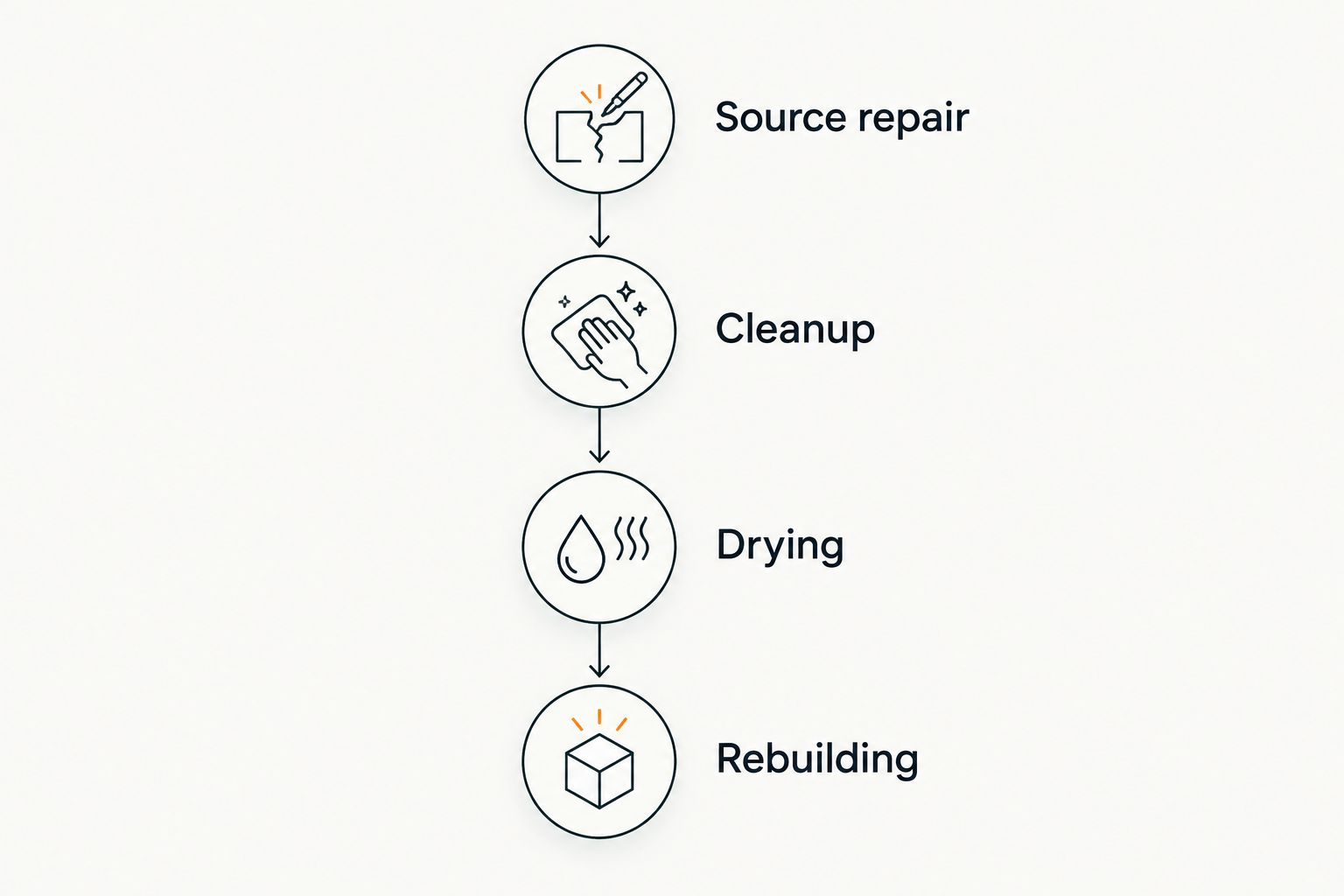
Start by dividing the scope into source repair, contaminated-material cleanup, drying, and finish restoration. A single line reading “remove mold” does not tell you whether damaged drywall, cavity inspection, or rebuilding is included.
EPA guidance distinguishes cleaning hard surfaces from handling porous materials that can be difficult or impossible to clean fully. Replacing damaged material is not the same as hiding it behind new paint. Ask how materials will be assessed and how the contractor will limit the spread of dust during removal.
Use the sequence below when reviewing responsibilities. Each stage needs an owner, even when different trades perform the work. Do not close a wall simply because the demolition portion is finished.
- Source repair: Correct the water-entry or condensation problem.
- Cleanup: Address affected surfaces and materials within the agreed scope.
- Drying: Check remaining materials before covering them.
- Rebuilding: Replace finishes after cleanup and drying are complete.
Verify completion before closing the maintenance request
Start with a walk-through against the agreed scope, not just a photograph of a freshly painted wall. Check that the moisture source has been addressed and that the contractor has documented the work performed. Ask how drying was evaluated and what conditions remain unresolved.
A completion review should also address tenant concerns raised at the beginning. An unexplained odor or a continuing leak needs follow-up rather than a closed ticket. Do not use the absence of visible growth as your only evidence that the underlying problem has ended.
For your 2026 property records, retain the original report alongside the final documentation. Keep any testing reports in context: a sample result does not replace source repair, appropriate cleanup, or evaluation of remaining moisture.
- Compare completed work with the authorized scope.
- Save source-repair records and cleanup photographs.
- Request the contractor’s drying and completion documentation.
- Record unresolved conditions and assigned follow-up work.
- Notify the tenant what was completed and what remains scheduled.
Monitor the room after normal use resumes
Use a simple follow-up log before adding another inspection system. Ask whether the odor, dampness, or staining returns after the tenant resumes normal use of the room. Follow-up matters especially when the original cause involved showers, laundry, seasonal condensation, or intermittent water entry.
EPA moisture-control guidance recommends keeping indoor relative humidity below 60%, ideally between 30% and 50%. A humidity reading is a useful observation, not proof that every wall cavity or building material is dry.
Keep maintenance instructions specific to the property. Explain how to report a leak and operate existing ventilation, but do not assume tenant behavior caused a building defect. Repeated growth calls for another look at the source, not another coat of stain-blocking paint.
- Confirm exhaust fans operate and discharge appropriately.
- Check repaired areas for renewed staining or dampness.
- Record humidity observations where persistent dampness is reported.
- Reopen the maintenance request if symptoms return.
- Add recurring moisture locations to routine property inspections.
Compare mold-cleanup options for rental properties
Choose by damage scope and required expertise, not by the smallest visible patch. A maintenance team, restoration contractor, and independent assessor serve different purposes. The table separates those roles so you can ask for the right work without assuming every provider includes every service.
| Option | Best for | Main advantage | Key limitation |
|---|---|---|---|
| Landlord-directed surface cleanup | Limited, accessible surface issues that fit EPA guidance and staff capabilities | Direct control over a narrow maintenance task | Does not resolve hidden contamination or establish that larger damage is absent |
| Qualified maintenance trade | A defined plumbing, roofing, drainage, or ventilation defect | Repairs the identified moisture source | Source repair alone does not remove affected materials or complete restoration |
| Phoenix Restoration Group mold restoration | Landlords seeking local restoration assessment in Carlisle, Des Moines, and Central Iowa | Free business-hours inspections and 24/7 emergency restoration | Free inspections are limited to 8am to 4:30pm; confirm the proposed scope |
| Independent environmental assessment | Situations needing a separately defined assessment or verification role | Separates evaluation from cleanup contracting | Does not itself repair leaks, remove materials, or rebuild rooms |
Before selecting a provider, ask who documents completion and whether any proposed testing answers a specific question. A longer report is not a substitute for an actionable scope.
Arrange a mold inspection
Free inspections during business hours, 8am to 4:30pm. Emergency restoration is available 24/7.
Common mistakes landlords make
Treating visible staining as the whole problem
A surface stain does not define the full cleanup scope. Repeated growth beside a window or under a sink deserves a moisture investigation. Record what is visible, then determine whether the source and adjacent materials need assessment before approving cosmetic work.
Ordering testing before defining the question
EPA guidance says sampling is usually unnecessary when visible mold growth is present. Ask what a proposed test will establish and how the result changes the work. Do not delay an active leak repair while waiting for a mold name or species result.
Assuming tenants caused the moisture
Condensation, blocked ventilation, plumbing leaks, and building-envelope defects require different responses. Document observations before assigning responsibility. Keep tenant instructions practical, and evaluate building conditions rather than treating every damp bathroom as a housekeeping issue.
Closing the file when the wall looks clean
Fresh finishes do not document source repair or drying. Keep invoices, photographs, scope changes, and completion records together. If a tenant reports the same odor or stain again, reopen the issue and compare it with the original findings.
Confusing emergency service with inspection hours
24/7 emergency restoration and free business-hours inspections are different arrangements. State which service you are requesting and describe the active conditions. Do not promise tenants a specific arrival time that the provider has not confirmed.
FAQ
What should a landlord do first when a tenant reports mold?
Record the report and determine whether water is still entering the property. Arrange safe access, address active hazards, and assess the affected materials before authorizing cosmetic repairs.
Can a landlord remove a small mold patch without a contractor?
EPA guidance says property owners can usually handle areas smaller than about 10 square feet, subject to its precautions and exceptions. Rental-property decisions must also account for the material, contamination source, hidden damage, staff capabilities, and occupant concerns.
Do landlords need mold testing before cleanup?
Mold testing is usually unnecessary when visible growth is present, according to EPA guidance. If testing is proposed, ask what question it answers and how the result will change the cleanup or completion decision.
Does painting over mold solve the problem?
No, painting over mold does not correct the moisture source or replace appropriate cleanup. Complete source repair, material assessment, cleanup, and drying before restoring finishes.
Does a tenant have to leave during mold removal?
Occupancy decisions depend on the affected space, work methods, access restrictions, and applicable requirements. Ask the contractor to explain work-area controls and obtain property-specific legal advice when relocation or tenancy rights are involved.
Are free mold inspections available outside business hours?
Phoenix Restoration Group offers free inspections during business hours, 8am to 4:30pm. Its 24/7 emergency restoration service is separate; describe the conditions when requesting help.
What records should landlords keep after mold cleanup?
Keep the tenant report, photographs, access communications, source-repair records, cleanup scope, and completion documentation. Record unresolved conditions and follow-up responsibilities before closing the maintenance request.
One last thing
Put the moisture-source repair next to the cleanup invoice in your 2026 property file. If the same room develops another stain, those two records help you distinguish an unresolved source from a separate event. A useful closeout record explains what caused the damage, what was removed or cleaned, and what still needs monitoring.