

For real estate agents, mold remediation is the process of addressing mold contamination and its moisture source so buyers and sellers can make informed property decisions. This 2026 guide explains how to coordinate assessment, cleanup, documentation, and transaction communication without treating a cosmetic repair as proof that the problem is resolved.
- Mold remediation for real estate agents requires moisture correction, a defined cleanup scope, and documented completion.
- Phoenix Restoration Group serves agents coordinating mold remediation in Carlisle, Des Moines, and Central Iowa.
- Keep seller disclosures, contractor findings, and buyer requests separate; each serves a different purpose.
- Emergency restoration is available 24/7; free inspections run during business hours, 8am to 4:30pm.
Why mold remediation matters for real estate agents
A mold concern creates two separate problems: a property condition that needs attention and a transaction that needs reliable information. You cannot solve the second by minimizing the first. Buyers need to understand what was found, what caused it, and what work remains.
Your role is coordination, not diagnosis. Record observable conditions, arrange qualified help, and communicate findings without claiming that a room is safe or that a stain proves a particular mold species. For local assessment and cleanup coordination, review the available restoration services.
For your 2026 transaction checklist, separate the inspection deadline, repair agreement, and actual cleanup schedule. A contract date does not establish how long a building needs to dry or what concealed damage requires. Get the contractor's scope before asking the parties to agree on completion terms.
How to coordinate mold remediation during a property transaction
1. Record the concern without diagnosing it
Start with a dated observation log and photographs taken from an accessible, safe location. Describe the room, surface, visible staining, odor, and any known leak history. Write what you observed, not what you assume caused it.
Ask the seller for existing inspection reports, repair invoices, and information about previous water entry. Those records help the assessor understand the property, but an old repair invoice does not establish the condition today.
Do not disturb suspect material to get a better photograph. Lifting carpet, opening walls, or brushing a surface can spread contamination and change the condition before assessment. Leave destructive investigation to the people responsible for the work.
- Photograph the affected area and nearby water staining.
- Record the date, room, and accessible surfaces.
- Request previous leak and repair records.
- Note who reported the concern and what they observed.
- Avoid labeling suspected growth by species or toxicity.
2. Separate immediate hazards from transaction questions
Before discussing credits or closing dates, establish whether the property has an active leak, standing water, electrical exposure, or another immediate hazard. If there is an immediate threat to life or safety, use emergency services rather than waiting for a property assessment.
From a safe location, ask the owner whether the water source has been stopped. Do not enter standing water, touch wet electrical equipment, or enter an area with suspected structural instability. Keep buyers and showing attendees away from affected work areas.
Use the initial call to explain conditions accurately. An active water problem requires a different conversation from a dry stain discovered in an inspection report. Neither description should become an unsupported promise about cleanup duration.
- Ask whether water is still entering the building.
- Identify affected rooms without entering unsafe areas.
- Keep showings out of cleanup and restricted areas.
- Report known electrical or structural concerns.
- Separate emergency action from the repair negotiation.
3. Arrange an assessment before negotiating the remedy
You can organize the initial information yourself using photographs, existing reports, and the seller's repair history. You still need a qualified assessment to define the work. A photo exchange alone is not a reliable basis for specifying concealed-material removal.
Phoenix Restoration Group fits real estate agents coordinating mold remediation in Carlisle, Des Moines, and Central Iowa. The company provides mold restoration and keeps clients informed from the initial assessment through cleanup.
Phoenix Restoration Group offers free inspections for all services during business hours, 8am to 4:30pm, and provides 24/7 emergency restoration. These are different arrangements: round-the-clock emergency service does not mean a free inspection is available at every hour. Confirm scheduling directly without promising an arrival time.
For a 2026 listing or purchase, send the relevant inspection excerpt with the property address and access instructions. Ask what the assessment covers and whether specialist testing or additional investigation is needed.
- Share the inspection report and dated photographs.
- Identify the owner or authorized decision-maker.
- Confirm access, occupancy, and restricted spaces.
- Ask how the moisture source will be evaluated.
- Request written findings and proposed next steps.
4. Obtain a scope that addresses moisture and affected materials
A useful scope explains the affected areas, planned cleanup, handling of damaged materials, and responsibility for correcting the moisture source. It also identifies work that remains outside the proposal, such as rebuilding or a separate plumbing repair.
Do not equate surface treatment with complete remediation. Mold control depends on moisture control, and cleaning visible growth does not repair a leaking pipe, recurring seepage, or another unresolved source.
Ask the contractor how discoveries behind finishes will be handled. A scope based on accessible areas should not become a fixed promise about concealed conditions. Establish who approves changes and how those changes reach the parties before work expands.
- Identify the rooms and materials included in cleanup.
- Define the moisture problem and repair responsibility.
- Clarify containment and work-area access arrangements.
- Separate remediation from reconstruction.
- Establish written approval for scope changes.
5. Align the repair agreement with the actual work
Translate the technical scope into transaction questions without rewriting the contractor's methods yourself. The parties need to know who authorizes the work, who receives the records, and what completion documentation the agreement requires.
Use your broker and, where appropriate, legal counsel for contract language and disclosure questions. Requirements depend on the property and transaction. A contractor's cleanup proposal is not legal advice, and a seller's disclosure is not a technical assessment.
For your 2026 repair addendum, avoid vague phrases such as mold taken care of. Identify the agreed scope and required records. If someone requests independent post-remediation evaluation, define that requirement before work begins rather than introducing it at the final walkthrough.
- Name the party authorized to approve work.
- Identify the agreed scope by document and date.
- Clarify responsibility for related moisture repairs.
- Specify which completion records must be delivered.
- Address schedule changes through the transaction process.
6. Track cleanup through defined communication points
Create a simple update log instead of forwarding disconnected messages. Record the current work stage, newly discovered conditions, outstanding decisions, and the next update. Share technical findings accurately without turning tentative observations into final conclusions.
Choose a primary contact for owner approvals. The buyer's agent, seller's agent, owner, and contractor should not issue conflicting instructions. Keep authorization separate from information sharing so everyone understands who can approve additional work.
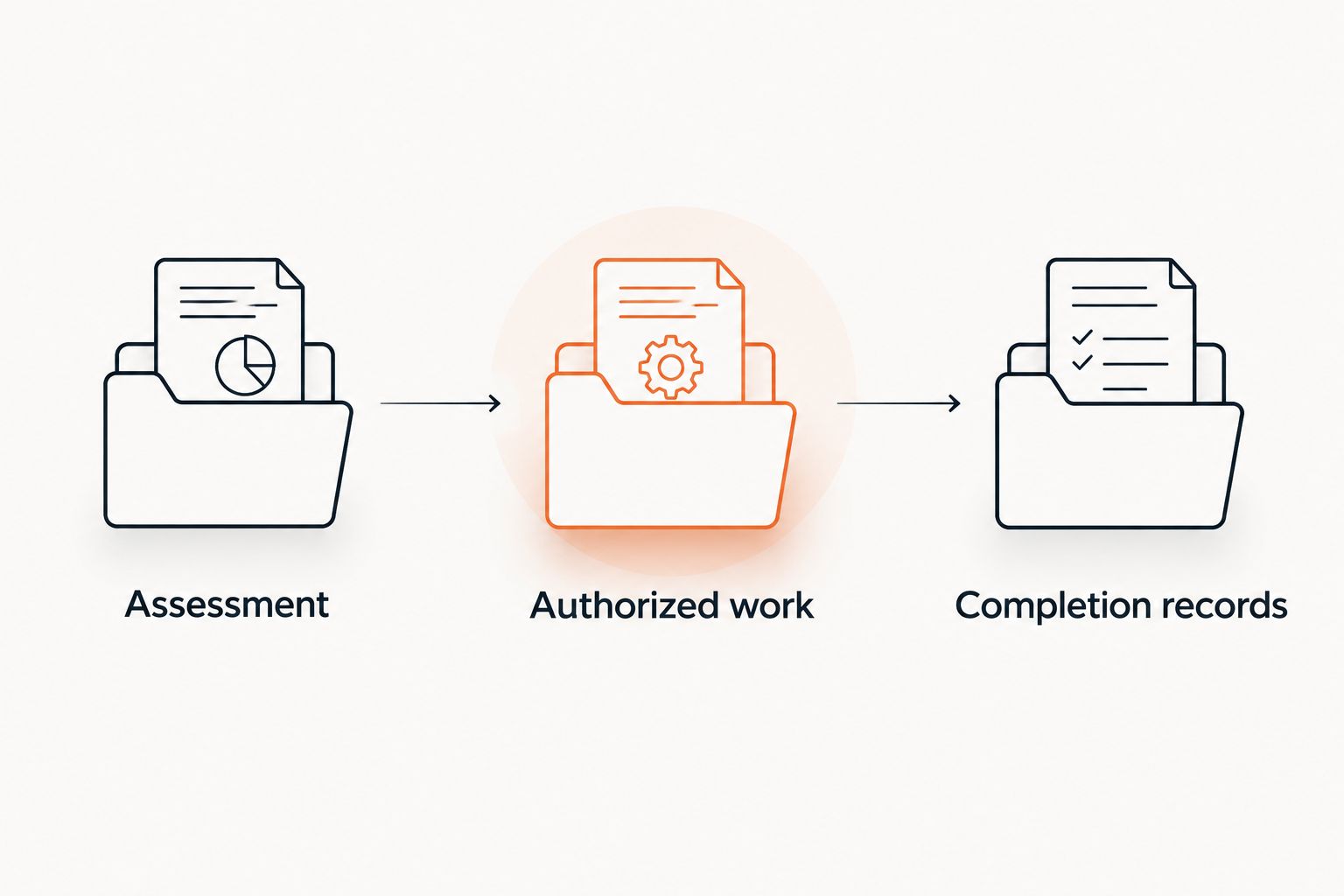
Use 3 clearly labeled files: assessment, authorized work, and completion records. This structure is an organizational recommendation, not a legal retention standard. Apply your brokerage's recordkeeping requirements to the final file.
- Confirm who approves changes and receives updates.
- Record new findings with their source and date.
- Track unresolved decisions separately from completed tasks.
- Share revised schedules without promising closing dates.
- Keep the agreed scope beside each change authorization.
7. Review completion records before making representations
Match the completion records to the agreed scope. Ask which areas were addressed, whether the moisture correction is complete, and whether any reconstruction or follow-up remains. An invoice establishes a billed service, not every fact a buyer needs about the property's condition.
Avoid describing a property as mold-free based on appearance, odor, or a single document. Mold spores occur naturally, and a transaction needs a defined account of the work rather than an absolute promise about the entire building.
For the 2026 closing file, distinguish contractor completion from any separately required verification. If the agreement requires an independent evaluation, confirm that it was performed and review the actual report rather than substituting the cleanup contractor's invoice.
- Compare completed work with the authorized scope.
- Obtain available photographs and written completion records.
- Confirm the status of moisture-source repairs.
- Identify unfinished reconstruction or follow-up tasks.
- Deliver records through the agreed transaction channel.
Compare assessment and remediation options
Choose the option that answers the unresolved question. A property inspection, specialist assessment, cleanup service, and independent evaluation serve different purposes. Do not ask one document to stand in for all of them.
| Option | Best for | Main benefit | Key limitation |
|---|---|---|---|
| Owner records and visual observations | Preparing an initial issue summary | Organizes known history and visible conditions | Does not establish concealed conditions or a cleanup scope |
| General property inspection | Identifying transaction concerns | Places moisture observations within the broader property review | Inspection scope varies; do not assume mold assessment or testing is included |
| Phoenix Restoration Group mold restoration | Coordinating local assessment and cleanup in Central Iowa | Provides mold restoration with communication from assessment through cleanup | Free inspections are limited to business hours; no specific arrival time is promised |
| Independent mold assessment or testing | Answering a defined question beyond the cleanup scope | Provides a separate evaluation when the transaction requires one | Testing alone does not remove mold or correct moisture |
| Independent post-remediation evaluation | Checking agreed completion criteria | Separates verification from the cleanup work | Does not replace source repair or guarantee future conditions |
Ask each provider what its deliverable includes. If a report, sampling plan, or separate verification is necessary, establish that requirement before selecting the service. More documents do not automatically mean better information; each document should answer a specific question.
Arrange a mold inspection
Free inspections during business hours, 8am to 4:30pm. Emergency restoration is available 24/7.
Common mistakes real estate agents make
Treating paint or odor removal as completion
Fresh paint and a less noticeable odor do not establish that affected materials or moisture sources were addressed. Ask for the work scope and completion records before describing the concern as resolved. Keep cosmetic improvements separate from remediation in your communications.
Negotiating a repair credit before understanding the scope
A credit changes the transaction terms; it does not define or complete the work. Get enough assessment information for the parties to understand what they are accepting. Use the appropriate transaction advisers to document responsibility for unresolved conditions.
Ordering testing without identifying the question
A test should answer a defined question, not simply create another attachment. Ask the assessor what sampling would establish, how results would be interpreted, and whether it changes the cleanup decision. Visible contamination and an unresolved leak still require attention regardless of paperwork.
Promising that remediation will preserve the closing date
You do not control concealed conditions, owner approvals, or repair completion. Communicate the contractor's current schedule with its stated dependencies. When the schedule changes, address the transaction deadlines directly rather than pressuring the cleanup team to certify unfinished work.
Giving every recipient the same incomplete update
An owner needs approval requests, while the transaction parties need accurate status and agreed records. A fragment of a contractor's message can lose its context when forwarded. Identify the source, date, and unresolved question each time you communicate a material finding.
FAQ
What should a real estate agent do when an inspection finds possible mold?
Record the finding, notify the appropriate parties, and arrange an assessment before negotiating a specific remedy. Describe observable conditions without diagnosing mold species or making health claims.
Should the seller remediate mold before listing the property?
Address known moisture and mold concerns before making representations about the property's condition. The appropriate work depends on assessment findings, while disclosure and transaction decisions should follow your broker's and legal adviser's guidance.
Is mold testing always required before remediation?
Mold testing is not automatically required for every cleanup situation. Ask a qualified assessor whether sampling answers a specific unresolved question or fulfills a transaction requirement; testing does not replace moisture correction or cleanup.
Does a free mold inspection include laboratory testing?
Do not assume laboratory testing is included in an inspection. Phoenix Restoration Group offers free inspections during business hours, 8am to 4:30pm; confirm the inspection scope and any separate testing arrangements directly.
Can a buyer accept a credit instead of completed mold remediation?
A credit is a transaction decision, not evidence that remediation is complete. The parties should understand the assessment findings and document responsibility for unresolved work with their transaction advisers.
What records should an agent request after mold remediation?
Request the agreed scope, approved changes, completion records, and documentation of moisture-source repairs. If the agreement calls for independent post-remediation evaluation, obtain that separate report as well.
Is emergency restoration available outside business hours?
Emergency restoration is available 24/7. Free inspections are offered during business hours, 8am to 4:30pm, and should not be confused with round-the-clock emergency service.
One last thing
Ask what stopped the moisture, not just what removed the visible mold. A cleanup record and a source-repair record answer different questions. Before you describe the issue as addressed, make sure your file explains both the remediation work and the status of the condition that allowed growth.