
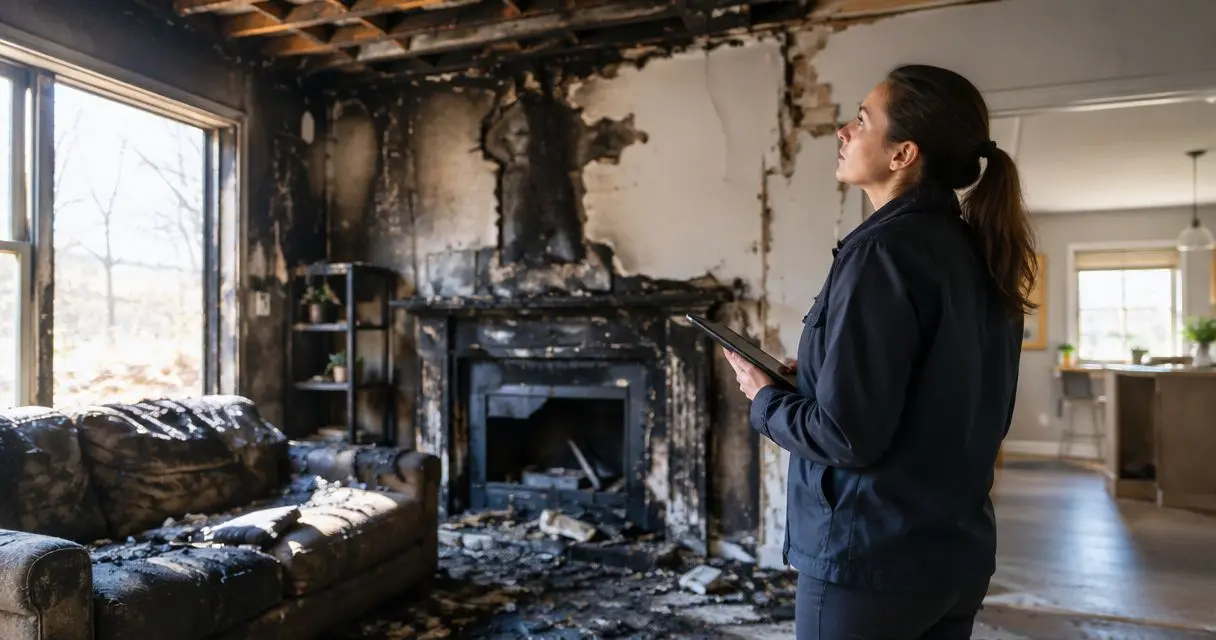
Do not live in a fire-damaged house until the fire department permits reentry and the relevant professionals address structural, electrical, gas, smoke, and water hazards. Permission to retrieve belongings is not permission to sleep there. A room that looks untouched can still have smoke residue or share damaged utilities with the burned area.
- Is it safe to live in a house after a fire? Only after hazards and occupancy restrictions are resolved.
- Phoenix Restoration Group provides 24/7 emergency fire damage restoration in Carlisle, Des Moines, and Central Iowa.
- Brief supervised entry, overnight occupancy, and completed fire damage restoration are different decisions.
- Free inspections run during business hours, 8am to 4:30pm, not around the clock.
Is it safe to live in a house after a fire?
A fire being extinguished does not make the house safe to occupy. Before returning home, separate permission to enter from confirmation that the building is suitable for everyday use. Follow any restrictions issued by the fire department, building department, or utility provider.
Fire damage restoration addresses cleanup and damaged materials. It does not replace a structural evaluation, electrical inspection, or required occupancy approval. You can review the available restoration services while arranging the checks relevant to your property.
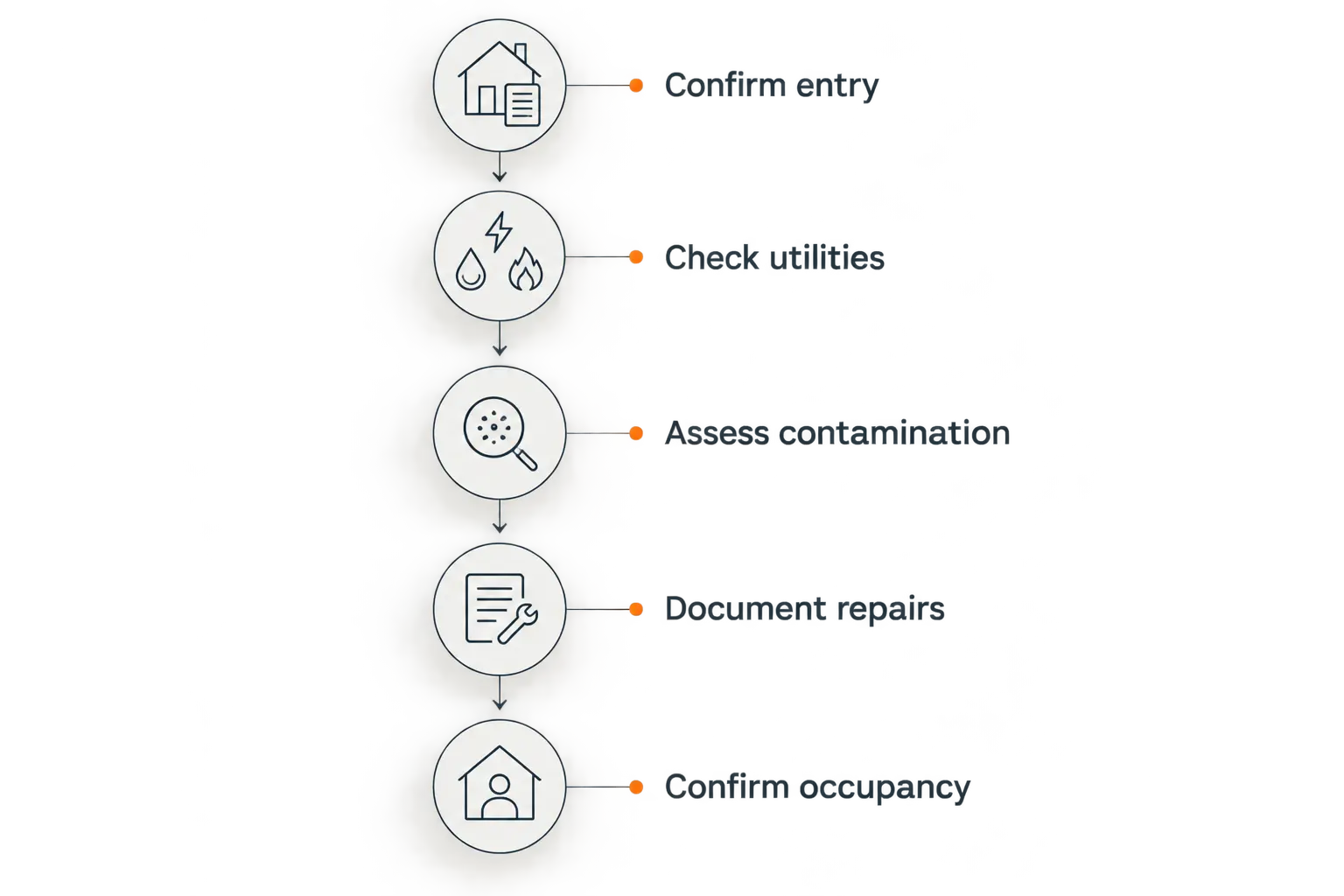
Use these steps to organize the return-home decision:
- Confirm entry. Ask the fire department whether anyone can enter, which areas remain restricted, and whether entry requires supervision. Do not cross a barrier or enter a posted unsafe building. If you need medication, identification, or pet supplies, tell responders rather than entering without permission.
- Check utilities. Have damaged electrical systems, gas equipment, and other affected utilities evaluated by the appropriate qualified professional or utility provider. Do not restore power or gas yourself after a fire-related shutoff. A working light in one room does not establish that the rest of the wiring is safe.
- Assess contamination. Arrange an assessment of smoke residue, soot, affected contents, firefighting water, and the heating and cooling system. Describe where smoke traveled, not just where flames were visible. The assessment should identify what needs cleaning, drying, removal, or further specialist evaluation.
- Document repairs. Keep inspection findings, photographs taken from safe locations, repair records, and any restrictions together. Ask which items prevent occupancy and which can be completed while an approved living area remains in use. Do not assume that a cleanup invoice answers those questions.
- Confirm occupancy. Ask the responsible local authority what approval applies to your property and confirm that required inspections are complete. Resolve any remaining restrictions before moving back. Obtain clear instructions about access, utilities, and unfinished work rather than relying on a general statement that the fire is out.
These are separate checks, not interchangeable approvals. Keep the findings together so each person involved can see what remains unresolved.
Why this matters
The practical safety rule in 2026 is to assess the building, not judge it by appearance. Flames, heat, smoke, and firefighting water affect different materials and systems, so visible damage alone does not define the work required.
A bedroom can look clean while smoke has reached nearby surfaces or the ventilation system. A kitchen fire can also leave wet materials beyond the burned cabinets. Base your housing decision on identified hazards and completed checks, not the room that looks least damaged.
Brief entry versus living in the house
Retrieving a wallet and spending the night create different exposure and safety concerns. Ask specifically about the activity you intend to do; a general question about whether you can go inside leaves too much unclear.
| Option | Best for | Practical benefit | Limitation |
|---|---|---|---|
| Authorized brief entry | Retrieving essential belongings | Allows limited access under stated restrictions | Does not establish that sleeping or cooking is safe |
| Temporary accommodation | Households with unresolved hazards or occupancy restrictions | Keeps residents away from damaged areas during assessment and work | Requires arrangements for housing, pets, and daily needs |
| Return to an approved living area | Properties where the relevant authority permits partial occupancy | Allows use of an area specifically accepted for occupancy | Requires safe utilities, access, and separation from remaining work |
| Full return home | Properties with occupancy-blocking hazards resolved | Restores normal household use | Requires more than a visual check or odor treatment |
Do not decide that an upstairs bedroom is separate enough from a downstairs fire. Shared wiring, stairs, air circulation, and access routes all matter. Partial occupancy needs an explicit assessment, not a closed interior door.
Why safety after a house fire varies
No fixed waiting period makes every burned house safe. These conditions determine which assessments and repairs are necessary:
- Structural damage: Heat and fire can damage framing, floors, roof components, and connections. Sagging, cracks, or unstable materials require restricted access and professional evaluation.
- Electrical and gas damage: Heat, flames, and water can affect wiring, appliances, outlets, and fuel systems. Utility restoration is a separate decision from surface cleanup.
- Smoke and soot distribution: Residue can extend beyond the room where the fire started. Visible soot and persistent odor require attention, but neither provides a complete measurement of exposure.
- Water and moisture: Firefighting water can soak flooring, wall cavities, insulation, and contents. Dry-looking surfaces do not establish that concealed materials are dry.
- Materials disturbed during work: Demolition can expose additional hazards, including asbestos-containing materials or lead-based paint where present. Testing and handling requirements depend on the materials and applicable rules.
- Resident health needs: Children, older adults, and people with respiratory conditions need particular consideration. Tell the assessment team about these needs before planning a return.
The size of the burned area is only part of the decision. A localized fire still requires attention to the systems and pathways connected to that area.
What should a 2026 return-home checklist include?
Use a written checklist to turn general reassurance into specific answers. For each unresolved issue, record who evaluates it, what work is required, and what confirms completion.
Structure and safe access
Confirm that you have an approved route into and out of the occupied area. Stairs, floors, ceilings, and exits must be considered, including areas you pass through rather than sleep in.
Do not move debris to test a floor or climb into a damaged attic. Report visible changes from a safe location and leave evaluation to the appropriate professional.
Utilities and essential facilities
Ask whether electricity, gas, heating, plumbing, and sanitation are suitable for use. A utility provider reconnecting service does not necessarily mean every affected appliance or building component has been repaired.
Do not run a generator, grill, or fuel-burning outdoor heater inside the house or garage. If safe utilities are unavailable, arrange accommodation rather than improvising indoor heat or cooking.
Smoke residue and affected belongings
Ask which surfaces and contents need cleaning, removal, or disposal. Do not bring visibly contaminated bedding, clothing, or soft furnishings into your temporary sleeping space without guidance on handling them.
Cleaning the room and handling its contents are connected tasks. Returning untreated belongings to a cleaned area can reintroduce residue and odor.
Moisture and unfinished work
Ask how wet materials were evaluated and what evidence supports the drying decision. Covering damp materials with new finishes conceals the problem rather than resolving it.
Also establish where demolition, cleaning, or other disruptive work will continue. A livable room is not enough if the only exit passes through a restricted work area.
Can you sleep in a house after a small kitchen fire?
Do not sleep in the house based only on the fire being small. Confirm that responders allow occupancy and that smoke, utilities, and affected materials have been evaluated as needed.
Tell the assessor whether smoke reached bedrooms, whether the ventilation system was operating, and whether water was used. These details help define the assessment; they do not replace it.
If anyone develops breathing difficulty, chest pain, confusion, or other severe symptoms after smoke exposure, leave the affected environment and seek emergency medical help. Call 911 for an immediate emergency.
Does opening windows make a fire-damaged house safe?
Opening windows does not establish that a fire-damaged house is safe. Ventilation does not repair wiring, stabilize framing, remove embedded soot, or dry concealed wet materials.
Do not turn on the heating or cooling system simply to clear the smell. Ask whether the system needs inspection or cleaning before operation, particularly when smoke or soot entered it.
How long should you stay out after a house fire?
Stay out until the restrictions relevant to entry and occupancy are lifted and the hazards preventing your return are addressed. There is no universal number of nights that substitutes for those checks.
For a fire in 2026, build your accommodation plan around inspection and repair milestones rather than a guessed move-back date. Ask for updates when the scope changes, particularly if opening walls reveals additional damage.
Who should you contact about returning home?
Start with the fire department's entry instructions and the local authority's occupancy requirements. Then arrange the structural, utility, and restoration assessments those conditions require. Each professional should explain the scope of the decision they are qualified to make.
Phoenix Restoration Group provides 24/7 emergency fire damage restoration for Central Iowa property owners. The company serves Carlisle, Des Moines, and Central Iowa, with communication from the initial assessment through cleanup.
Phoenix Restoration Group offers free inspections for all services during business hours, 8am to 4:30pm. Emergency restoration is available 24 hours a day, 7 days a week; the business-hours inspection offer is separate. A restoration inspection does not replace required utility checks or local occupancy approval.
Use the contact page to explain what happened, whether entry is permitted, which utilities are disconnected, and whether anyone is still living in the property. Do not reenter to collect those details if access is restricted.
What should you ask your insurer?
Ask whether your policy covers additional living expenses and what documentation the insurer requires. Coverage, limits, and approval depend on your policy and claim; do not assume that every hotel, meal, or rental expense qualifies.
Keep receipts and maintain a record of housing-related communications. Explain why the property cannot be occupied, using inspection findings or official restrictions where available. Insurance approval is a payment decision, not a building-safety clearance.
FAQ
Is it safe to live in a house after a fire in 2026 if the damage looks minor?
Minor-looking damage does not establish that a house is safe to live in after a fire. Follow entry restrictions and resolve the structural, utility, smoke, and moisture concerns relevant to the property before returning.
Can I stay in a room that has no visible soot?
A room without visible soot is not automatically safe to occupy. Shared utilities, smoke movement, access routes, and nearby restoration work still need consideration.
Does the fire department saying I can enter mean I can sleep there?
Permission to enter does not necessarily include permission to sleep in the house. Ask specifically about overnight occupancy and any further inspections or restrictions.
Does a working carbon monoxide alarm prove the house is safe?
A working carbon monoxide alarm does not prove that a fire-damaged house is safe. It does not assess structural stability, electrical damage, soot contamination, or all airborne hazards.
Can I move back when the smoke smell disappears?
The disappearance of smoke odor does not establish that the house is safe. Confirm that required cleanup, repairs, utility checks, and occupancy approvals are complete.
Should children or someone with asthma return during fire cleanup?
Do not bring children or someone with asthma into an area that remains unsafe or restricted during fire cleanup. Discuss individual health needs with their healthcare professional and the team assessing the property.
Does Phoenix Restoration Group offer emergency fire restoration overnight?
Phoenix Restoration Group offers 24/7 emergency fire damage restoration in Carlisle, Des Moines, and Central Iowa. Free inspections for all services are available during business hours, 8am to 4:30pm; that offer is separate from emergency availability.
One last thing
Before your 2026 return-home decision, ask one precise question: What still prevents this property from being occupied, and who confirms that each issue is resolved? Record the answers rather than treating a finished cleaning task as permission to move back.
A house can look better before it is ready for everyday use. Keep temporary accommodation in place until the people responsible for the remaining safety decisions have answered that question.