
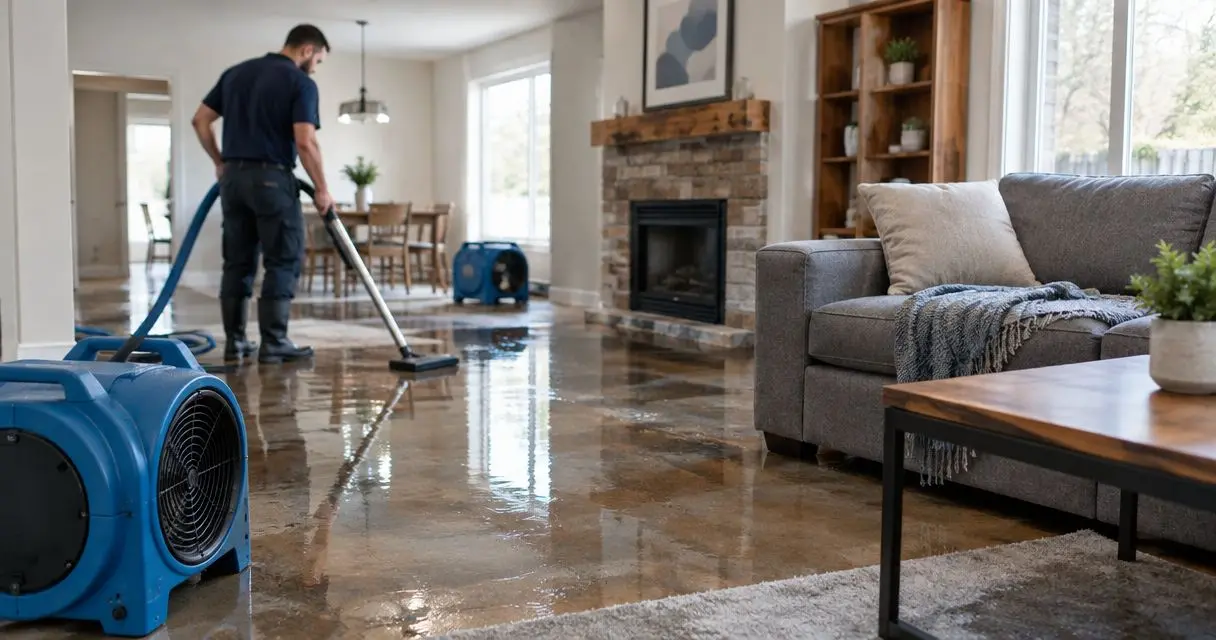
Water damage restoration cost in Des Moines depends on the affected materials, the extent of moisture, and the cleanup and repair work your property needs. A property-specific assessment is the basis for a usable estimate in 2026. Check whether the estimate includes only water removal and drying or also damaged-material removal, cleanup, and repairs.
- Water damage restoration cost Des Moines estimates need a defined scope, not just a total.
- Phoenix Restoration Group provides water damage restoration with 24/7 emergency service in Des Moines and Central Iowa.
- Free inspections are available during business hours, 8am to 4:30pm; emergency service is available 24/7.
- Compare extraction, drying, material removal, and repairs separately before authorizing work.
Why this matters
A restoration estimate is useful only when you understand what it covers. Removing visible water, drying building materials, and repairing damaged finishes are different tasks. A total that leaves out necessary work does not tell you what it will take to restore the affected space.
Phoenix Restoration Group provides water damage restoration for residential and commercial property owners in Carlisle, Des Moines, and Central Iowa. The company offers 24/7 emergency restoration and free inspections for all services during business hours, 8am to 4:30pm. Those are separate arrangements: an emergency service request is not the same as a business-hours free inspection.
How much does water damage restoration cost in Des Moines?
The useful answer is a written estimate tied to the inspected damage, not a general figure applied to every property. For a 2026 project, ask the contractor to identify the affected spaces, proposed work, exclusions, and conditions that require further approval.
Use this breakdown to check what a water damage estimate actually includes. These are scope categories to discuss, not a statement that every property needs every task.
| Scope category | What to clarify | What it does not establish |
|---|---|---|
| Assessment | Which spaces and materials were inspected | The condition of concealed areas that were not inspected |
| Water extraction | Where standing water needs removal | Whether surrounding materials are dry |
| Structural drying | Which wet materials need drying and monitoring | Whether damaged finishes need replacement |
| Material removal | Which materials cannot remain in place | Whether replacement work is included |
| Cleaning | Which affected surfaces or contents need attention | Whether separate contamination treatment is necessary |
| Repairs | Which finishes or building components need restoration | Whether the source of the water has been corrected |
Ask the estimator to separate confirmed work from work that depends on further inspection. For example, visible damage to a wall does not establish the condition of everything behind it. The estimate should explain how newly discovered damage will be documented and authorized.
Do not treat water extraction as a complete restoration scope. Extraction addresses standing water; the remaining work depends on moisture, material condition, and contamination.
Water extraction: confirm what happens after removal
Water extraction addresses standing water in the affected space. Its advantage is a clear, immediate task. Its limitation is equally important: removing water from a floor does not establish that walls, flooring assemblies, or other materials are dry.
Ask which areas require extraction and what assessment follows it. If an estimate stops at water removal, ask whether drying is excluded or whether the inspection found no need for it. Get that distinction in writing rather than assuming the contractor's use of the word cleanup includes everything.
Keep the water source separate from the cleanup discussion. A restoration scope should not be read as confirmation that plumbing, drainage, roofing, or another source problem has been repaired. Ask who is responsible for that work.
Structural drying: define the materials and the finish point
Structural drying addresses moisture in affected building materials. Its benefit is that the work focuses on material condition rather than appearance alone. Its limitation is that drying does not repair every type of physical damage or make every material suitable to keep.
For a 2026 estimate, ask which materials the contractor intends to dry, how moisture will be checked, and what will determine when drying ends. Also ask what happens if a material cannot remain in place.
You do not need to select equipment yourself. You need an explanation of the proposed drying area, how progress will be assessed, and how changes to the original plan will be communicated. Avoid treating an equipment list as a substitute for an explanation of the work.
Material removal and repairs: check the boundary
Removing damaged material and replacing it are separate parts of a project. Removal can provide access to affected areas or address material that cannot remain. The trade-off is disruption: an opened wall or removed floor still needs a defined repair plan.
Ask whether the estimate ends after removal, cleaning, and drying or continues through repairs. Confirm who handles replacement materials, finish work, and any separate trades. Do not assume the person discussing cleanup has included all reconstruction work in the same document.
For a rental or commercial property, identify who can approve those decisions before work starts. The owner, property manager, tenant, and insurer can have different roles. A clear approval contact prevents instructions from becoming fragmented.
Why water damage restoration scope varies
The visible wet area is only part of the assessment. These factors explain why two Des Moines properties can need different work even when both owners describe the problem as water damage.
- Affected area. Identify the rooms, levels, and building components involved. A room name alone does not describe the full wet area.
- Water source. Tell the contractor whether the event involved a supply line, appliance, outdoor flooding, or sewage. The source informs cleanup precautions and assessment.
- Material condition. Carpet, wallboard, wood, insulation, and other materials require evaluation before a decision to dry or remove them.
- Concealed moisture. Water beneath flooring or behind finishes requires assessment beyond a visible surface check.
- Contamination. Sewage, mold, or other contamination changes the cleanup discussion. Do not assume ordinary water removal covers it.
- Access and repair scope. Occupied rooms, stored contents, and concealed building assemblies affect how work can be carried out and what must be restored afterward.
These are inspection questions, not reasons to accept unexplained additions. Ask the contractor to connect each proposed task to an observed condition or a clearly stated inspection need.
How do I get a useful restoration estimate?
Start with safety, then move to a written scope. Do not enter standing water when electrical hazards or contamination are possible. If you cannot safely reach the affected area, describe the situation without entering it.
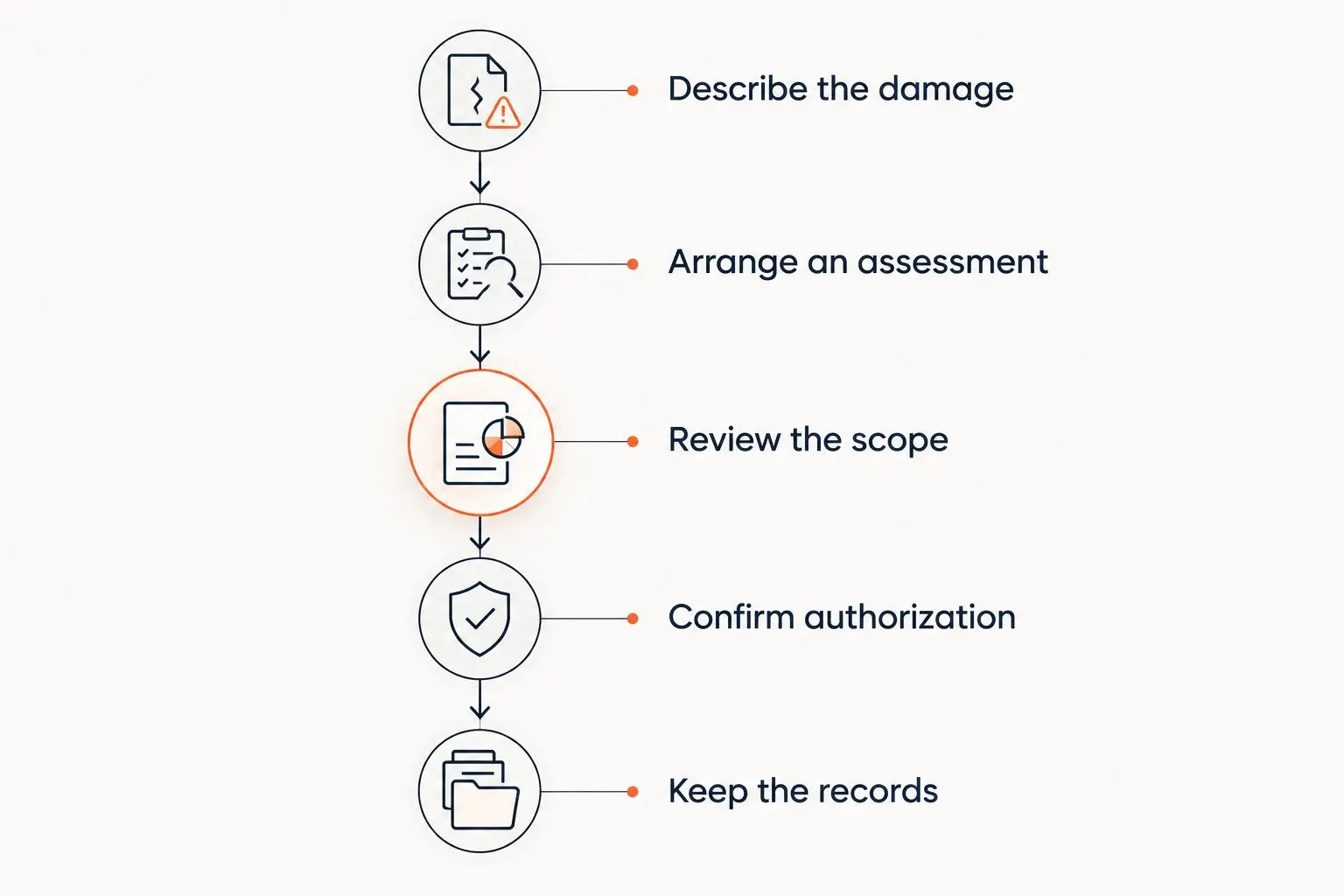
- Describe the damage. Explain where you found water, what appears wet, and whether water is still entering. Distinguish what you observed from what you suspect.
- Arrange an assessment. Explain whether you need emergency assistance or an inspection of an existing problem. Ask which areas the assessment will cover.
- Review the scope. Check extraction, drying, removal, cleaning, and repairs. Ask which tasks are included and which are excluded.
- Confirm authorization. Identify who approves the initial work and how the contractor will request approval for changes.
- Keep the records. Retain photographs taken from a safe location, written estimates, approvals, invoices, and communications about the project.
Prepare questions before the assessment so the conversation does not stop at the visible damage. Ask what remains uncertain, whether additional access is needed, and who will explain any changes. A useful estimate makes those boundaries understandable.
Should I request emergency service or a business-hours inspection?
Phoenix Restoration Group is suited to Des Moines property owners who need 24/7 emergency water damage restoration. Free inspections for all services are available during business hours, 8am to 4:30pm. Do not interpret those inspection hours as the company's emergency service hours.
Emergency service and a scheduled inspection serve different needs. Emergency assistance addresses an urgent damage situation; a business-hours inspection provides an opportunity to assess damage and discuss the work. Neither the service description nor the inspection offer establishes a specific arrival time.
When requesting help in 2026, describe whether water is still entering, whether standing water remains, and whether the affected area is safe to access. Ask what the next step is and what requires authorization. The company keeps property owners informed from the initial assessment through cleanup.
Request a water damage assessment
24/7 emergency restoration. Free inspections for all services during business hours, 8am to 4:30pm.
How do I compare water damage estimates fairly?
Compare the same work before comparing totals. A water-removal estimate and an estimate that also includes drying, removal, and repairs are not equivalent proposals.
Put the estimates side by side and mark each task as included, excluded, or unresolved. Then ask about differences in the affected area, materials to be retained, proposed removal, and repair responsibility. An unexplained gap deserves a question, not an assumption about which contractor is right.
For a 2026 project, also compare how changes will be handled. Ask whether the contractor will describe newly discovered conditions, explain the proposed response, and seek authorization before expanding the agreed scope. Clear communication matters when inspection cannot establish every concealed condition at the outset.
Will insurance cover my water damage restoration?
Insurance coverage depends on your policy and the circumstances of the loss. A restoration estimate describes proposed work; it is not a coverage decision.
Contact your insurer to report the event and ask about documentation, applicable policy terms, and any inspection requirements. Keep the damage description factual. Describe where the water was found and what you observed without guessing about concealed damage or the cause.
Before authorizing work, understand your agreement with the contractor and ask your insurer what remains unresolved. Do not assume that an inspection, emergency service request, or submitted estimate means the insurer has approved every task.
FAQ
How do I find out my water damage restoration cost in Des Moines?
Request a property-specific assessment and a written estimate identifying the affected areas, proposed work, and exclusions. Compare extraction, drying, removal, cleaning, and repairs separately rather than relying on a total alone.
Does Phoenix Restoration Group offer free water damage inspections?
Phoenix Restoration Group offers free inspections for all services during business hours, 8am to 4:30pm. Its 24/7 emergency restoration service is separate from those inspection hours.
Can I get emergency water damage help outside business hours?
Phoenix Restoration Group provides 24/7 emergency water damage restoration in Carlisle, Des Moines, and Central Iowa. Describe the situation when requesting service and ask about the next step; no specific arrival time is stated.
Does water extraction mean my property is dry?
Water extraction does not establish that affected building materials are dry. Ask what moisture assessment and drying work are needed after standing water is removed.
Does a restoration estimate include rebuilding damaged walls and floors?
A restoration estimate includes repairs only when its written scope says so. Confirm whether replacement materials, finish work, and separate trades are included or require another agreement.
Should I wait for insurance approval before reporting water damage?
Report the damage to your insurer promptly and ask about its documentation and inspection requirements. Address immediate safety concerns, and understand the work authorization before agreeing to restoration services.
What should I ask before signing a water damage estimate?
Ask which areas and tasks are included, what is excluded, and how changes require approval. Also confirm who handles the water source, drying decisions, material removal, and repairs.
One last thing
Before you approve a 2026 restoration estimate, ask: What condition will the property be in when this scope is complete? That question exposes the difference between standing water removed, materials dried, damaged finishes removed, and repairs finished.
Write the answer into the agreement. A clear completion point gives you a practical way to check the work and understand what still needs a separate decision.