
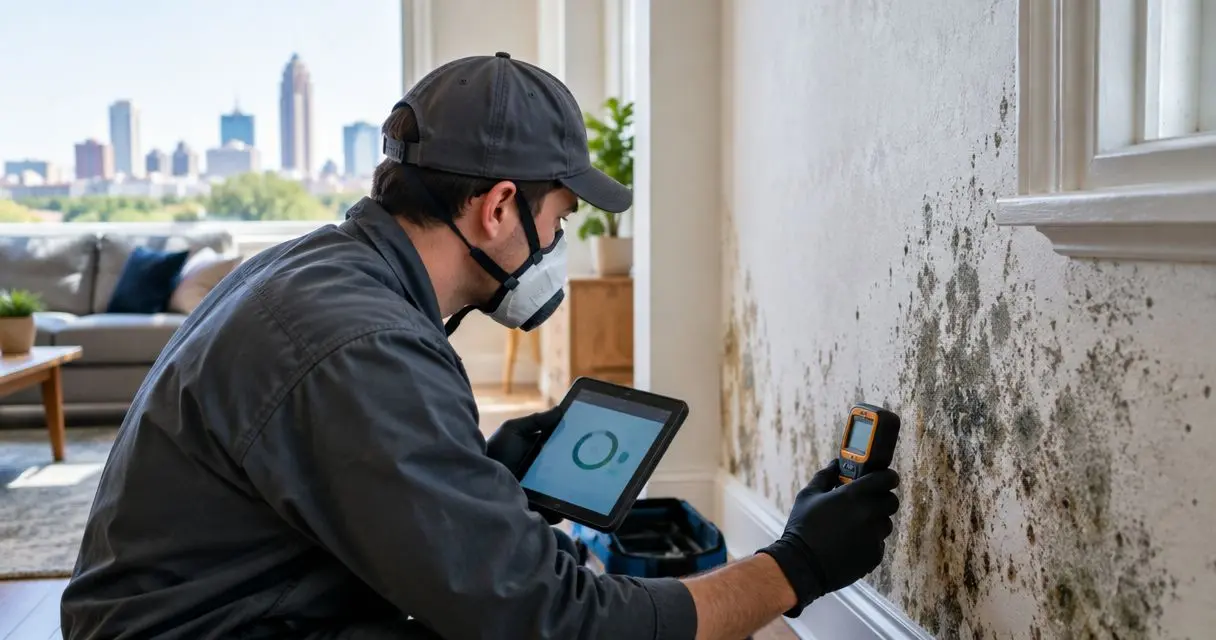
Mold removal cost in Des Moines depends on the affected materials, the extent of contamination, and the work required to address moisture and clean the property. For a 2026 estimate, get a property-specific inspection and written scope rather than budgeting from a general average. Confirm whether the proposal includes moisture correction, material removal, cleanup, and repairs, because those are different parts of the job.
- Mold removal Des Moines cost estimates should identify affected materials, moisture conditions, cleanup work, and exclusions.
- Phoenix Restoration Group offers mold restoration and free inspections during business hours, 8am to 4:30pm.
- Emergency restoration is available 24/7; business-hours free inspections are a separate service arrangement.
- Compare written scopes before totals, and confirm who handles moisture correction and repairs.
Why this matters
A mold removal estimate is only useful when you know what work it covers. Cleaning an accessible surface is different from removing affected wall materials, investigating concealed moisture, and restoring finishes afterward. A total without those details leaves you unable to compare proposals fairly.
Start by identifying whether you need mold assessment alone or help with related water damage. Phoenix Restoration Group lists water and mold restoration among its restoration services, serving residential and commercial property owners in Carlisle, Des Moines, and Central Iowa.
Your immediate goal is a clear next step: document what you can see without disturbing it, report any active leak, and arrange an assessment. Do not open a wall simply to give a contractor a better photograph.
How much does mold removal cost in Des Moines?
The cost is specific to the property and the agreed remediation scope. For your 2026 estimate, ask the contractor to separate the work needed to address mold from related plumbing, drying, demolition, and reconstruction. Do not assume that a proposal described as mold removal includes every repair needed to finish the room.
Use this breakdown to check what the estimate actually covers:
| Scope component | What the written estimate should explain | What to clarify |
|---|---|---|
| Assessment | Areas inspected and conditions observed | Whether concealed areas remain unassessed |
| Moisture investigation | Known or suspected source of dampness | Who is responsible for correcting it |
| Work-area protection | Measures planned to limit the spread of debris | How occupied areas will be separated |
| Material treatment | Materials to clean and materials to remove | How decisions change if concealed damage is found |
| Debris handling | Removal and disposal of affected materials | Whether this work is included |
| Completion review | How the agreed work will be checked | Whether any separate evaluation is planned |
| Repairs | Replacement of removed materials and finishes | Whether reconstruction requires another proposal |
Ask for plain descriptions, not just broad labels. An estimate that says mold treatment should explain which surfaces receive treatment and whether affected materials stay in place or are removed.
Also ask what triggers a change in scope. Concealed damage is not something a contractor can fully describe before gaining access, but the proposal can explain how additional findings will be documented and authorized.
Why mold removal costs vary
Mold remediation involves both the affected materials and the moisture conditions that support growth. These factors determine the work to discuss during an inspection:
- Affected area: Ask which rooms, surfaces, and connected spaces are included. A visible patch does not establish the full extent of concealed damage.
- Material type: Nonporous surfaces and porous building materials require different decisions about cleaning or removal.
- Access: Work behind cabinets, inside wall cavities, or in confined spaces requires a different plan from work on an exposed surface.
- Moisture source: A repaired leak and an ongoing water problem create different project requirements. Assign responsibility for stopping the water.
- Protection and cleanup: Ask how the work area will be separated and how debris will leave the property.
- Restoration afterward: Removing affected materials does not replace drywall, insulation, flooring, or finishes. Confirm the repair boundary.
These are scope questions, not reasons to accept unexplained charges. Every proposed task should connect to an observed condition or a clearly described project requirement.
For a 2026 project, keep the inspection findings, estimate, photographs, and any approved changes together. That record helps you track what was identified, what you authorized, and what remains unfinished.
How do I get an estimate I can actually compare?
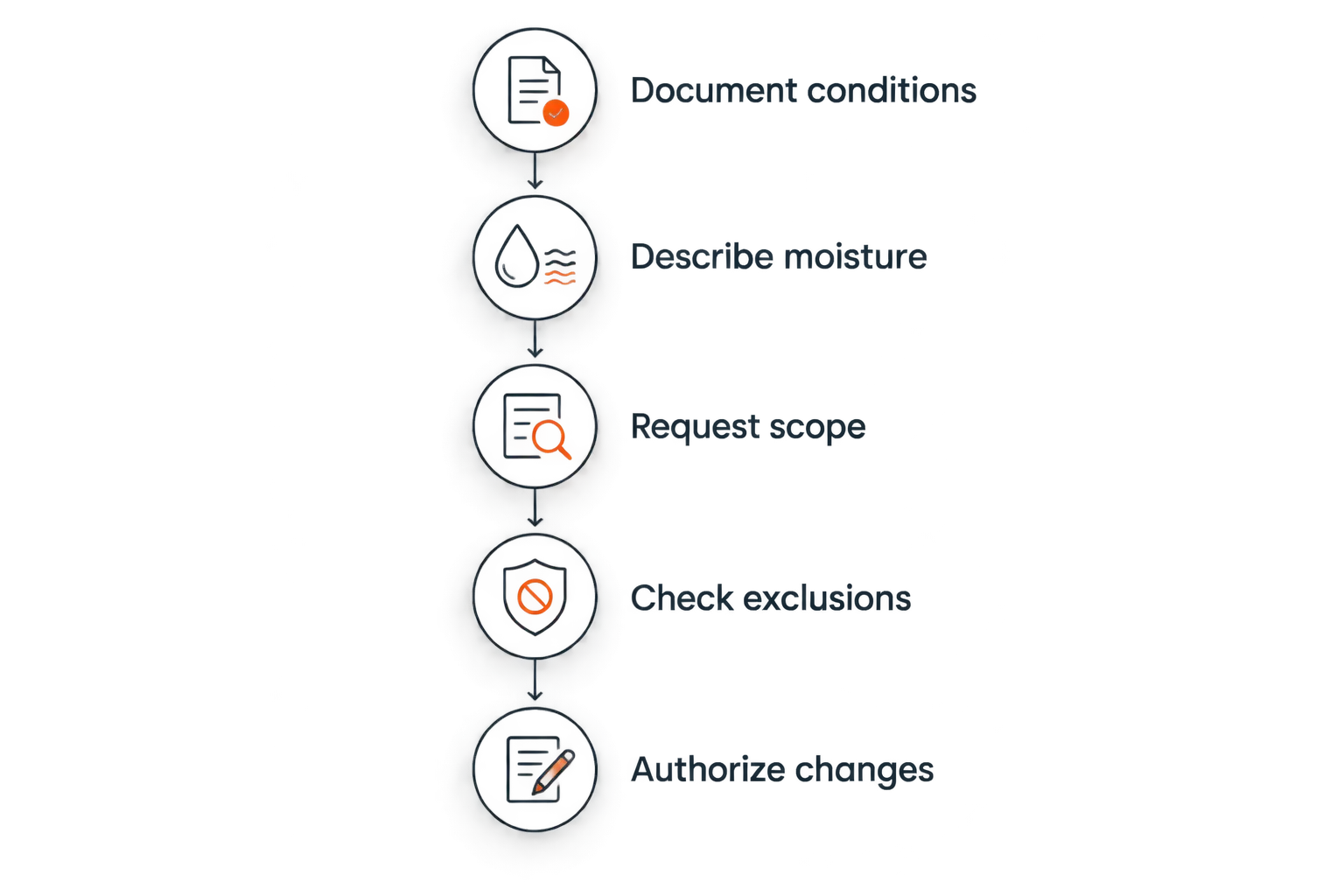
Follow the same process with each contractor. Consistent information makes differences in the proposals easier to understand.
- Document conditions. Photograph visible staining, affected materials, and the surrounding area from a safe position. Note when you first noticed the problem and whether water is still entering.
- Describe moisture. Explain any known leak, flooding, condensation, or previous water damage. Separate what you observed from what you suspect.
- Request scope. Ask for the areas included, the planned work, and the responsibilities that remain yours or another contractor's.
- Check exclusions. Confirm whether moisture-source repairs, reconstruction, contents handling, and any separate testing are included or excluded.
- Authorize changes. Require an explanation of additional findings and approval before work expands beyond the agreed scope.
Keep your description factual. A musty odor is an observation; a claim that every wall is contaminated is a conclusion that requires assessment. Accurate information helps the contractor focus the inspection without treating an assumption as established damage.
For rental or commercial property, identify who can authorize access and approve work. Give the contractor any relevant occupancy restrictions before the scope is finalized, not after cleanup begins.
Is a free inspection the same as emergency mold service?
No. A business-hours free inspection and 24/7 emergency restoration are different service arrangements. Phoenix Restoration Group offers free inspections for all services during business hours, 8am to 4:30pm, and provides 24/7 emergency water, fire, mold, and biohazard restoration.
If water is actively entering the property, describe that condition when you request help. If you are arranging an inspection of an existing mold concern, ask about the business-hours inspection process. Neither arrangement establishes a specific arrival time.
Phoenix Restoration Group is suited to Des Moines property owners who need mold restoration with communication from assessment through cleanup. The free inspection is a starting point for understanding the problem, not a statement that remediation or related repairs are free.
Use the contact page to describe the property, the visible concern, and whether there is active water damage. Ask which service arrangement fits the situation before scheduling.
What should a written mold removal proposal leave clear?
A useful proposal lets you explain the job back to the contractor without guessing. Before approving a 2026 remediation project, make sure you understand the following boundaries:
- Where work starts and stops: Identify rooms, surfaces, and any concealed areas that require access.
- What happens to materials: Specify which materials will be cleaned, removed, or evaluated after access.
- Who corrects moisture: Name the responsible party rather than leaving the leak or dampness unresolved between contractors.
- How changes are approved: Establish how additional findings will be documented and communicated.
- What completion means: Define the agreed review, remaining repairs, and any follow-up responsibilities.
Ask about cleanup access as well. You need to know which parts of the property the crew needs to enter and which areas the work plan restricts. Do not assume that unaffected rooms must be emptied or that every belonging requires disposal.
A clear proposal also distinguishes observations from limitations. If an inspection did not include the inside of a wall, that boundary belongs in the discussion before you approve work.
Will homeowners insurance cover mold remediation?
Coverage depends on your policy, the cause of the damage, and the insurer's claim decision. Do not treat a contractor's remediation scope as confirmation of insurance coverage. The contractor describes the work; the insurer applies the policy.
The question of insurance coverage for mold remediation starts with the moisture event and the policy language, not simply whether mold is present. When you contact your insurer, describe the known water event and ask which documents are needed to evaluate the claim.
Keep photographs, inspection findings, correspondence, and approved work records. Ask how your policy treats remediation, water-source repairs, removed materials, and reconstruction rather than assuming they receive the same treatment.
Also clarify who authorizes work and who is responsible for payment. A pending claim does not replace a written agreement with the contractor. If immediate action is needed, ask the insurer how to document protective work without making assumptions about reimbursement.
Should I choose surface cleaning or material removal?
The material and its condition should drive that decision. Surface appearance alone does not establish whether cleaning is adequate, especially when porous materials or concealed moisture are involved.
| Approach | Best for | Benefit | Limitation |
|---|---|---|---|
| Surface cleaning | Suitable cleanable surfaces after assessment | Retains materials when cleaning is appropriate | Does not address concealed growth or unresolved moisture |
| Material removal | Affected materials that the assessment identifies for removal | Removes the materials identified in the scope | Leaves repair or replacement work to resolve |
| Further investigation | Suspected damage beyond accessible surfaces | Clarifies conditions before the final scope | Requires access decisions and clear authorization |
These are scope options, not interchangeable packages. Ask the contractor why the proposed approach fits each affected material, and request an explanation if the plan changes after access.
Do not approve cosmetic work as a substitute for addressing the moisture problem. Painting over a stain does not explain why the surface became damp or establish that underlying damage has been resolved.
How can I control the project without cutting necessary work?
Focus on avoiding gaps, duplicated tasks, and unclear responsibilities. Choosing an incomplete scope does not resolve the work left outside it.
Before signing a 2026 proposal, confirm whether another contractor will handle the plumbing, roofing, or reconstruction. Share those boundaries with everyone involved so that one crew does not assume another has completed a required task.
You can also make decisions easier by keeping a single project record. Save the original scope, approved revisions, photographs, and messages about completion in the same place. For a managed property, make sure the person approving changes can access that record.
Ask for explanations when a task is unclear. The right question is not simply whether an item can be removed, but what problem that item addresses and what remains unresolved without it.
FAQ
How do I get an accurate mold removal estimate in Des Moines?
Get a property-specific inspection and a written scope identifying affected areas, materials, planned cleanup, and exclusions. Ask who handles moisture correction and reconstruction before approving the work.
Does Phoenix Restoration Group offer free mold inspections?
Phoenix Restoration Group offers free inspections for all services during business hours, 8am to 4:30pm. Its 24/7 emergency restoration service is separate from that business-hours inspection arrangement.
Does a mold removal estimate include fixing the leak?
Do not assume moisture-source repairs are included in a mold removal estimate. Ask the contractor to identify who will correct the water problem and whether that work needs a separate agreement.
Is mold testing the same as mold removal?
Mold testing and mold removal are different activities. If testing is proposed, ask what question it will answer and whether it is included in the remediation scope or arranged separately.
Can I compare mold removal companies by their totals alone?
Compare the work and exclusions before comparing proposal totals. Different assumptions about material removal, cleanup, repairs, and completion review make totals difficult to evaluate fairly.
Does homeowners insurance automatically cover mold cleanup?
Homeowners insurance does not automatically cover every mold cleanup project. Coverage depends on policy terms, the cause of damage, and the insurer's decision on the claim.
Should I remove damaged drywall before the inspection?
Do not disturb suspected mold-damaged materials just to prepare for an inspection. Describe the visible conditions and ask the restoration contractor how to handle access and immediate concerns.
One last thing
Ask this before approving the job: What will still need to happen after your crew finishes? The answer should identify remaining moisture repairs, reconstruction, or other responsibilities. That question exposes the gap between removing affected materials and returning the space to its intended use.