
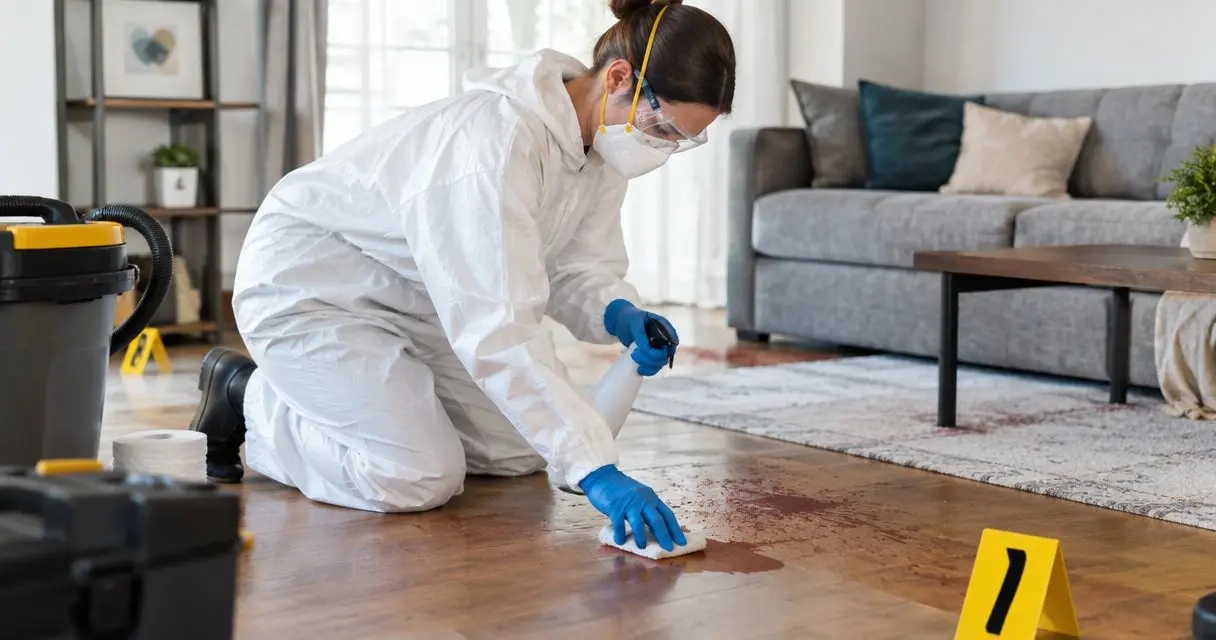
Crime scene cleanup takes as long as the assessed contamination requires; there is no single duration that applies to every property. The schedule must separate permission to enter, hands-on biohazard cleanup, and any repairs needed before you can use the affected space again.
- How long does crime scene cleanup take? An on-site assessment must establish the scope before a reliable timeline exists.
- Police release, biohazard cleanup, and property repairs are separate milestones, not interchangeable completion dates.
- Phoenix Restoration Group provides 24/7 emergency biohazard restoration in Carlisle, Des Moines, and Central Iowa.
- Free inspections run during business hours, 8am to 4:30pm; emergency availability does not promise a specific arrival time.
How long does crime scene cleanup take?
A useful cleanup estimate identifies what must happen before work starts, what the cleanup includes, and what remains afterward. Ask for those milestones separately rather than accepting one completion date with no explanation. You can review the available restoration services while arranging an assessment.
For a 2026 cleanup plan, use the following breakdown to understand what the proposed schedule actually covers.
| Stage | What determines its duration | What the milestone means |
|---|---|---|
| Scene access | Release by investigating authorities, when applicable, and permission from the authorized property representative | The cleanup provider can access the approved area |
| Assessment | Extent of contamination, affected materials, and access restrictions | The provider can define the cleanup scope |
| Biohazard cleanup | Material removal, cleaning, disinfection, and waste handling | The agreed biohazard work is complete |
| Repairs | Replacement of removed finishes or damaged building materials | The affected space is repaired to the agreed scope |
| Return to use | Remaining hazards, restrictions, and unfinished work | The authorized parties determine how the space can be used |
These stages are not interchangeable. Police release does not mean a room has been cleaned, and completion of biohazard removal does not mean removed flooring or wall finishes have been replaced.
Why this matters
A single end date can hide different responsibilities. You need to know whether the estimate means the crew has finished cleaning, the contractor has completed repairs, or occupants can return to normal use.
That distinction affects practical decisions: arranging access, relocating occupants, notifying tenants, and scheduling other contractors. Plan around the next confirmed milestone, not an assumed return date. Keep the affected area restricted while the responsible professionals evaluate the conditions.
What happens before cleanup starts?
Confirm scene release
If law enforcement controls the scene, confirm that the area has been released before arranging entry or moving belongings. Do not treat a departure by individual officers as permission to begin cleanup. Ask the investigating agency who can confirm access and whether any restrictions remain.
Police release addresses investigative control. It is not a statement that blood, bodily fluids, sharps, or other hazards have been removed.
Identify who can authorize work
The person reporting an incident is not always the person authorized to approve work on the property. Establish who can authorize access, removal of affected materials, and the proposed cleanup scope. For a rental or commercial property, that conversation can involve the owner or designated property representative.
Resolve those questions before the crew is expected to make decisions about belongings or building materials. Clear authorization prevents a scheduling discussion from becoming a dispute over what work was permitted.
Describe conditions without entering the affected area
Tell the provider what you already know: the affected location, whether authorities still control access, and whether occupied areas share an entrance with the scene. Explain any known access restrictions. Do not enter a restricted or contaminated space just to gather more detail.
Existing information helps the initial conversation, but it does not replace an assessment. A description of visible staining alone cannot establish the full cleanup scope.
What happens during crime scene cleanup?
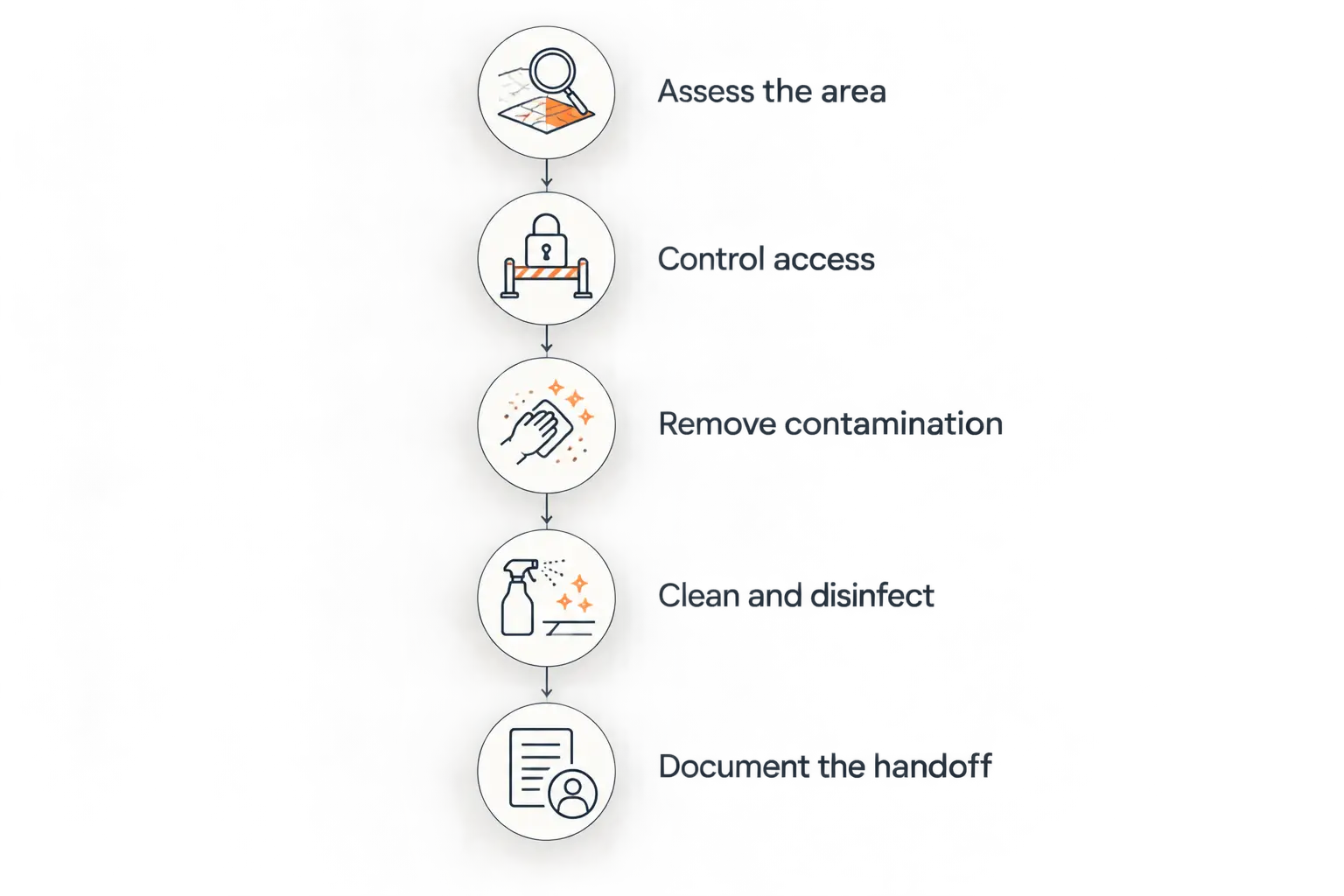
The work follows the conditions found at the property, not a fixed appointment length. A practical sequence separates assessment from removal, cleaning, and the final handoff.
- Assess the area. Establish affected surfaces, materials, access routes, and the boundaries of the work.
- Control access. Keep unauthorized people away from the affected area and establish an appropriate work setup.
- Remove contamination. Address contaminated contents and materials according to their condition and the cleanup scope.
- Clean and disinfect. Remove soil and apply suitable disinfectants according to their labeled directions.
- Document the handoff. Explain completed work, remaining restrictions, and any repairs outside the cleanup scope.
Cleaning and disinfection are separate tasks. A disinfectant's labeled contact time is the period the surface must remain treated as directed; it is not an estimate for the entire job. Do not ask a provider to shorten required product-use steps to meet a move-in deadline.
For your 2026 work order, ask which steps are included and how the provider will explain any change in scope. The useful answer is a defined process tied to site conditions, not a guaranteed finish before anyone has assessed the property.
Why crime scene cleanup time varies
The following conditions determine the work required. Ask the provider which ones apply to your property and how each affects the proposed schedule.
- Extent of contamination. The area requiring treatment determines how much material needs assessment, cleaning, or removal. A visible stain does not establish the full boundary by itself.
- Affected materials. A cleanable hard surface presents a different task from contaminated carpet, padding, upholstery, or other absorbent materials. Material removal also creates a separate repair question.
- Contamination beneath surfaces. Fluids that reach seams, underlying materials, or cavities require attention beyond the visible surface. The scope changes when the assessment identifies additional affected areas.
- Access and scene restrictions. Investigative restrictions, locked areas, or missing authorization prevent work from proceeding even when a provider is available to take the request.
- Waste handling and remaining repairs. Contaminated material handling is part of cleanup planning. Replacing removed building finishes is a separate task unless the agreed scope includes it.
Ask what would change the estimate. A useful schedule explains the conditions behind it and identifies what happens if additional contamination is discovered after work begins.
Does a small visible stain mean a short cleanup?
A small visible stain does not establish a short cleanup. The provider still needs to assess the material, surrounding area, and whether contamination reached below the surface. Do not use the size of a photograph as a substitute for that evaluation.
The same distinction applies to belongings. An item that appears unaffected from one angle still needs an appropriate assessment before anyone decides to clean, move, or discard it. Ask who will discuss those decisions with the authorized property representative.
Can cleanup begin immediately after police leave?
Cleanup can begin only after the necessary access and authorization are confirmed. Police leaving the property does not, by itself, tell you whether the scene is released or whether restrictions remain. Confirm the status with the investigating agency before permitting entry.
You can contact a cleanup provider while waiting for clarification. Explain that release is pending so the conversation does not become an unsupported promise about a start time.
Does 24/7 service mean cleanup finishes the same day?
24/7 emergency service means emergency availability, not a same-day completion guarantee. It does not establish a crew's arrival time, the amount of contamination, or the repair schedule. Those are separate questions.
Phoenix Restoration Group provides 24/7 emergency biohazard restoration for residential and commercial property owners in Carlisle, Des Moines, and Central Iowa. Free inspections for all services are available during business hours, 8am to 4:30pm. The team keeps you informed from the initial assessment through cleanup.
Phoenix Restoration Group is a fit for Central Iowa property owners seeking 24/7 emergency biohazard restoration and clear communication through cleanup. Emergency availability covers 24 hours a day, 7 days a week; free inspection hours are narrower, and neither establishes a specific arrival time.
Request a biohazard assessment
24/7 emergency restoration. Free inspections during business hours, 8am to 4:30pm.
What should you ask before accepting a timeline?
For a 2026 cleanup estimate, request a scope that separates confirmed conditions from decisions still requiring an assessment. Keep the questions practical:
- Has the scene been released, and who confirmed access?
- Which rooms, surfaces, contents, and underlying materials are included?
- Does the proposed completion date cover cleanup only or repairs too?
- Who can authorize additional removal if hidden contamination is found?
- How will you receive updates when the scope or schedule changes?
- What information will you receive when the cleanup work is complete?
Ask for the answers in writing with the scope. That gives the property owner, occupants, and other contractors a shared reference instead of different understandings of a phone conversation.
Avoid treating an insurer's claim decision as a cleanup milestone. Ask your insurer about your specific policy and documentation requirements, and ask the restoration provider separately about access, authorization, and the proposed work.
When can you use the property again?
Return to use depends on the affected area, remaining hazards, unfinished work, and any restrictions still in place. Do not use appearance or lack of odor as the sole basis for deciding that a room is ready. Ask the provider to explain the status of the agreed work and any remaining limitations.
For a 2026 reopening plan, distinguish between access to an unaffected area and normal use of the cleaned space. A business or rental property also needs a clear decision-maker for communicating those boundaries to employees, tenants, and contractors.
Before reopening, confirm what was cleaned, what was removed, and what still needs repair. Keep that information with the work documentation. A clear handoff is more useful than an unexplained statement that the crew is finished.
FAQ
How long does crime scene cleanup take from the first call?
The time from the first call depends on scene access, authorization, assessed contamination, and the work required. Ask for separate milestones for assessment, cleanup, and repairs rather than one unexplained completion date.
Can crime scene cleanup be finished the same day?
Same-day completion is not something to assume before assessment. The provider must establish the affected materials, contamination boundaries, and work required before giving a property-specific schedule.
Do police clean up a crime scene before releasing it?
Police release is not confirmation that biohazard cleanup has been completed. Confirm access with the investigating agency, then arrange an appropriate cleanup assessment.
Can I clean up blood myself to make the job faster?
Do not handle blood or potentially contaminated materials simply to shorten the cleanup schedule. Keep people away from the affected area and seek professional assessment rather than moving or spreading contamination.
Does crime scene cleanup include replacing carpet and drywall?
Replacement of removed carpet or drywall is a repair task, so confirm whether the written scope includes it. A cleanup completion date does not automatically include restoration of every removed finish.
Are free inspections available overnight?
Phoenix Restoration Group offers free inspections for all services during business hours, 8am to 4:30pm. Its 24/7 emergency restoration service is separate from those inspection hours, and availability does not establish a specific arrival time.
Can I return when the room no longer smells?
The absence of odor does not establish that a room is ready for use. Ask about completed cleanup, remaining hazards, unfinished repairs, and any access restrictions before returning.
One last thing
Ask what “finished” means before you ask for a finish date. In 2026, your written schedule should still answer the basic question: does completion mean biohazard cleanup, repaired building materials, or return to normal use? Those milestones can require different work and different approvals.
Keep one written record of the authorized scope and updates. When the next contractor or property representative asks about the schedule, that record gives them something concrete to act on.