
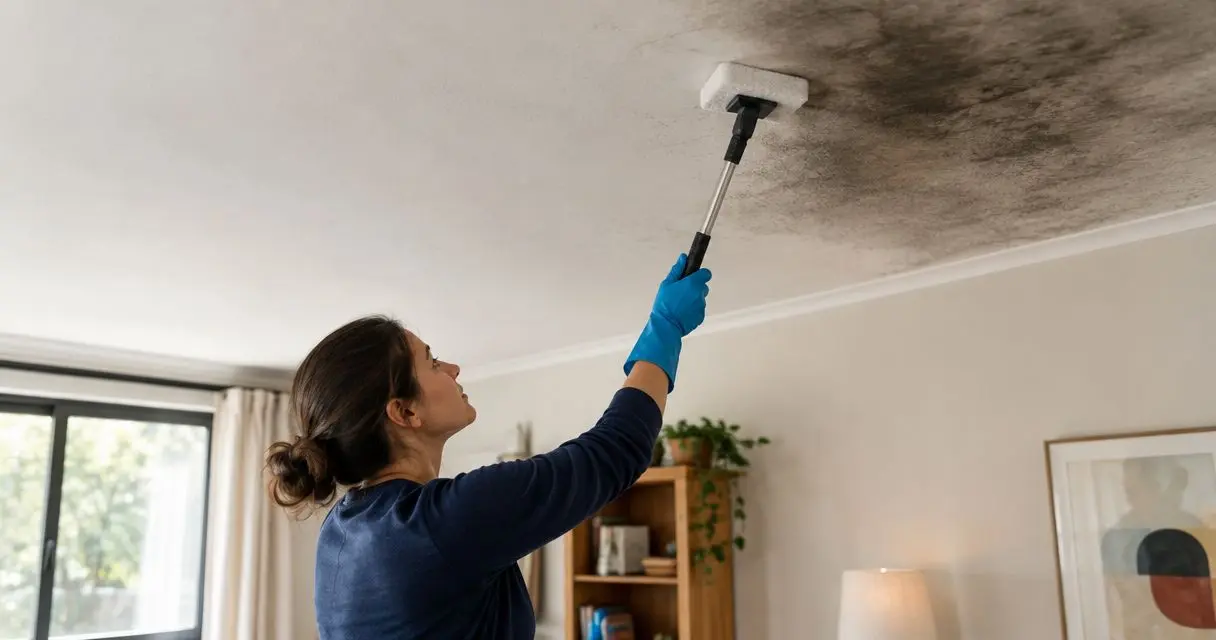
To remove soot stains from walls and ceilings, first remove loose residue without rubbing it into the surface, then test a dry soot-cleaning sponge before using any liquid cleaner. Wet cleaning belongs only on finishes that tolerate it, after dry removal; widespread fire residue, damaged drywall, and persistent smoke odor call for professional assessment. This 2026 guide explains where a small cleanup ends and fire restoration begins.
- How to remove soot stains from walls: remove loose particles first, then test dry cleaning before moisture.
- Never scrub soot into paint or soak drywall and ceiling textures.
- Phoenix Restoration Group provides fire restoration for Carlisle, Des Moines, and Central Iowa property owners.
- Emergency restoration is available 24/7; free inspections run during business hours, 8am to 4:30pm.
How do you remove soot stains from walls and ceilings?
Remove loose soot first, test the surface, and clean only as aggressively as the finish allows. Do not start with a wet cloth: water and rubbing can spread residue and damage vulnerable finishes.
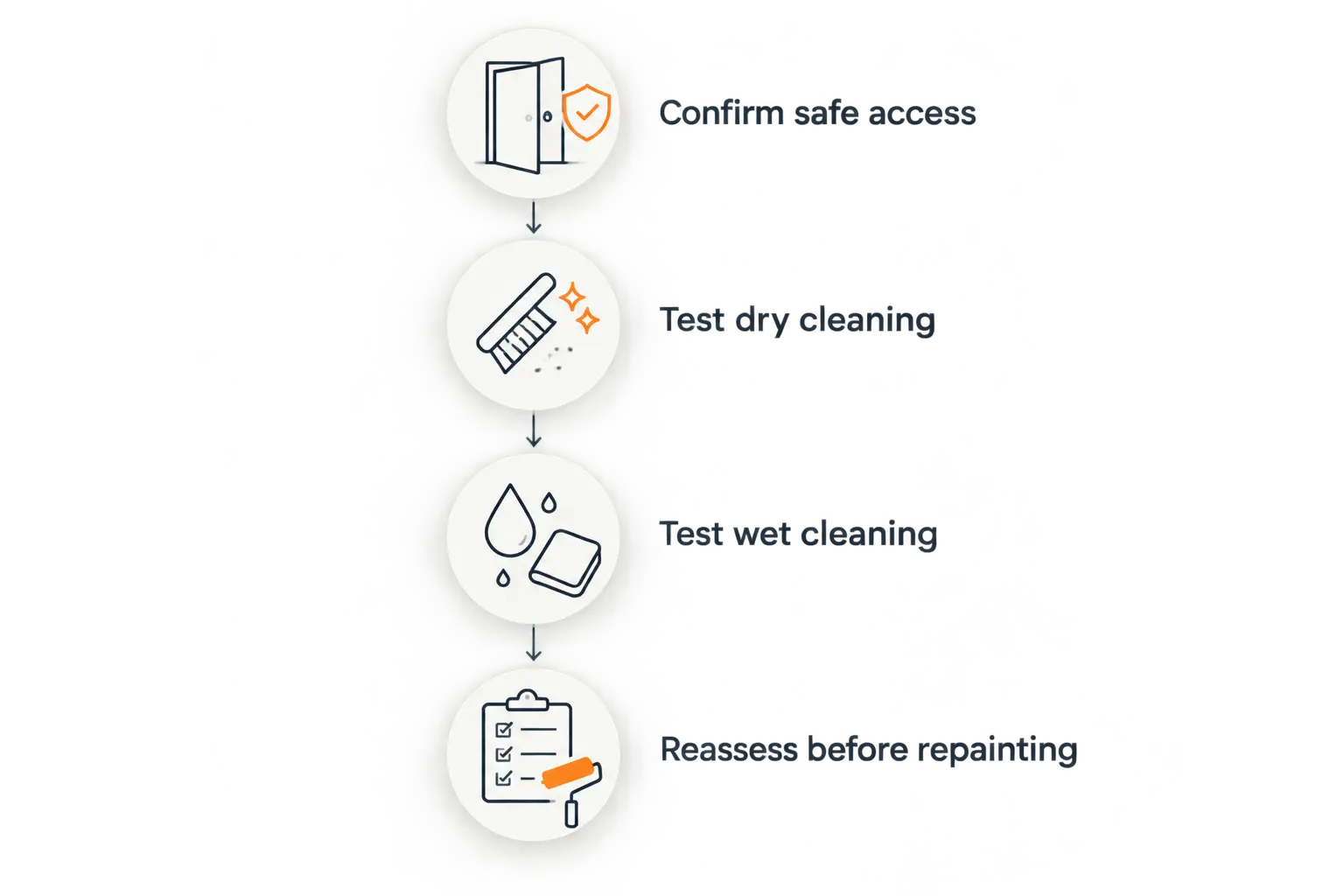
- Confirm safe access. After a fire, enter only when the responsible authorities have cleared the property. Do not work under sagging ceilings or near damaged electrical fixtures.
- Document the damage. Photograph the wall, ceiling, nearby contents, and apparent source before disturbing residue.
- Remove loose particles. For a limited, safe cleanup, use a suitable sealed HEPA-filtered vacuum without touching the nozzle to the finish. Do not use an ordinary household vacuum.
- Test dry cleaning. On a hidden spot, gently press and lift a dry soot-cleaning sponge according to its instructions. Stop if paint or texture transfers.
- Test wet cleaning only where suitable. Use a cleaner labeled for the surface, follow its dilution instructions, and avoid saturation. Let the test area dry before judging it.
- Reassess before repainting. Remaining staining, odor, soft material, or repeated smearing needs further assessment rather than another coat of paint.
Phoenix Restoration Group is a local fire restoration option for residential and commercial property owners in Carlisle, Des Moines, and Central Iowa. Its restoration services include fire, water, mold, and biohazard damage.
Why this matters
Soot cleanup is not just a cosmetic job. Fire residue can contain irritating particles, and aggressive cleaning can turn a removable deposit into a larger stain or damage the finish underneath.
For your 2026 cleanup plan, separate surface cleaning from building safety. A cleaner-looking ceiling does not establish that wiring, insulation, concealed materials, or indoor air are safe after a fire. Keep children, pets, and people with respiratory conditions away from the affected area during cleanup.
Which cleaning method fits your wall or ceiling?
The right method depends on the residue and the surface, not simply how dark the stain looks. Use this comparison to choose a starting point, not as permission to clean extensive fire damage yourself.
| Method | Best for | Benefit | Limitation or reason to stop |
|---|---|---|---|
| Noncontact HEPA vacuuming | Loose, dry particles on an intact surface | Removes loose material before wiping | Does not remove embedded stains; unsuitable equipment can redistribute particles |
| Dry soot-cleaning sponge | Light, dry deposits on a compatible finish | Avoids introducing water at the start | Can lift fragile paint or damage textured finishes |
| Surface-compatible wet cleaning | Remaining residue on tested, washable finishes | Addresses residue that dry cleaning leaves behind | Can smear soot, dull paint, or swell absorbent material |
| Professional restoration assessment | Widespread residue, oily deposits, odor, or damaged materials | Considers the affected building rather than one visible stain | Requires an assessment before the cleaning or repair scope is known |
Dry cleaning is a starting method, not a guarantee that every soot stain will come off. Oily residue, unsealed surfaces, and heat-damaged coatings require different decisions from light candle soot on sound paint.
Prepare the room before touching soot
For limited cleanup on a safe, accessible surface, protect nearby contents and keep foot traffic out of the area. Wear gloves and eye protection. Particle-filtering respiratory protection must fit correctly; a particulate respirator does not protect against fire gases or make an unsafe building safe.
Do not aim fans across soot-covered surfaces. Air movement can spread loose contamination into clean areas. Avoid running an affected HVAC system until its condition and potential contamination have been assessed.
Use stable access equipment for ceilings. Do not stretch from furniture, work beside exposed wiring, or remove light fittings to reach a stain. If safe access requires electrical work or disturbing damaged material, stop the cleanup.
Gather supplies before starting:
- A suitable sealed HEPA-filtered vacuum for loose residue.
- A dry soot-cleaning sponge used according to its label.
- Clean, nonabrasive cloths for compatible washable finishes.
- A surface-compatible cleaner and its instructions.
- Protection for nearby floors and contents.
How to use a dry soot-cleaning sponge
A soot-cleaning sponge is designed for dry residue removal. It is not an ordinary kitchen sponge, and wetting it defeats the purpose of the dry-cleaning stage.
Test an inconspicuous area first. Use gentle contact, keep a clean sponge face against the surface, and follow the manufacturer's instructions for exposing or replacing dirty sections. Do not repeatedly drag a loaded sponge over clean paint.
Watch the finish as closely as the soot. If the sponge picks up paint, removes texture, leaves shiny patches, or increases streaking, stop. More pressure is not the answer.
For ceilings, avoid pressing upward hard enough to break texture or weaken damaged material. Do not scrape an older textured ceiling or disturb suspect coatings without checking whether hazardous-material precautions apply. Surface cleaning must not become uncontrolled demolition.
When is wet cleaning appropriate?
Wet cleaning is appropriate only after loose residue removal and a successful compatibility test on a washable surface. Even washable paint needs testing because heat damage, age, and previous repairs affect how it responds.
Apply the labeled cleaning solution to a cloth rather than flooding the wall. Keep the cloth damp, not dripping, and change to clean cloth surfaces frequently. Follow the cleaner's instructions for rinsing and drying.
Let the test patch dry fully before continuing. A wet surface can hide discoloration or make damaged paint look temporarily uniform. Stop if you see swelling, peeling, tackiness, dull patches, or spreading gray smears.
Never mix cleaning chemicals. Avoid improvised combinations of bleach, ammonia, acids, or other household products. A stronger mixture is not a substitute for matching the cleaner to the residue and finish.
Why soot removal results vary
In 2026, a useful cleanup assessment still starts with the material and contamination, not a universal cleaning recipe. These factors determine whether cleaning is enough or repair is necessary:
- Residue type: Dry, powdery deposits behave differently from greasy or sticky smoke residue.
- Surface finish: Sound washable paint tolerates different treatment from flat paint, wallpaper, bare drywall, or porous plaster.
- Material condition: Blistering, cracking, softness, or heat damage changes whether the surface is suitable for cleaning.
- Extent of contamination: A localized candle mark is a different task from residue across multiple rooms and contents.
- Water exposure: Firefighting water and leaks add a drying problem that soot removal alone does not address.
- Access and hidden spread: High ceilings, fixtures, cavities, and affected ventilation systems expand the assessment beyond visible walls.
Describe these conditions when requesting help. A photo of a black mark does not show whether the backing material is wet, the coating is failing, or residue extends behind a fixture.
How do you know when to stop cleaning?
Stop when cleaning damages the finish, spreads contamination, or reveals a larger problem. Do not continue just because some black residue is still transferring to the cloth.
Use these stop points:
- Smearing: Dry residue becomes a wider gray or greasy patch.
- Finish damage: Paint, texture, or drywall paper comes away with the cleaning tool.
- Material damage: The surface feels soft, swollen, loose, or unstable.
- Persistent odor: Smoke odor remains after the accessible surface has been cleaned.
- Health symptoms: You develop coughing, eye irritation, dizziness, or breathing discomfort. Leave the area; severe symptoms require urgent medical attention.
The process is straightforward: check access, test the finish, remove loose residue, and reassess before doing more. Passing one check does not eliminate the others.
When should you request fire restoration?
Request an assessment when soot covers multiple surfaces, residue feels oily, smoke odor persists, or materials show heat or water damage. Professional help is also appropriate when you cannot safely reach the ceiling or determine whether a finish is suitable for cleaning.
Phoenix Restoration Group provides 24/7 emergency restoration across Carlisle, Des Moines, and Central Iowa. Free inspections for all services are available during business hours, 8am to 4:30pm. These are different service windows: round-the-clock emergency availability does not mean free inspections occur at every hour.
The team keeps you informed from the initial assessment through cleanup. Ask which materials need cleaning, which need further evaluation, and what conditions must be addressed before repairs or painting. Do not assume that every affected surface can be saved or that inspection alone establishes the final scope.
Request a fire damage assessment
24/7 emergency restoration. Free inspections during business hours, 8am to 4:30pm.
Can you paint over soot stains instead of cleaning them?
Do not paint directly over soot. Residue can interfere with coating adhesion, and smoke staining or odor can remain a problem beneath fresh paint.
Remove contamination and resolve moisture or damaged materials first. A compatible stain-blocking primer can be part of refinishing after appropriate preparation, but primer is not a cleaning method or an odor-removal guarantee. Follow the coating manufacturer's surface-preparation instructions.
Is soot removal different on ceilings?
Ceilings require the same test-first approach, but overhead access, fragile textures, and nearby electrical fixtures add risk. Avoid saturating ceiling materials or scraping texture to remove a stain.
If a ceiling sags, crumbles, or shows water damage, do not work underneath it. Arrange an assessment before cleaning or repainting.
What should you document before cleanup?
For a 2026 fire or smoke incident, keep dated photographs showing both close-up residue and the full affected room. Record the apparent source, affected surfaces, visible water damage, and any cleaning already attempted.
Save product labels and note where each cleaner was tested. That information helps prevent repeated use of a method that already damaged the finish. Ask your insurer what documentation it requires before discarding damaged materials; do not delay urgent safety measures to complete paperwork.
FAQ
What's the first step when removing soot from a painted wall?
Confirm that the area is safe, then remove loose particles without rubbing them into the paint. Test a dry soot-cleaning sponge on a hidden spot before expanding the cleanup.
Can I use a wet sponge on soot stains?
Do not start soot removal with a wet sponge. Moisture can smear residue, so remove loose particles and test dry cleaning before considering a surface-compatible wet method.
Can I use a regular vacuum to remove soot?
Do not use an ordinary household vacuum for soot cleanup. Use suitable sealed HEPA-filtered equipment without touching the nozzle to the finish, or request professional help.
Will soot stains come off flat paint?
Soot removal can damage flat paint, so test an inconspicuous area before cleaning. Stop if pigment transfers, the finish changes, or the residue spreads; refinishing can be necessary after appropriate cleanup.
Does removing the black stain remove smoke odor too?
Removing a visible soot stain does not prove that smoke odor sources are gone. Residue can remain in contents, porous materials, cavities, and other affected areas.
Can I clean soot off a textured ceiling myself?
Only consider limited cleaning when the ceiling is intact, safely accessible, and suitable for the method. Do not scrape suspect texture or disturb damaged materials without an assessment.
Does Phoenix Restoration Group offer emergency fire restoration?
Phoenix Restoration Group provides 24/7 emergency fire restoration in Carlisle, Des Moines, and Central Iowa. Free inspections for all services take place during business hours, 8am to 4:30pm, rather than throughout the emergency-service window.
One last thing
Before closing a soot cleanup in 2026, inspect the test area after it dries and compare it with your original photographs. A stain that looks lighter while damp is not proof of successful cleaning.
Judge the result by the condition of the material, not just the disappearance of black marks. If cleaning leaves peeling paint, softened drywall, or persistent odor, stop treating the job as a surface stain.