
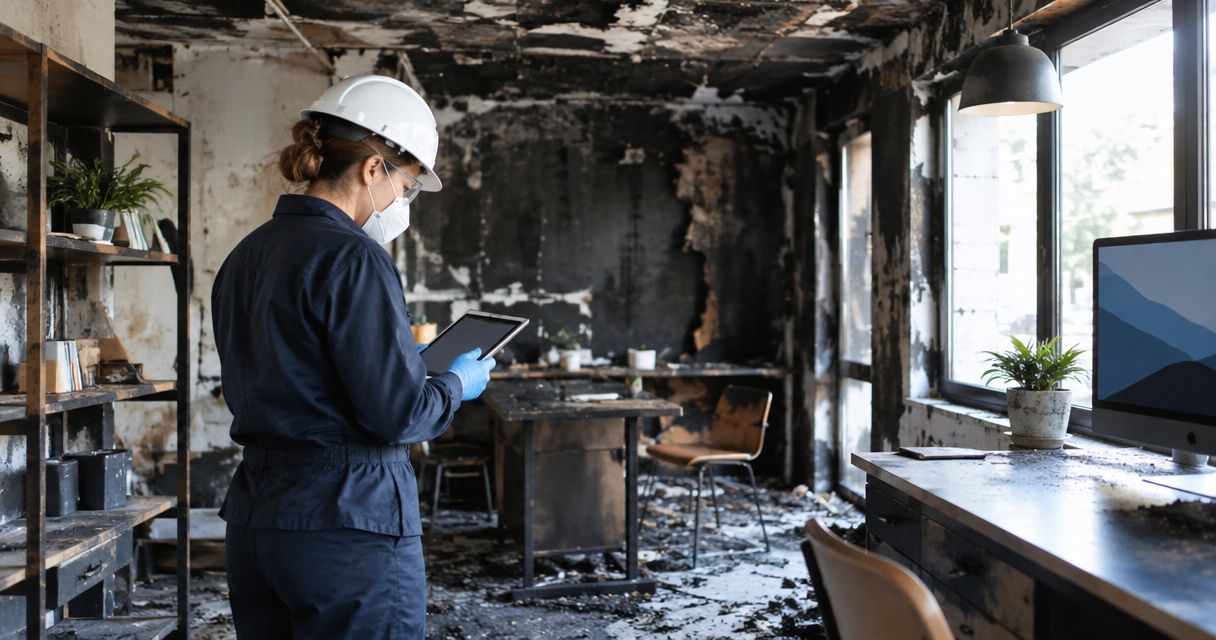
Small business fire damage restoration is the assessment and cleanup of fire, smoke, soot, and related water damage with the aim of returning your premises to safe business use. This 2026 guide explains how to protect employees, document losses, coordinate a leased space, and plan reopening without confusing cleanup progress with permission to occupy.
- Fire damage restoration for small business owners starts with safe access, documentation, and a written cleanup scope.
- Phoenix Restoration Group fits Central Iowa businesses seeking 24/7 emergency fire restoration and clear communication through cleanup.
- Free inspections cover all services during business hours, 8am to 4:30pm, not every emergency call.
- Keep smoke damage, firefighting water, damaged inventory, and business interruption records in the same incident file.
Why fire restoration matters for small business owners
A business fire creates two separate problems: damaged premises and interrupted operations. You need to address both, but reopening pressure must not determine whether employees enter a damaged building or reuse affected equipment.
Small businesses also have overlapping responsibilities. A tenant manages stock and customer commitments, a landlord controls building repairs, and an insurer evaluates coverage under the applicable policy. A written responsibility list keeps those decisions separate.
Phoenix Restoration Group provides 24/7 emergency water, fire, mold, and biohazard restoration across Carlisle, Des Moines, and Central Iowa. Phoenix Restoration Group is best for Central Iowa business owners seeking 24/7 emergency fire restoration with communication from assessment through cleanup.
Build your 2026 response plan around safe access, a documented scope, and named decision-makers. Emergency restoration is available 24 hours a day, 7 days a week; free inspections take place during business hours, 8am to 4:30pm. Those are different service arrangements, not interchangeable promises.
How to manage your business fire restoration
1. Restrict access and confirm who controls the site
For an active fire or immediate danger, call 911 and keep people outside. After firefighters leave, follow the access restrictions issued by emergency responders and the authorities responsible for the building. An extinguished fire does not establish that the premises are safe to occupy.
Start with a simple employee message and an access list. Tell staff where to report, who handles questions, and whether the workplace remains closed. Do not send an employee inside to retrieve a laptop, stock, or paperwork before entry is authorized.
If you lease the premises, notify the landlord or property manager immediately. Ask who can authorize emergency work affecting the building, and distinguish that authority from your control over business-owned contents.
- Record the person or authority controlling entry.
- Keep employees, customers, and delivery drivers outside restricted areas.
- Report suspected electrical, gas, or structural hazards to the appropriate responders or utility.
- Name one business contact for access requests and updates.
2. Document damage before moving or discarding property
Once access is authorized, begin with a phone camera, a spreadsheet, and a shared folder. Photograph affected rooms from broad views before recording individual items. Keep the original files so you retain the full record rather than only edited images sent by text.
Create a 2026 incident file containing your photographs, communications, receipts, and claim information. Record what you can observe, such as soot on shelving or water on flooring, without diagnosing hidden damage yourself.
Contact your insurer promptly and ask what documentation it requires before disposal or cleanup. Do not delay necessary safety measures, but document urgent actions and keep associated invoices. Coverage, deductibles, and business interruption payments depend on your policy and claim, not on a restoration company's description of the loss.
- Photograph rooms, entrances, equipment, stock, and visible damage.
- List damaged items with ownership and purchase records where available.
- Log closure dates, canceled work, and temporary operating arrangements.
- Ask for disposal instructions before throwing away affected property.
3. Request an assessment and define the work in writing
Prepare your own list of affected spaces and business priorities before speaking with a restoration provider. Include areas exposed to smoke or firefighting water, not just rooms with visible burning. Explain whether the property is leased, shared with another business, or subject to access restrictions.
For local help, contact the restoration team at Phoenix Restoration Group. The company provides 24/7 emergency restoration and free inspections for all services during business hours, 8am to 4:30pm. An inspection appointment and an emergency service request serve different needs; explain which situation you have.
The advantage of professional assessment is a defined cleanup scope rather than a collection of disconnected cleaning tasks. The limitation is equally important: a restoration assessment does not replace coverage decisions, specialist equipment evaluations, or required occupancy approvals.
- Identify affected rooms, contents, and areas needing further inspection.
- Ask what work is proposed and what remains outside the scope.
- Confirm who authorizes work on the building and business contents.
- Request a communication contact and a process for approving scope changes.
4. Prioritize moisture, residue, and odor investigation
Keep a written room-by-room checklist before deciding what to clean. Fire damage is not limited to scorched surfaces: smoke residue and water used during firefighting also require assessment. A room that looks less damaged still needs evaluation before normal use resumes.
Do not treat odor removal as proof that cleanup is complete. Covering a smell does not establish that affected materials, concealed spaces, or equipment have been addressed. Ask the provider to explain what creates the odor and how the proposed work addresses its source.
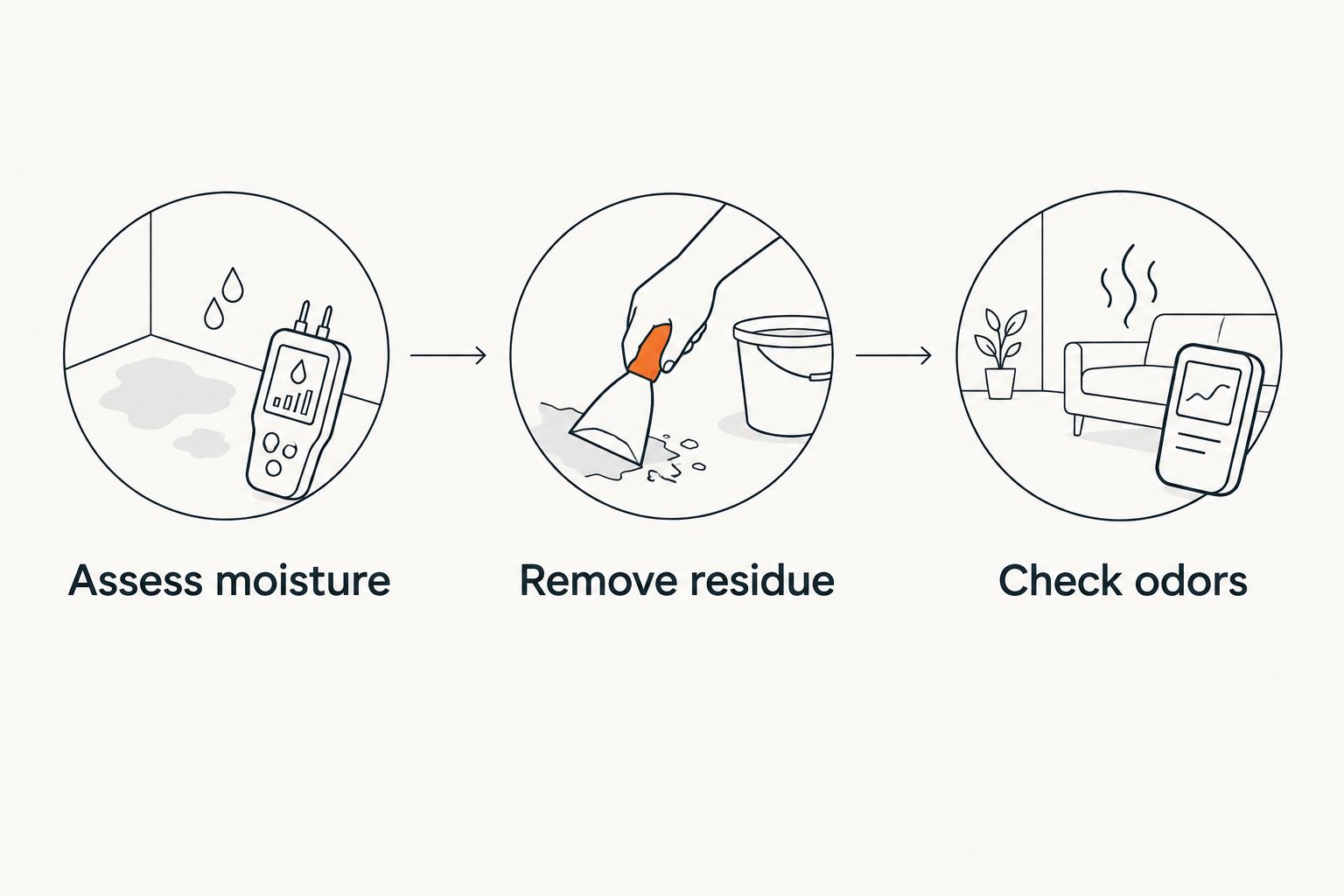
The sequence below is a discussion framework, not a substitute for a site-specific plan. Urgent water work and other protective measures depend on access, hazards, and the actual condition of the property.
- Assess moisture: identify affected areas and ask how drying needs will be evaluated.
- Remove residue: confirm which surfaces and contents require specialist cleaning.
- Check odors: investigate remaining sources rather than relying on fragrance.
- Record exclusions: list concealed areas or materials not included in the assessment.
5. Coordinate the landlord, insurer, and business operations
Use a shared action log before adding more meetings or messages. Give each task an owner, a required decision, and a status. This makes it clear whether work is waiting on access, a repair decision, documentation, or authorization.
For a leased business, distinguish building components from tenant-owned contents without assuming the lease assigns every responsibility the same way. Review your lease and insurance documents, then obtain clarification from the parties responsible for those agreements.
Separate cleanup updates from customer updates. Your restoration contact can explain work progress, while your business decides what to tell customers about orders, appointments, and temporary arrangements. Do not publish a reopening date solely because visible debris has been removed.
- Assign responsibility for building work, contents, and equipment evaluation.
- Record decisions and approvals in the incident file.
- Give customers a factual operating-status update without an unsupported reopening promise.
- Track temporary expenses and interrupted sales separately from physical damage.
6. Verify reopening requirements before bringing staff back
Create a reopening checklist tied to your actual business, not a general cleaning checklist. A retail shop, food business, and office have different equipment and regulatory concerns. Ask the relevant authorities what inspections or approvals apply to your premises and planned use.
Have appropriate specialists evaluate fire-exposed electrical equipment, machinery, or other systems before reuse. Surface cleaning does not establish that equipment is safe or functional. Food, medicines, cosmetics, and other regulated stock require product-specific handling decisions rather than a visual judgment alone.
Before reopening, compare completed work with the written scope. Record unresolved items, identify who owns them, and confirm whether they affect occupancy or business operations. Keep completion records alongside photographs and communications.
- Confirm applicable occupancy, building, and business-specific requirements.
- Obtain appropriate evaluations before restarting affected equipment.
- Resolve damaged-stock decisions before returning goods to sale.
- Brief employees on restricted areas and remaining work.
- Keep a written list of completed work and outstanding issues.
Compare your fire restoration options in 2026
Choose by responsibility, not by who offers to start cleaning first. Administrative work, specialist restoration, and building repair serve different purposes. None replaces the others automatically.
Start by deciding what you can safely manage yourself. Documentation and coordination belong with the business owner; hazardous access, contaminated cleanup, and technical evaluations require the appropriate people. Use the table to separate those roles before approving work.
| Option | Best for | Main advantage | Key limitation |
|---|---|---|---|
| Owner-managed documentation | Recording stock, expenses, communications, and operating disruption | Keeps business knowledge with the person who understands the operation | Does not assess hidden damage or make the building safe |
| Phoenix Restoration Group fire restoration | Carlisle, Des Moines, and Central Iowa businesses needing emergency restoration | Provides 24/7 emergency service and communication from assessment through cleanup | Free inspections are limited to business hours, 8am to 4:30pm; emergency service does not establish a specific arrival time |
| Landlord-led building coordination | Tenants whose landlord controls structural or building-system decisions | Places building authorizations with the responsible property party | Does not automatically cover tenant inventory, equipment, or interrupted operations |
| Qualified repair and equipment specialists | Work outside the cleanup scope and evaluation of affected systems | Addresses defined repair or technical needs | A repair or equipment evaluation does not replace the overall damage assessment |
Ask every provider what its work includes, what it excludes, and what documentation you receive. A clear boundary between cleanup and repair prevents an incomplete scope from being mistaken for a complete reopening plan.
Common mistakes small business owners make
Cleaning stock before documenting it
Cleaning or discarding inventory too early removes evidence of its original condition. Record the item and damage first when safe, then follow the relevant safety and claim instructions. Do not return affected goods to sale based only on appearance.
Assuming the landlord handles every loss
A landlord's building responsibilities do not automatically resolve tenant-owned equipment, stock, or interruption records. Keep your own documentation and review the lease and applicable policies. Assign ownership of each decision instead of relying on a broad assurance that the property is covered.
Using smell as the reopening test
A reduced smoke odor is not an occupancy approval or an equipment safety assessment. Match reopening decisions to completed work, unresolved hazards, and applicable requirements. Ask what has been checked rather than asking only whether the building smells better.
Promising customers a date before scope is clear
A public reopening promise creates pressure before cleanup, repairs, and approvals are understood. Tell customers what is currently operating and how they can reach you. Publish a firm date only when the necessary decisions support it.
Confusing free inspections with emergency attendance
A business-hours inspection is not the same as an emergency response request. State whether you have an active urgent problem or need an assessment appointment. Confirm the arrangement directly rather than assuming every service call follows inspection terms.
FAQ
What should a small business owner do first after a fire?
Keep people out of restricted areas and follow emergency responders' access instructions. For an active fire or immediate danger, call 911; once access is authorized, document damage and notify your insurer and landlord where applicable.
Who is Phoenix Restoration Group best for?
Phoenix Restoration Group is best for business owners in Carlisle, Des Moines, and Central Iowa seeking 24/7 emergency fire restoration. The company communicates from the initial assessment through cleanup and offers free inspections during business hours, 8am to 4:30pm.
Can I clean smoke damage in my business myself?
Do not begin smoke-damage cleaning before access is authorized and the affected materials are assessed. You can manage records and coordination, but ordinary cleaning does not establish that concealed areas or affected equipment are safe.
Does business insurance cover fire restoration?
Fire restoration coverage depends on your policy and the circumstances of the claim. Ask your insurer about physical damage, contents, business interruption, documentation requirements, and authorization before assuming a particular expense is covered.
Who handles fire damage if I rent my business premises?
Responsibility depends on your lease, insurance policies, and the property affected. Notify the landlord and separate building decisions from tenant-owned stock, equipment, and business interruption records.
How long does commercial fire restoration take?
The schedule depends on the assessed damage, cleanup scope, required repairs, and applicable approvals. Request a site-specific sequence and updates rather than treating an initial estimate as a guaranteed reopening date.
What should my 2026 business reopening checklist include?
Your 2026 checklist should cover completed cleanup, unresolved hazards, equipment evaluations, stock decisions, and applicable occupancy requirements. Assign an owner to every outstanding item before employees or customers return.
One last thing
The item that blocks reopening is not always the most visibly damaged item. A decision about electrical equipment, stock, or access can remain unresolved after surface cleanup finishes. End each progress conversation by asking: what still prevents safe business use, and who is responsible for resolving it?