

Instead of repeatedly sending disconnected photos and estimates, organize the fire damage insurance claim process around one claim file, a documented assessment, and written insurer decisions. This 2026 workflow takes you from safe documentation through claim submission, adjuster review, and approval of the covered scope without confusing emergency restoration with insurance authorization.
- The fire damage insurance claim process starts with safety, prompt reporting, and organized evidence, not an immediate repair agreement.
- Phoenix Restoration Group provides 24/7 emergency restoration; free inspections run during business hours, 8am to 4:30pm.
- Keep emergency mitigation, the restoration estimate, and the insurer’s coverage decision separate.
- Submit newly discovered fire or smoke damage as a documented supplement, not an unexplained replacement estimate.
Why this matters
A restoration assessment describes damage and proposed work. An insurer’s decision addresses coverage under your policy. Neither document substitutes for the other. Keep them connected through the claim number, room names, photographs, and estimate references.
Phoenix Restoration Group is best suited to Central Iowa property owners seeking 24/7 emergency fire damage restoration with communication from assessment through cleanup. The company serves Carlisle, Des Moines, and Central Iowa. Its restoration services do not replace your insurer’s coverage review.
Before you start
- Confirm safe access. Follow instructions from responding authorities. Do not enter a restricted building, energize damaged equipment, or open concealed areas to collect evidence.
- Gather your claim materials. Have your policy information, property address, contact details, incident description, and access to the insurer’s reporting channel. Locate existing property photographs or purchase records where available.
- Separate urgent protection from permanent repairs. Ask what documentation the insurer needs before materials are removed. Do not delay necessary safety measures, but preserve evidence whenever safe and record why urgent work was necessary.
For your 2026 claim file, record the policy’s notice requirements and any deadlines stated in insurer correspondence. Do not substitute a generic online deadline for the instructions governing your claim.
Claim file and initial report
Establish the record
- Create the claim file. Choose a folder location you control. Add folders named Photos, Inventory, Estimates, and Correspondence. These are suggested labels you create, not insurer portal buttons.
- Report the loss. Use the reporting method listed in your policy or insurer materials. Describe what you observed, when you discovered it, and whether access remains restricted. Distinguish observations from assumptions about the cause.
- Record the claim number. Add the assigned representative’s name and contact information. Ask where to submit evidence and how to confirm receipt.
- Start an action log. Record each communication’s date, participants, requested action, responsible person, and due date when one is provided.
Expected result: You have a traceable claim record and a confirmed submission route. You also know which questions remain unanswered instead of relying on a general assurance that someone will follow up.
Keep original documents intact. Store annotated copies separately so your notes do not overwrite the evidence you received or captured. A filename containing the room, subject, and capture date is easier to reconcile with an estimate than a camera’s default filename alone.
Damage evidence and emergency protection
Document before conditions change
- Photograph accessible areas. From a safe position, capture 3 views where practical: the room, the affected surface, and the damage detail. Do not enter an unsafe area to complete the set.
- Build the contents inventory. List damaged belongings by room. Include the item description, identifying details, observed condition, and supporting records you actually possess. Mark unknown details as unknown.
- Record emergency work. Keep work authorizations, descriptions, photographs, and receipts. Identify what was done to protect the property and when it occurred.
- Preserve disputed evidence. Ask the insurer what it needs to inspect before disposal. Record any safety-related reason an item cannot remain in place, and obtain professional direction rather than storing hazardous material yourself.
Expected result: A reviewer can connect an affected room or item to evidence and any immediate protective work.
Keep Observed damage, Emergency protection, and Proposed restoration separate in your notes. That distinction helps explain why an urgent action happened before the full repair scope was settled.
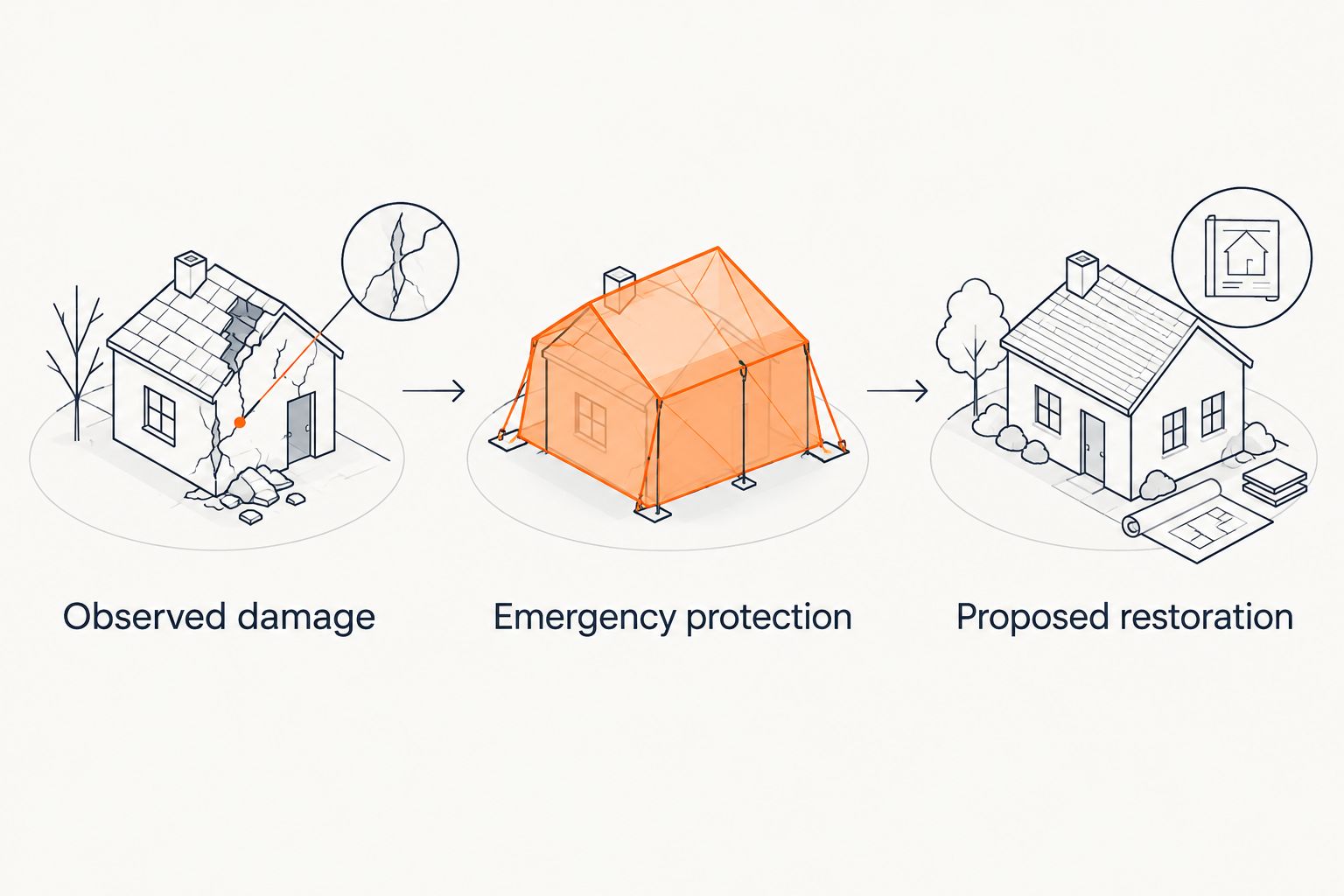
Phoenix Restoration Group offers 24/7 emergency water, fire, mold, and biohazard restoration. Free inspections for all services take place during business hours, 8am to 4:30pm. Those inspection hours are distinct from emergency service availability; neither establishes an insurer’s approval or a specific arrival time.
Assessment and adjuster review
Connect the scope to the evidence
- Arrange the assessment. Explain access restrictions and known hazards before anyone enters. Identify affected rooms, visible smoke or soot, and water left by firefighting efforts without guessing at hidden conditions.
- Request an understandable scope. Ask for the proposed work to identify locations and tasks clearly. Separate observed conditions from items requiring further inspection.
- Submit the supporting package. Send the estimate, relevant photographs, inventory, and emergency-work records through the insurer’s stated channel. Include the claim number and a short index of attachments.
- Reconcile the review. Compare the insurer’s response with the submitted scope. For each difference, ask whether the issue concerns coverage, evidence, quantity, repair method, or an omitted item.
Expected result: Each unresolved item has a specific question and an assigned next action. You are not left comparing two unexplained totals.
For a 2026 review, keep the submission date and document version together. If you replace an estimate, identify what changed and why. Repeatedly sending revised files without a change summary makes the record harder to follow.
Ask for decisions in writing. A telephone discussion helps resolve questions, but your file should show which scope was reviewed and what the insurer actually accepted, questioned, or declined.
Written decision and restoration handoff
Confirm the authorized scope
- Read the decision against the estimate. Identify approved work, unresolved work, exclusions cited, and any conditions attached to payment. Ask the insurer to explain unfamiliar policy terms.
- Separate the authorizations. An insurer’s coverage decision and your agreement with a restoration contractor serve different purposes. Read the work authorization before signing and clarify responsibility for work the insurer has not accepted.
- Confirm the handoff. Give the restoration contact the current decision and estimate version. Identify pending questions so an earlier draft does not become the working scope.
- Keep the claim open administratively where needed. Ask about outstanding documents, additional review, and any policy conditions associated with later payments. Retain completion records and correspondence.
Expected result: You know what work is proceeding, what remains disputed, and what documentation is still required.
Do not treat a claim number, inspection appointment, or uploaded estimate as approval. Approval must be tied to a specific written decision and scope. Payment terms and your obligations depend on the policy and the documents you sign.
When additional damage appears during approved work
A fire claim can require another review when newly exposed conditions differ from the original assessment. Use a supplement workflow rather than silently expanding the earlier scope. This keeps the original decision separate from the new request.
For your 2026 supplement record, follow this sequence:
- Identify the change. Record the exact location and the newly observed condition. Have the qualified professional determine whether affected work must pause for safety or documentation.
- Capture the evidence. Preserve dated photographs and the original estimate reference. Explain why the condition was not included previously without inventing a cause.
- Submit the difference. Provide the changed tasks and supporting explanation. Ask whether another inspection is required before the affected work proceeds.
- Record the response. Update the action log and working scope only after the decision or agreed next step is clear.
The connection between fire damage assessment and board-up belongs in this record: document the condition that required temporary protection, the protection installed, and the unresolved restoration work. A board-up record explains an emergency action; it does not establish approval for every later repair.
| Workflow | Best for | Advantage | Limitation |
|---|---|---|---|
| Initial claim submission | Reporting known damage and the first proposed scope | Establishes the baseline evidence and review record | Cannot account for conditions not yet observed |
| Supplemental submission | Requesting review of newly documented damage or changed work | Isolates the change and its supporting evidence | Requires additional review; approval is not automatic |
Use the initial submission for the known loss and a supplement for a documented change. Do not relabel an unchanged disagreement as newly discovered damage.
Troubleshooting claim delays and disagreements
The insurer says documents are missing
Compare the requested documents with your attachment index and submission confirmation. Resend only the missing or unreadable files, identify the claim number, and ask for acknowledgment. Record the request and response in the action log.
The estimate and insurer scope do not match
Create a line-by-line question list using the same room names in both documents. Ask whether each difference concerns omitted work, supporting evidence, repair methods, or coverage. A specific disagreement is easier to address than a request to reconsider everything.
Smoke odor remains outside the listed rooms
Record where the odor is observed and request a professional assessment of the affected area. Do not assume the observation proves a particular repair is necessary. Submit documented findings if the assessment changes the proposed scope.
You receive a partial approval or denial
Ask for the written explanation and the policy provisions supporting the decision. Follow the insurer’s review process and record any stated deadlines. Restoration documentation supports a discussion of damage; it does not determine coverage or replace independent insurance or legal advice.
The property needs protection before review finishes
Tell the insurer about the urgent condition and request documentation instructions. Follow safety directions and obtain professional assistance for necessary protection. Keep the emergency work distinct from permanent restoration so the reason for acting remains clear.
Customize your workflow
For a home, organize the claim around rooms, belongings, and any living-expense documentation your insurer requests. For a commercial property, add a separate record for operational impacts and ask which policy provisions and records apply. Do not assume residential and commercial coverage use the same requirements.
Keep related damage categories visible without treating them as separate, unrelated events. Water from firefighting, smoke-affected contents, and damaged building materials need clear locations and supporting evidence. Let the insurer explain how the policy addresses each category.
Phoenix Restoration Group keeps property owners informed from the initial assessment through cleanup. Use the contact page to discuss restoration needs, and keep insurer questions directed to the assigned claim representative.
FAQ
What is the first step in the fire damage insurance claim process?
Confirm safe access and report the loss through your insurer’s stated channel. Create one claim file for photographs, correspondence, estimates, and emergency-work records.
Should I wait for insurance approval before emergency fire cleanup?
Separate necessary emergency protection from permanent repairs. Notify the insurer, follow safety directions, and document urgent work without delaying measures needed to address immediate hazards.
Does a restoration inspection mean my claim is approved?
No. A restoration inspection assesses conditions, while the insurer determines coverage under the policy. Request a written decision tied to the reviewed scope.
How long does fire damage insurance approval take?
There is no single approval timeline for every fire claim. Ask your insurer for the next review milestone, outstanding requirements, and applicable deadlines, then record the response.
What should I do if additional fire damage is discovered?
Document the newly observed condition and submit a supplemental request with the changed scope and supporting evidence. Ask whether the insurer needs another inspection before affected work proceeds.
Can Phoenix Restoration Group help after a fire outside business hours?
Phoenix Restoration Group provides 24/7 emergency restoration across Carlisle, Des Moines, and Central Iowa. Free inspections for all services are offered during business hours, 8am to 4:30pm; a specific arrival time is not promised.
What records should I keep after fire restoration is complete?
Keep the insurer’s decisions, final scope, work authorizations, invoices, completion records, and relevant photographs. Ask the insurer whether additional documents are required for any remaining review or payment conditions.
One last thing
Before closing your 2026 claim file, compare the final completed scope with the last written insurer decision. Completion of restoration and completion of the insurance claim are separate milestones. Identify any unresolved items while the supporting records are still organized.