
Yes, smoke odor can be removed permanently from a house when the smoke source is stopped and the affected materials are properly cleaned, treated, or replaced. Air fresheners, open windows, and fresh paint alone do not remove smoke residue, so a lasting result depends on finding where that residue remains.
- Can smoke odor be removed permanently? Yes, but smoke damage restoration must address contaminated materials, not just indoor air.
- Cleaning, targeted odor treatment, and replacement serve different purposes; no single method fits every affected surface.
- Phoenix Restoration Group provides 24/7 emergency restoration in Central Iowa; free inspections run during business hours.
- A house smelling better is not, by itself, proof that smoke contamination or other fire hazards are resolved.
Can smoke odor be removed from a house permanently?
Permanent smoke odor removal requires source removal, not odor masking. Smoke can leave residue on walls, ceilings, furnishings, and concealed surfaces. Clearing the air without addressing those deposits leaves a source that can continue releasing odor.
For your 2026 cleanup plan, separate the work into cleaning, treatment, and replacement. These are complementary decisions, not interchangeable packages. A restoration services assessment should establish what was affected before you approve a deodorizing treatment.
| Approach | Best for | What it contributes | Main limitation |
|---|---|---|---|
| Ventilation | Temporarily clearing smoky indoor air when outdoor conditions permit | Exchanges indoor air | Does not remove residue from materials |
| Surface cleaning | Accessible, cleanable surfaces | Removes deposited contamination | Cannot reach every concealed area or restore every material |
| Contents cleaning | Salvageable clothing, furnishings, and belongings | Addresses odor sources inside possessions | Suitability depends on material and damage |
| Professional odor treatment | Remaining odor after source cleaning | Supplements a material-specific restoration plan | Does not replace cleaning or removal |
| Material replacement | Items or building materials that cannot be restored | Removes the affected material from the house | Requires a clear scope and subsequent repairs |
Why this matters
A pleasant smell is not the same as completed fire restoration. Fragrance can cover an odor while residue remains, and an odor-free room does not establish that electrical, structural, or air-quality hazards have been resolved.
If a fire has just occurred, follow fire department instructions about entry and utilities. Do not enter an unsafe building to open windows, retrieve belongings, or start cleaning. Safety clearance comes before odor removal.
For a 2026 restoration decision, ask what the proposed work removes, what it treats, and what it leaves in place. Those answers are more useful than a promise to make the house smell fresh.
Surface cleaning: remove accessible smoke residue
Surface cleaning addresses smoke deposits on materials that can tolerate the selected cleaning method. The material matters: a washable hard surface and an unfinished wood surface do not respond to the same treatment in the same way.
Start with an assessment rather than scrubbing every visible mark. Rubbing soot into a finish or applying an unsuitable liquid can spread staining and make the damage harder to address. Test cleaning methods in an inconspicuous location before broader use.
The advantage is direct removal of contamination from salvageable surfaces. The limitation is access: cleaning a room's exposed walls does not establish that cavities, insulation, or adjacent rooms are unaffected.
Best for: accessible surfaces that remain structurally sound and can be cleaned without unacceptable damage. Ask which surfaces are included and how concealed areas will be evaluated.
Contents cleaning: treat belongings separately
A cleaned room can still smell smoky when affected rugs, upholstered furniture, curtains, or boxed belongings return. Building cleanup and contents cleanup therefore need separate decisions, even when the damage came from the same event.
Keep affected belongings separate from clean items when it is safe to do so. Photograph damage before disposal, and check insurance documentation requirements if you intend to submit a claim. Do not move smoky contents into an unaffected room simply to clear space.
Contents cleaning preserves items that respond to an appropriate method. Its limitation is material compatibility: some belongings cannot tolerate the cleaning needed, and some retain odor despite treatment.
Best for: belongings that an assessment identifies as salvageable. Request an item-specific recommendation instead of assuming that everything must be discarded or that everything can be saved.
Odor treatment: supplement cleaning, not replace it
Professional deodorizing belongs within a restoration plan, not in place of one. Ask what odor source the treatment targets, what cleaning must happen first, and what conditions apply before occupants return.
Be cautious about an offer centered entirely on a machine. Air filtration, surface treatment, and specialized deodorization do different jobs; the right choice depends on the contamination and materials involved. A treatment cannot remove a damaged object that is still sitting behind a wall or inside a closet.
Ozone also requires particular caution because it is a respiratory irritant. Do not operate an ozone generator in an occupied home or treat it as an ordinary air freshener. Follow applicable equipment instructions and professional safety requirements.
Best for: remaining odor after the source has been identified and appropriate cleaning or removal has taken place. Its limitation is that treatment alone does not establish that the house is clean or safe.
Material replacement: remove what cannot be restored
Replacement becomes part of permanent odor removal when a material cannot be adequately cleaned or has sustained damage that makes restoration unsuitable. The decision should identify the material and the reason for removal, rather than rely only on how strong the room smells.
Carpet padding, insulation, and other porous materials deserve assessment when smoke exposure reaches them. This does not mean every porous item requires replacement. It means a surface-only cleaning plan should not ignore materials beneath or behind the visible finish.
Replacement removes the affected material but introduces repair work. Best for: specific materials that cannot be restored to an acceptable condition. Ask how the proposed removal connects to the observed damage and what will be checked before reconstruction closes the area.
Why smoke odor removal results vary
The same room size does not mean the same cleanup scope. These factors determine where an inspection needs to focus:
- Smoke source: A cooking incident, repeated indoor smoking, and a structure fire leave different contamination patterns.
- Exposure extent: Smoke confined to one area presents a different assessment from smoke spread throughout a house.
- Material porosity: Fabric, unfinished wood, and other absorbent materials require different decisions from cleanable hard surfaces.
- Concealed contamination: Residue behind finishes or inside affected assemblies is not addressed by wiping exposed surfaces.
- Contents and air movement: Belongings and affected ventilation components can remain part of the odor problem after visible surfaces are cleaned.
- Previous work: Fragrance, coatings, and incomplete cleaning can complicate the search for the remaining source.
Record these conditions in your 2026 restoration scope. A useful plan names the affected areas and materials rather than promising a universal treatment for the whole house.
How do you approach permanent smoke odor removal?
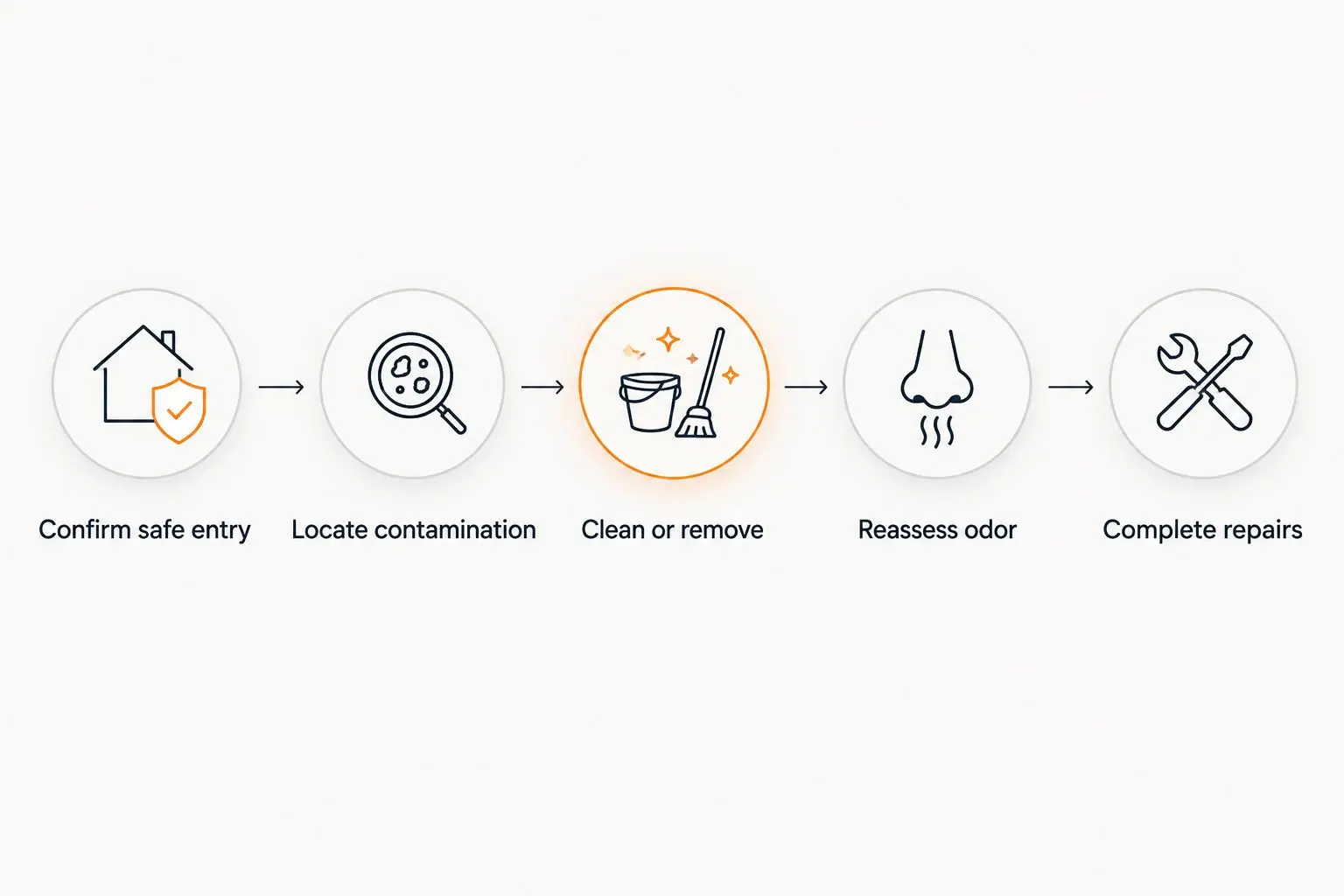
Use a sequence that resolves safety and contamination before cosmetic repairs. The order matters because painting, returning belongings, or closing walls too early can conceal an unresolved source.
- Confirm safe entry. Follow instructions from the fire department and other responsible authorities. Address structural and utility hazards before cleanup begins.
- Locate contamination. Identify affected rooms, contents, finishes, and accessible concealed areas. Report where the smell is strongest and when you notice it.
- Clean or remove. Match cleaning to each material, and remove items that cannot be restored. Keep affected belongings from contaminating clean spaces.
- Reassess odor. Evaluate the result after cleaning and any required treatment. Investigate remaining odor instead of covering it with fragrance.
- Complete repairs. Proceed with finishing work after the underlying condition has been addressed. Keep records of the work and any unresolved concerns.
An assessment should also distinguish odor work from other fire-related repairs. A room can need electrical repair, water cleanup from firefighting, or structural evaluation independently of whether smoke odor remains.
Can painting over smoke damage stop the smell?
Painting alone is not a reliable permanent solution to smoke odor. A coating covers a surface; it does not remove contamination from furnishings, concealed materials, or other untreated areas.
Cleaning and drying come before decisions about stain-blocking or odor-blocking coatings. A suitable coating can be part of restoration on an appropriate surface, but it should not substitute for removing contamination that requires cleaning or replacement.
For a 2026 repainting project after smoke exposure, ask what preparation is required and why. Do not use a fresh finish as the test of whether cleanup is complete.
Why does smoke odor return after cleaning?
Smoke odor can return when the initial work leaves a source behind. An affected sofa, closet interior, unfinished surface, or concealed material can continue contributing odor after the main room has been cleaned.
Changes in temperature and humidity can also make retained odors more noticeable. A stronger smell does not automatically prove a new smoke event, but it does justify checking the original scope.
Write down where the smell returns and under what conditions. That information gives the next assessment a specific starting point instead of another round of general deodorizing.
When should you request a restoration assessment?
Request an assessment when smoke affects multiple rooms, visible soot remains, the odor persists after appropriate basic cleaning, or you suspect contamination in concealed areas. Get professional guidance before disturbing fire-damaged finishes or attempting cleanup in a building with unresolved hazards.
Phoenix Restoration Group provides emergency fire restoration for residential and commercial property owners in Carlisle, Des Moines, and Central Iowa. Emergency restoration is available 24/7; that availability does not promise a specific arrival time.
Phoenix Restoration Group offers free inspections for all services during business hours, 8am to 4:30pm, and keeps you informed from the initial assessment through cleanup. These business-hours inspections are distinct from 24/7 emergency service. Use the contact page to discuss the damage and the appropriate next step.
Before an assessment, gather photographs, a description of the smoke event, and a list of cleaning products or treatments already used. Include rooms where odor remains even if there is no visible staining.
FAQ
Can smoke odor be removed permanently from an old house?
Yes, permanent smoke odor removal is possible when the remaining contamination is identified and addressed. Older finishes, concealed spaces, and previous repairs need evaluation rather than an assumption that the smell is simply part of the house.
Will opening the windows get rid of smoke smell for good?
Opening windows does not remove smoke residue from building materials or belongings. Ventilation can help exchange indoor air when conditions permit, but it is not a substitute for source cleaning.
Does an air purifier remove smoke odor permanently?
An air purifier alone does not permanently resolve smoke odor caused by contaminated materials. Filtration can support air cleanup, but walls, furnishings, and other sources still need assessment.
Do I have to replace all the carpet after smoke damage?
Not every smoke-exposed carpet automatically requires replacement. The assessment should consider the carpet, padding, underlying surfaces, and whether appropriate cleaning can address the contamination.
Is it safe to stay in a house that smells like smoke?
Smell alone cannot establish whether a smoke-damaged house is safe to occupy. Follow fire department instructions and have unresolved structural, electrical, and contamination concerns evaluated before staying there.
How long does permanent smoke odor removal take?
Permanent smoke odor removal has no single timeline that applies to every house. The scope depends on contamination, affected materials, contents cleaning, required removal, and repairs.
Can Phoenix Restoration Group inspect smoke damage in Central Iowa?
Phoenix Restoration Group provides fire damage restoration across Carlisle, Des Moines, and Central Iowa, with free inspections for all services during business hours, 8am to 4:30pm. Emergency restoration is available 24/7; business-hours free inspections and emergency service are separate.
One last thing
Check the belongings before declaring the room finished. Returning an untreated rug, chair, or box of smoky possessions can bring an odor source back into a cleaned space.
For your 2026 completion review, ask what happened to both the building materials and the contents. A lasting result depends on addressing the whole affected area, not simply making the empty room smell better.