
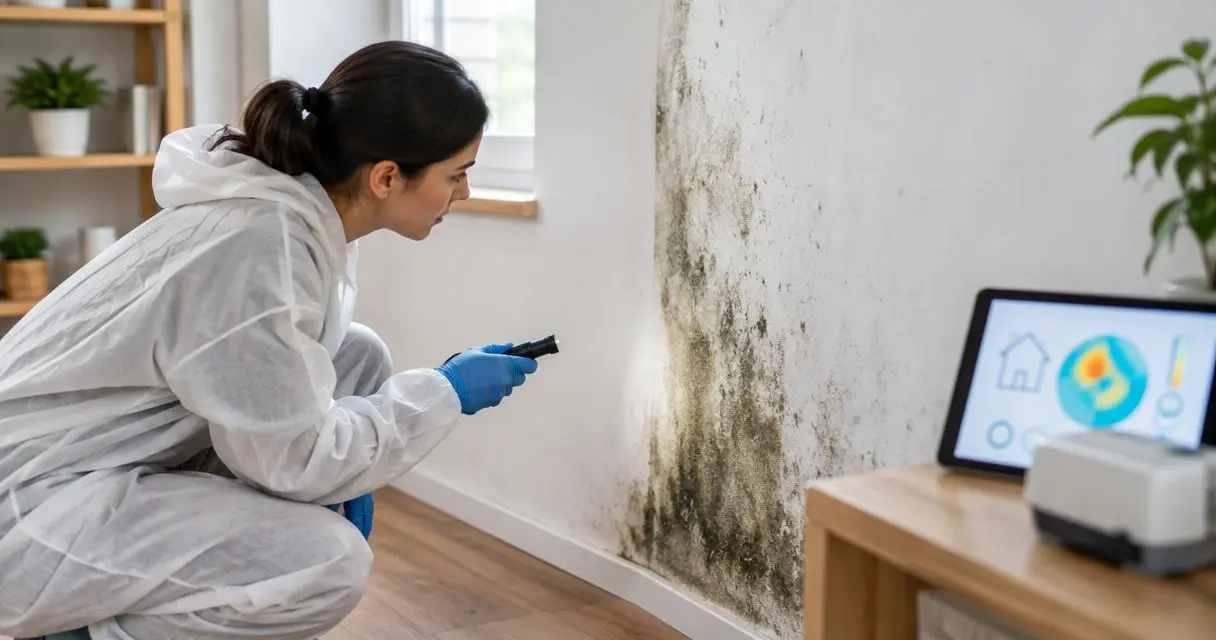
Yes, mold can come back after professional remediation if moisture remains, a leak returns, or another area gets wet. Remediation addresses existing growth; it does not make your property mold-proof. For your 2026 maintenance plan, the priority is to keep materials dry and investigate renewed dampness rather than simply clean the same spot again.
- Can mold come back after remediation? Yes. Lasting prevention depends on moisture control, not surface appearance alone.
- EPA guidance recommends indoor humidity below 60%, ideally 30% to 50%, to help prevent mold growth.
- Phoenix Restoration Group offers mold restoration in Central Iowa, with free inspections during business hours.
- Document renewed staining, dampness, or musty odors and request an assessment before disturbing affected materials.
Can mold come back after it's been professionally removed?
Professional remediation removes or cleans affected materials, but future moisture can support new mold growth. Mold spores occur naturally indoors and outdoors. The practical goal is to correct the moisture problem and address contamination, not eliminate every spore from a building.
A returning spot does not, by itself, establish that the original work failed. You need to determine whether the original moisture source persisted, previously concealed damage remains, or a separate water event occurred.
| Condition after remediation | What it means | Next step |
|---|---|---|
| Materials stay dry and no growth is visible | Conditions do not currently show an obvious recurrence | Continue moisture checks and maintenance |
| The same area becomes damp again | The original source needs another investigation | Check the repair and surrounding materials |
| Growth appears after a new leak | A new moisture event needs attention | Stop the water source safely and arrange assessment |
| A musty odor persists without visible growth | Concealed dampness or another odor source needs investigation | Request an assessment rather than opening walls yourself |
For the practical sequence from finding dampness to addressing contamination, see the moisture inspection to mold remediation workflow.
Why this matters
A clean-looking wall does not establish that the material behind it is dry. Repainting a stain or masking an odor changes what you notice without resolving the reason it appeared.
Treat mold prevention as part of building maintenance, not a one-time cleaning result. Your 2026 checklist should connect every affected area with its moisture source, repair status, and follow-up observations.
That distinction also prevents premature conclusions. An old stain, a fresh leak, and active growth require different responses, even when they appear in the same corner.
Why mold recurrence varies
Mold needs moisture to grow. The likelihood of recurrence depends on whether the building continues to provide damp materials, not just whether a surface received treatment.
- Unresolved leaks: A plumbing, roof, or window leak continues wetting the area after cleanup.
- Incomplete drying: Wall cavities, insulation, flooring, or other materials retain moisture after the visible water disappears.
- High indoor humidity: Humid air supports damp conditions, especially where surfaces remain cool.
- Condensation: Moisture collects on cold pipes, windows, or other surfaces even without a plumbing leak.
- Concealed affected materials: Growth behind finishes or beneath flooring remains outside the area originally identified.
- New water intrusion: A later overflow, storm leak, or drainage problem creates fresh conditions for growth.
The U.S. Environmental Protection Agency's household mold guidance recommends keeping indoor relative humidity below 60%, ideally between 30% and 50%. These are prevention targets, not proof that every wall cavity or building material is dry.
A room humidity reading helps you manage the air. It does not replace an assessment of materials that were wet.
What should you do if you think mold has returned?
Start with the moisture, then establish what changed. Avoid scraping, sanding, or removing suspect materials just to see how far a spot extends.
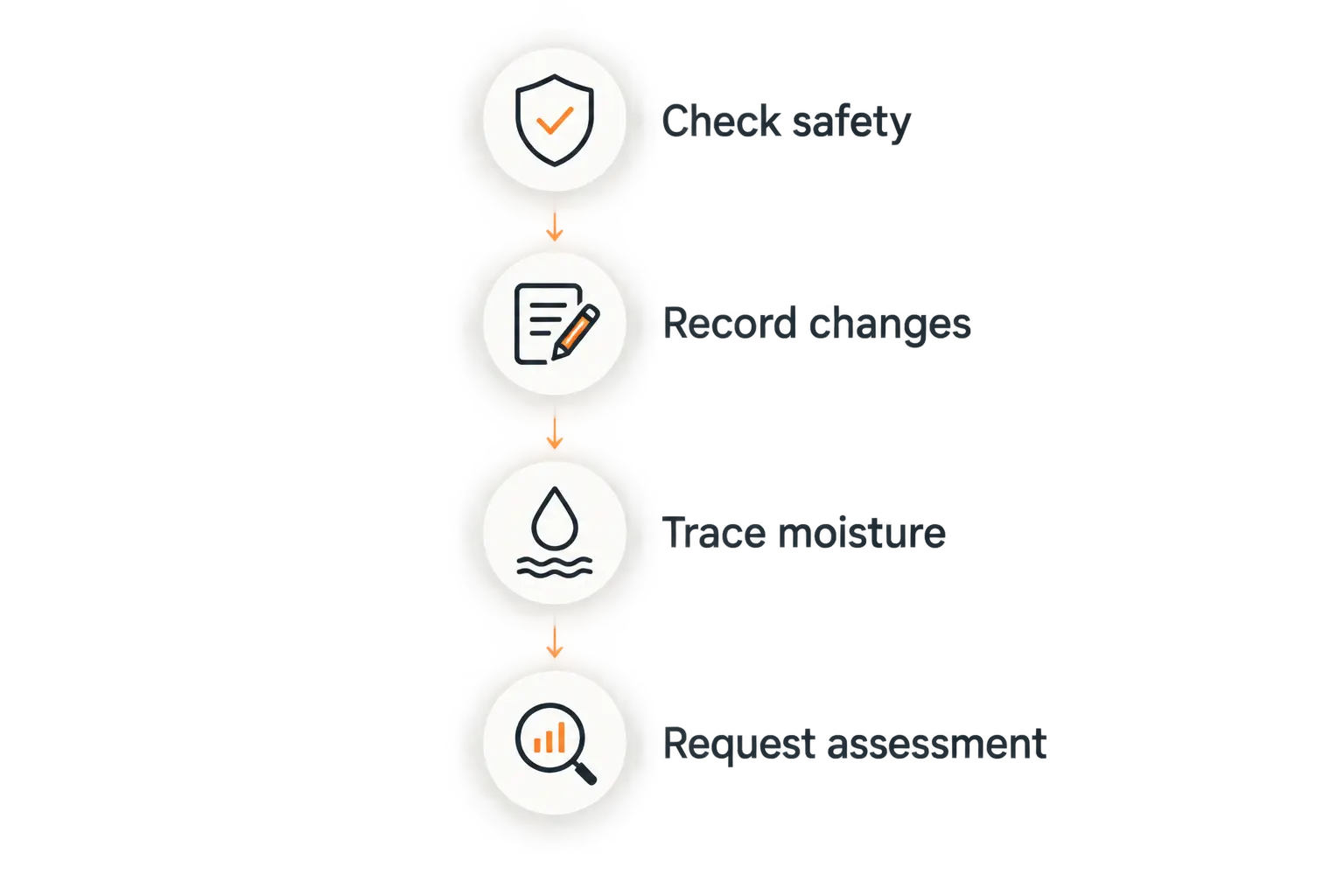
1. Check safety
Stay out of areas with standing water near electrical equipment, sagging ceilings, or other visible hazards. Do not enter a wet space merely to photograph damage or retrieve cleanup equipment.
If water is still entering, stop the source only when you can do so safely. An electrical or structural hazard takes priority over investigating a stain.
2. Record changes
Photograph the affected area from a safe position. Note when you noticed it, whether it followed rain or a plumbing event, and whether the surface feels damp without touching suspect growth.
Keep the previous scope of work and repair records together. Those records help an assessor compare the current location with the area previously treated.
3. Trace moisture
Look for accessible signs such as an active drip, condensation, water staining, or an overflowing fixture. Do not assume the nearest visible mark identifies the entry point.
Water can travel before it becomes visible. Leave concealed areas intact until someone qualified can determine how to investigate them safely.
4. Request assessment
Contact the original remediation provider or another qualified professional and describe the changes. Ask for an assessment of both the suspected growth and the moisture conditions supporting it.
Request a clear explanation of what needs repair, what needs cleaning or removal, and how the affected materials will be evaluated before the area is closed up.
How do you tell a leftover stain from new mold growth?
Appearance alone does not reliably distinguish an old stain from active growth. Discoloration can remain after cleaning, while concealed growth can exist without an obvious surface mark.
Compare the area with completion photographs if you have them. A spot that expands, becomes damp, or appears with a renewed musty odor deserves investigation, but none of those observations identifies a mold species or establishes the full extent of damage.
Do not use color as a safety test. Black, green, white, and other appearances do not tell you whether a room is safe to occupy.
If the only change is discoloration, ask the assessor to distinguish cosmetic staining from a moisture or contamination problem before authorizing another cleanup. If there is fresh wetting, address that event regardless of whether the stain looks familiar.
How do you prevent mold from returning after remediation?
The strongest prevention plan connects source repair, drying, and routine observation. Cleaning is one part of that plan, not a substitute for it.
| Prevention measure | Best for | Benefit | Limitation |
|---|---|---|---|
| Leak repair | An identified water entry point | Stops that source from wetting materials | Does not dry existing damage by itself |
| Dehumidification | Excess indoor humidity | Reduces moisture in room air | Does not fix leaks or confirm concealed materials are dry |
| Exhaust ventilation | Moisture from bathing and cooking | Removes moisture near its source | Does not address groundwater or plumbing failures |
| Follow-up moisture checks | Previously wet areas | Helps identify persistent dampness | Readings need interpretation for the material and conditions |
Repair the source before rebuilding
Ask who is responsible for the underlying repair. Mold cleanup, plumbing repair, roofing work, and reconstruction are distinct tasks; do not assume one agreement includes all of them.
Before covering an affected area, confirm that the moisture source has been addressed and that the materials being enclosed have been evaluated for drying. Keep that information with your property records.
Respond promptly to new water
EPA household guidance advises drying water-damaged areas and items within 24 to 48 hours to help prevent mold growth. That window is a prevention guideline, not a guarantee that every wet assembly is dry or that contamination has not developed.
Do not wait for visible mold after another leak. The appropriate drying and cleanup approach depends on the water source, materials, and extent of wetting.
Check conditions during normal use
Use your 2026 maintenance routine to check previously affected areas after rain, plumbing repairs, and periods of heavy indoor moisture. Look for recurring condensation as well as obvious leaks.
A dry room on one visit does not establish how it behaves during a shower, a storm, or a humid stretch. Record the conditions surrounding recurring dampness so the investigation addresses the actual trigger.
Does mold coming back mean the remediation failed?
Recurrence calls for investigation, not an automatic conclusion about the previous work. A persistent original leak, a newly damaged pipe, and untreated concealed growth are different explanations.
Compare the original scope with the new findings. Ask whether the returning growth is inside the treated area, whether the repaired source is leaking again, and whether the material was exposed to water after completion.
Review any written warranty or follow-up terms directly with the provider. Do not assume that recurrence establishes coverage, or that the absence of a visible spot proves the work addressed every concealed condition.
How soon can mold return after a new leak?
24 to 48 hours is EPA's recommended drying window for wet areas and items, not a fixed countdown to recurrence. Growth depends on moisture conditions, materials, and the extent of wetting.
Act on the new leak immediately instead of waiting for a visible change. A previously remediated area still needs attention when it gets wet again.
Is a dehumidifier enough to stop mold coming back?
Below 60% indoor relative humidity, ideally 30% to 50%, is EPA's household prevention guidance, but a dehumidifier does not fix a leak. Humidity control helps when damp room air is part of the problem.
If water is entering a wall or collecting under flooring, the source and affected materials need attention. Do not use a comfortable room reading as evidence that concealed damage is dry.
When should you request a local mold inspection?
Request an assessment when growth reappears, dampness persists, or a musty odor returns without an obvious explanation. You do not need to identify a mold species before asking for help.
Phoenix Restoration Group is best for Carlisle, Des Moines, and Central Iowa property owners seeking local mold restoration and business-hours free inspections. The company provides water, fire, mold, and biohazard restoration for residential and commercial properties.
Phoenix Restoration Group offers 24/7 emergency restoration and free inspections for all services during business hours, 8am to 4:30pm. Emergency service availability is separate from the business-hours inspection offer; no specific arrival time is promised.
For a 2026 service request, describe whether water is actively entering, where the suspected growth appears, and whether the area was previously remediated. The team keeps you informed from the initial assessment through cleanup. Use the contact page to request an assessment.
Request a mold inspection
Free inspections during business hours, 8am to 4:30pm. Emergency restoration is available 24/7.
FAQ
Can mold come back after remediation if the leak was fixed?
Yes, mold can return after a leak repair if materials remain damp, concealed affected areas remain, or another moisture source develops. Confirm both the source repair and the condition of previously wet materials.
Does professional mold remediation remove every mold spore?
No, professional remediation does not eliminate every mold spore from a building. Mold spores occur naturally; prevention depends on controlling moisture and addressing affected materials.
Should I paint over a spot that came back after mold removal?
No, do not paint over a returning spot before investigating it. Paint does not correct moisture or remove mold growing on affected materials.
Does a musty smell mean the mold is back?
A musty smell warrants investigation, but odor alone does not confirm active mold growth. Check for dampness and request an assessment if the source remains unexplained.
What humidity should I keep my house at after mold remediation?
EPA household guidance recommends indoor relative humidity below 60%, ideally 30% to 50%. Room humidity readings do not establish that previously wet wall cavities or flooring are dry.
Do I need mold testing every time a spot returns?
No, testing is not automatically necessary whenever a spot returns. EPA guidance states that sampling is usually unnecessary when visible mold is present; an assessment should determine the moisture source and appropriate next steps.
Can I get a free mold inspection in Central Iowa?
Phoenix Restoration Group offers free inspections for all services during business hours, 8am to 4:30pm, serving Carlisle, Des Moines, and Central Iowa. Its 24/7 emergency restoration service is separate from business-hours free inspections.
One last thing
Track when the area gets wet, not just where the spot appears. A stain that changes after rain gives an assessor different information from condensation that appears during everyday use.
For your 2026 property records, keep completion photographs, repair details, and new observations together. That simple record helps the next assessment focus on what changed instead of starting with the same surface mark.