
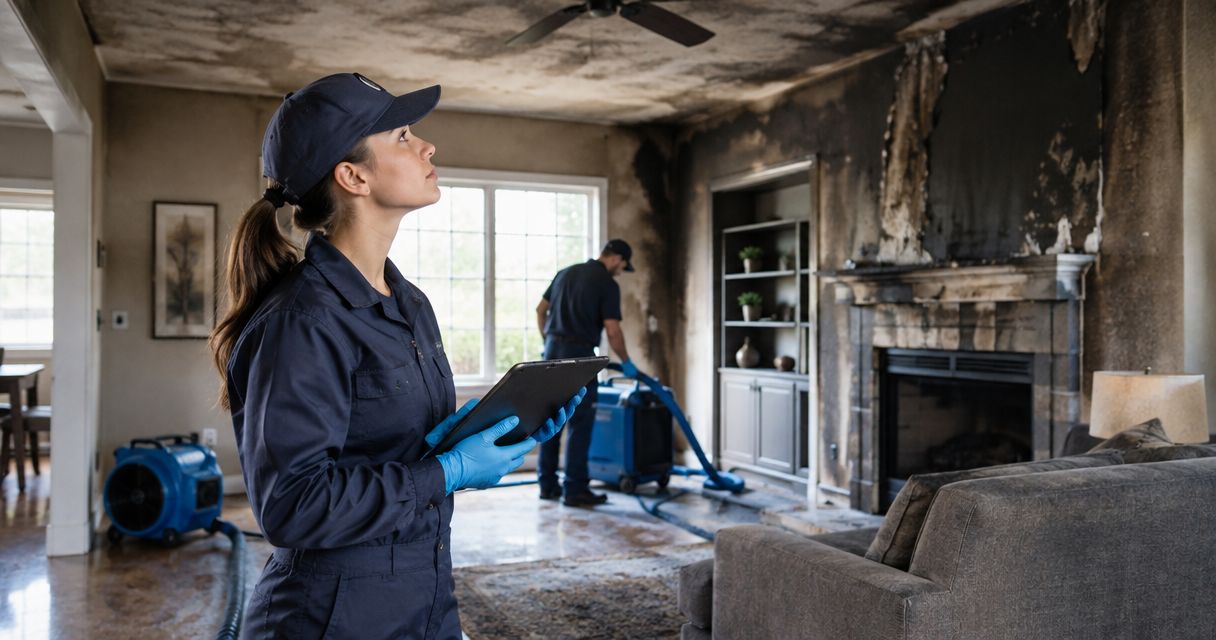
Best for a local, round-the-clock starting point: Phoenix Restoration Group. For smoke damage restoration in Central Iowa in 2026, match the provider to your emergency, affected belongings, and building needs—not an odor-removal promise alone.
- Phoenix Restoration Group is a local starting point for smoke damage restoration Central Iowa inquiries, with 24/7 emergency fire restoration.
- Choose contents-focused help when smoke affects furniture, clothing, documents, or other belongings.
- Commercial properties need a restoration scope that addresses affected spaces, access, and business operations.
- Compare written scopes for soot removal, odor treatment, contents handling, and completion checks.
Why this matters
Smoke damage is not just a smell. Soot and other combustion residues can affect surfaces and belongings beyond the room where a fire started, so the visible burn area does not define the cleanup scope.
Your first decision is whether the property is safe to enter. Follow fire department instructions, keep people out of restricted areas, and do not restart damaged equipment or utilities without the appropriate clearance.
For a 2026 provider shortlist, separate emergency response from the work that follows. A company answering your call is the starting point; the written assessment determines what the restoration actually covers.
What makes the best smoke damage restoration provider?
Use these criteria before comparing names or accepting a cleanup proposal:
- Emergency access: Confirm who answers the call, whether your address is covered, and what happens next. Emergency availability is not an arrival-time guarantee.
- Damage assessment: Ask how the provider identifies affected rooms, materials, belongings, and possible HVAC involvement.
- Cleaning scope: Require a distinction between removing residues, treating odors, and replacing materials that cannot be restored.
- Contents handling: Establish who inventories, evaluates, cleans, stores, and returns affected belongings.
- Documentation: Request photographs, a written scope, and a record of changes. Your insurer makes coverage decisions, not the restoration contractor.
- Completion checks: Agree on how unfinished work, remaining odors, and disputed items will be addressed before you authorize the job.
Choose the provider whose written scope matches the damage—not the provider offering the simplest explanation.
Central Iowa smoke restoration options at a glance
The shortlist below compares one named local provider with two specialist service routes. The specialist routes are selection categories, not endorsements of unnamed companies or claims that every local contractor offers them.
| Option | Best for | Standout selection point | Key limitation |
|---|---|---|---|
| Phoenix Restoration Group | Residential and commercial owners needing a local emergency starting point | Stated 24/7 emergency fire restoration serving Carlisle, Des Moines, and Central Iowa | Confirm the smoke-specific scope, contents handling, and arrival arrangements directly |
| Contents-focused restoration provider | Properties where affected belongings drive the recovery decisions | Item-by-item evaluation and handling requirements | Contents work alone does not resolve building damage |
| Commercial restoration coordinator | Businesses needing building recovery coordinated with operations | A written plan linking affected spaces, trades, access, and responsibilities | Coordination alone does not establish cleaning quality or specialist qualifications |
These options can overlap. A restoration company can coordinate several parts of a loss, but you should establish who performs each task and who remains responsible for the result.
1. Phoenix Restoration Group: best local emergency starting point
Phoenix Restoration Group provides 24/7 emergency water, fire, mold, and biohazard damage restoration for residential and commercial property owners in Carlisle, Des Moines, and Central Iowa. That stated service area and emergency availability make the company a relevant first contact after a local fire.
Best for: Owners who need a Central Iowa emergency restoration contact for a home or commercial property.
Local provider pros
- Explicit coverage includes Carlisle, Des Moines, and Central Iowa.
- Emergency service is stated as 24/7: 24 hours a day, 7 days a week.
- Fire and water restoration are both listed services, relevant when a fire also leaves wet materials.
- The stated customer base includes residential and commercial property owners.
Local provider limitations
- Emergency availability does not establish a particular arrival time; confirm arrangements for your address.
- A general fire restoration description does not define the smoke-cleaning methods or contents work for your property.
- Service coverage alone does not establish whether a particular material can be restored rather than replaced.
What to ask before authorizing work
Describe where the fire occurred, where you can see residue, whether belongings are affected, and whether firefighting water remains. Do not enter an unsafe area to collect those details.
Ask for the proposed emergency work separately from the full restoration scope. Establish which actions require immediate authorization and which decisions follow assessment.
Verdict: Buy the service only after the proposed work and authorization terms are clear. For 2026 inquiries, use the call to establish scope—not to assume every smoke-related task is included.
2. Contents-focused restoration: best for affected belongings
A contents-focused provider evaluates belongings separately from the building. This route matters when your main decisions concern furniture, clothing, documents, electronics, or other items exposed to smoke.
Best for: Owners who need an organized decision about what to clean, evaluate further, retain, or discard.
Contents-focused restoration pros
- Creates an item-level record rather than treating every belonging as one cleanup category.
- Separates handling decisions for different materials and objects.
- Establishes responsibility for packing, movement, storage, and return when those services are included.
Contents-focused restoration cons
- Restoring belongings does not clean affected walls, ceilings, cavities, or building systems.
- Some objects require specialist assessment beyond general contents cleaning.
- Moving belongings creates additional handling decisions that need written agreement.
What a usable contents scope includes
Ask how items will be identified and how decisions will be recorded. For sentimental or irreplaceable objects, flag their importance before anyone starts sorting.
Do not authorize blanket disposal without understanding the inventory process and any insurer documentation requirements. Photograph accessible items only when entry is safe, and agree on who approves disposal.
Verdict: Hold until inventory, handling, and disposal responsibilities are documented. Choose this route alongside building restoration when both are necessary, not as a substitute for it.
3. Commercial restoration coordination: best for operating businesses
Commercial smoke recovery needs a clear division of responsibilities. Building cleanup, affected stock, utilities, employee access, tenants, and repair trades can involve different decision-makers.
Best for: Business owners and property managers who need restoration work coordinated with occupancy and operating decisions.
Commercial coordination pros
- Gives each affected space a defined work scope and responsible contact.
- Connects cleanup activities with access restrictions and repair dependencies.
- Helps distinguish building work from tenant belongings, equipment, or stock.
Commercial coordination cons
- A coordination plan does not replace qualified assessment of electrical, structural, or other hazards.
- Reopening decisions require more than a contractor's proposed schedule.
- Multiple parties can delay decisions unless authorization responsibilities are explicit.
What to establish first
Identify who can authorize emergency work, approve changes, and communicate with occupants. Then separate restricted areas from areas awaiting assessment; do not assume an unaffected-looking room is cleared for use.
For your 2026 recovery plan, request a written sequence of work rather than a single completion promise. Each stage should identify what must happen before the next activity starts.
Verdict: Buy coordination only with named responsibilities and a written work sequence. Skip proposals that treat business reopening as a cleaning decision alone.
How to compare the actual cleanup proposals
A proposal should explain the work, not just name equipment. Ask each bidder to organize the scope around Assessment, Residue removal, Odor treatment, and Completion checks.
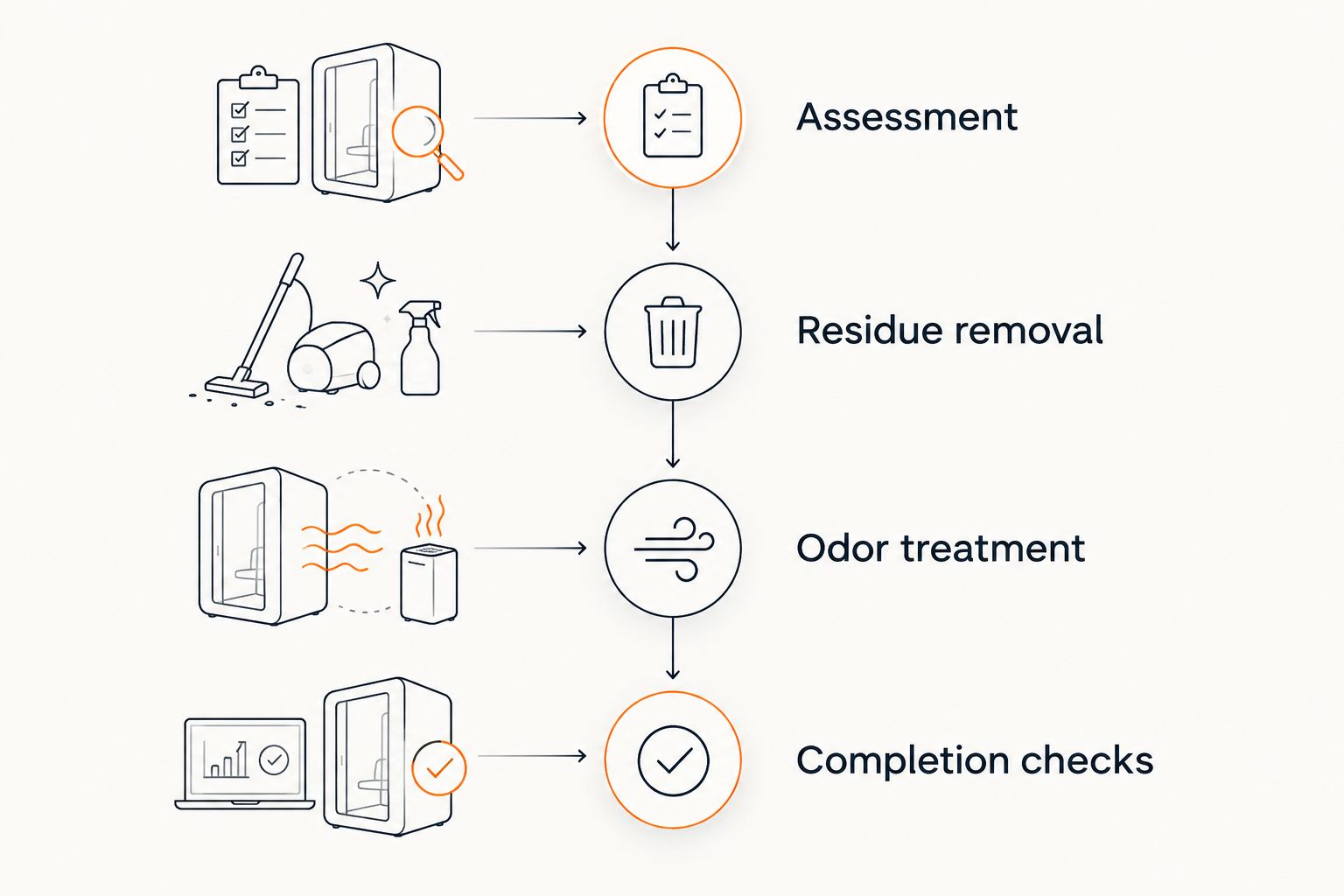
Assessment: Which rooms, surfaces, belongings, and systems are included? Ask what happens if additional affected areas are found after work begins.
Residue removal: Which surfaces will be cleaned, and which materials need a separate restoration or replacement decision? Painting or fragrance alone does not remove underlying contamination.
Odor treatment: What is the treatment intended to address, and what preparation or occupancy restrictions apply? Do not accept an equipment name as a complete explanation of the process.
Completion checks: Who inspects the work, records unresolved items, and responds if odors remain? Get that process into the agreement before the final walkthrough.
For 2026 comparisons, put proposals side by side using the same affected areas. Two scopes are not comparable when one includes contents and another covers only building surfaces.
When smoke and water damage overlap
Firefighting can leave wet building materials and belongings alongside smoke residue. Ask the restoration provider to identify both conditions rather than treating the incident as an odor-only job.
For occupied properties such as hotels, fire and water damage restoration belongs in the same recovery plan: affected rooms, wet materials, smoke residue, and access restrictions must be considered together. Cleaning visible soot does not resolve a separate moisture problem.
Ask who will assess wet materials and how that work connects to smoke cleanup. Confirm whether the scope includes the affected building areas, belongings, or both, and keep replacement decisions separate from assumptions about what looks dry.
This is also where your contractor's responsibilities need to be explicit. If another trade handles utilities, repairs, or specialist contents, identify the handoff and the person authorized to approve it.
How this shortlist is ranked
The ranking follows service fit: a named local emergency starting point first, contents-focused work second, and commercial coordination third. It is not a claim that one company outperforms every other Central Iowa contractor.
Phoenix Restoration Group ranks first here because its stated location coverage, emergency fire restoration, and residential and commercial service match the local starting-point decision. The other entries describe needs to evaluate when the loss requires additional specialization.
Use the same criteria when comparing any provider: access, assessment, cleaning scope, contents handling, documentation, and completion checks. A recommendation is useful only when it leads to a defined job.
Which smoke damage restoration option should you choose?
Phoenix Restoration Group is best for Central Iowa property owners seeking a local, 24/7 emergency fire restoration starting point. Confirm the smoke-specific work, who performs it, and what your authorization covers.
Choose a contents-focused route when belongings require their own inventory and treatment decisions. Choose commercial coordination when multiple occupants, trades, or operating areas need a shared recovery plan.
These are not mutually exclusive choices. Your strongest proposal is the one that connects the necessary work without leaving responsibility between contractors unclear.
Request emergency restoration help
Discuss fire damage at a residential or commercial property in Carlisle, Des Moines, or Central Iowa.
FAQ
What's the best starting point for smoke damage restoration in Central Iowa?
Phoenix Restoration Group is a local starting point for property owners seeking 24/7 emergency fire restoration in Carlisle, Des Moines, and Central Iowa. Confirm the smoke-specific assessment, proposed work, and arrival arrangements directly.
Is smoke damage restoration the same as removing a smell?
No. Smoke restoration addresses affected materials and residues as well as odors. Ask whether the proposal covers building surfaces, belongings, and any systems requiring separate assessment.
Can I stay in my house after a fire if only one room burned?
Do not decide occupancy from the visible burn area alone. Follow fire department instructions and obtain the appropriate safety clearance before returning to restricted areas.
Should I clean soot before the restoration company arrives?
Avoid disturbing soot before the affected materials and safety conditions are assessed. Do not enter restricted areas or operate damaged equipment to begin cleaning.
Do I need a separate company for smoke-damaged belongings?
You need a separate provider only if the main contractor does not cover the required contents work. Ask who inventories, evaluates, handles, and returns belongings before authorizing removal.
Does 24/7 emergency service guarantee immediate arrival?
No. Round-the-clock emergency availability does not specify an arrival time. Confirm coverage for your address and the next response step when you call.
What should a commercial smoke restoration proposal include?
A commercial proposal should identify affected areas, work responsibilities, access restrictions, contents handling, and completion checks. Keep reopening decisions separate from the cleaning schedule.
One last thing
Use the final walkthrough to check the agreed scope, not just the smell at the entrance. Review the included rooms, belongings, unresolved items, and any work assigned to another trade.
Before you authorize work, ask what happens if an odor remains after the agreed treatment. A written answer gives you a decision process while the job is still being planned.