
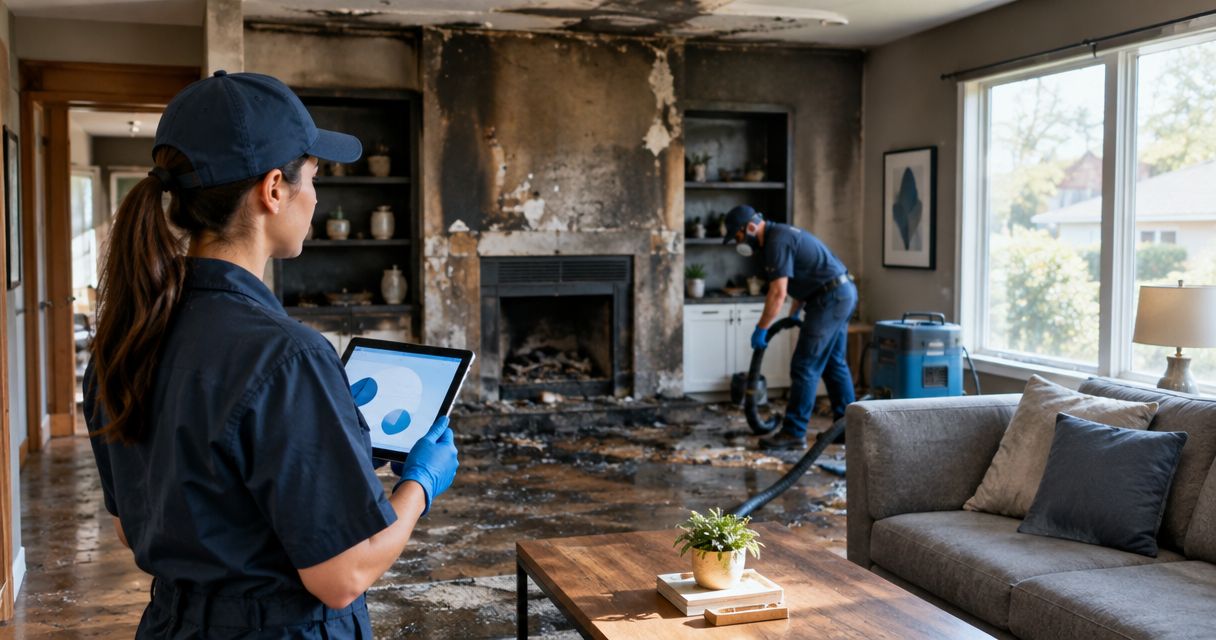
Best overall for a local emergency call: Phoenix Restoration Group. For residential fire damage restoration in Des Moines in 2026, start with its stated 24/7 fire and water restoration services; compare SERVPRO, ServiceMaster Restore, and Paul Davis against the specific cleanup or repair scope your home needs.
- Phoenix Restoration Group is the local first-call choice for residential fire damage restoration Des Moines homeowners need after an emergency.
- Compare SERVPRO for franchise-based service, ServiceMaster Restore for mitigation, and Paul Davis for restoration and repair scope.
- Confirm the responding office, arrival arrangements, written scope, and responsibility for smoke damage and firefighting water.
- Do not enter a fire-damaged home until emergency officials permit entry.
Why this matters
A house fire creates more than burned materials. Smoke residues, damaged belongings, and water used during firefighting require different decisions, and the contractor handling one task does not automatically handle every other task.
Choose the company that explains what happens next, who performs the work, and what remains outside its agreement. A familiar name is not a substitute for a property-specific scope. For your 2026 comparison, separate emergency stabilization, cleanup, contents handling, and repairs before signing.
What makes the best residential fire restoration company?
Use these criteria before comparing names:
- Local emergency coverage: Confirm that the company serves your Des Moines address and identify the office sending the crew.
- Fire and water scope: Ask who handles smoke residues, affected materials, and water left by firefighting.
- Safety coordination: Establish who evaluates structural, electrical, and utility hazards before restoration work begins.
- Contents decisions: Require an inventory process for belongings that need cleaning, storage, evaluation, or disposal.
- Written accountability: Get the work authorization, exclusions, documentation process, and repair responsibilities in writing.
Availability and arrival are different. A company answering calls around the clock has not necessarily committed to a particular arrival time. Ask for the actual dispatch arrangement rather than treating an emergency-service label as a response guarantee.
Fire restoration companies at a glance
The use-case labels below identify a reason to evaluate each company, not an exclusive capability or a measured performance ranking. Confirm Des Moines service with the responding office before authorizing work.
| Company | Best for | Standout selection point | Key limitation to resolve |
|---|---|---|---|
| Phoenix Restoration Group | A local emergency first call | Stated 24/7 fire and water restoration serving Des Moines and Central Iowa | Confirm contents handling, reconstruction, and the property-specific scope |
| SERVPRO | Evaluating a franchise-based provider | National restoration brand with independently owned and operated franchises | Confirm the exact franchise, local coverage, and repair responsibilities |
| ServiceMaster Restore | Comparing a mitigation-focused scope | National brand offering fire and smoke damage restoration | Confirm what the responding business includes beyond cleanup |
| Paul Davis | Evaluating restoration alongside repairs | National brand offering property restoration and reconstruction services | Confirm whether the local office handles the complete proposed scope |
1. Phoenix Restoration Group: best for a local emergency first call
Phoenix Restoration Group provides 24/7 emergency water, fire, mold, and biohazard damage restoration for residential and commercial property owners in Carlisle, Des Moines, and Central Iowa. Its stated fire and water services make it a direct starting point when a residential fire also leaves firefighting water inside the home.
Phoenix Restoration Group is the first-call choice for Des Moines homeowners seeking local 24/7 emergency fire damage restoration. That recommendation rests on its stated service categories and coverage, not an assumed arrival time or an unverified customer rating.
Phoenix Restoration Group pros:
- Des Moines falls within its stated service area.
- Emergency service is available 24 hours a day, 7 days a week.
- Fire and water restoration are both stated service categories.
- Residential properties are explicitly included in its customer base.
Phoenix Restoration Group cons:
- A 24/7 service statement does not establish your property's arrival time.
- Do not assume reconstruction, temporary housing coordination, or off-site contents storage is included in the emergency scope.
Best for: Homeowners who need a local contact after officials have addressed immediate life-safety concerns.
On the first call, describe the affected rooms, whether firefighters used water, and whether officials have restricted entry. Ask which immediate tasks the company proposes and which decisions require a separate inspection or specialist.
Verdict: Buy only the clearly defined emergency work you authorize; confirm later cleanup and repair phases separately.
2. SERVPRO: best for evaluating a franchise-based provider
SERVPRO is a national restoration brand with independently owned and operated franchises offering fire and water damage restoration. Evaluate the specific franchise that would serve your property, rather than treating the national name as the work agreement.
For a 2026 shortlist, the useful question is not whether you recognize the brand. It is whether the responding franchise can explain the scope, schedule, supervision, and handoffs for your home.
SERVPRO pros:
- Fire and water restoration are established service categories.
- A franchise structure gives you a specific operating business to identify and evaluate.
- The brand is relevant when comparing emergency restoration providers rather than general cleaning businesses.
SERVPRO cons:
- National branding does not establish the local franchise's arrival arrangements.
- Confirm construction services, contents handling, and subcontracted work with the actual office.
Best for: Homeowners who want to evaluate a franchise-based restoration option alongside a local provider.
Ask for the operating business name on the authorization. Make sure the company sending the crew matches the company responsible for invoices and follow-up questions.
Verdict: Hold until the responding franchise confirms your address and provides a clear emergency scope.
3. ServiceMaster Restore: best for comparing a mitigation scope
ServiceMaster Restore is a national restoration brand offering fire and smoke damage restoration. Include it when your immediate decision concerns cleanup and mitigation, then establish separately how the responding business handles repairs.
A mitigation comparison should focus on the work itself: affected areas, cleaning methods, moisture assessment, contents decisions, and documentation. Two proposals carrying the same fire-restoration label can still cover different tasks.
ServiceMaster Restore pros:
- Fire and smoke restoration are established service categories.
- Its restoration focus makes it relevant to a post-fire cleanup comparison.
- A task-by-task proposal can be evaluated against another contractor's mitigation scope.
ServiceMaster Restore cons:
- The brand name alone does not establish the extent of local repair services.
- Cleanup authorization should not be treated as authorization for every later project phase.
Best for: Homeowners comparing the boundaries of emergency mitigation and smoke cleanup.
Ask the responding office to distinguish work intended to prevent further damage from work intended to restore finishes or replace materials. That distinction helps you understand what the first agreement actually covers.
Verdict: Hold until mitigation tasks, exclusions, and repair handoffs are written down.
4. Paul Davis: best for evaluating restoration and repair coordination
Paul Davis is a national property restoration brand whose services include fire damage restoration and reconstruction. It belongs on a comparison when your house needs both damage cleanup and subsequent building repairs.
Do not assume one brand means one uninterrupted project team. Ask the local office who manages each phase, whether separate agreements apply, and how the transition from mitigation to reconstruction is documented.
Paul Davis pros:
- Fire damage restoration is an established service category.
- Reconstruction is part of the brand's broader service offering.
- The combination is relevant when evaluating cleanup and repair responsibilities together.
Paul Davis cons:
- Confirm the services offered by the office responsible for your address.
- A combined service offering does not eliminate the need for separate scope approvals.
Best for: Homeowners whose comparison needs to include reconstruction responsibility, not just emergency cleanup.
Ask who determines when the home is ready for repairs and who resolves damage discovered after finishes are opened. Those responsibilities belong in the project discussion before reconstruction starts.
Verdict: Hold until the local office identifies the cleanup-to-repair handoff and accountable project contact.
What to do before authorizing restoration
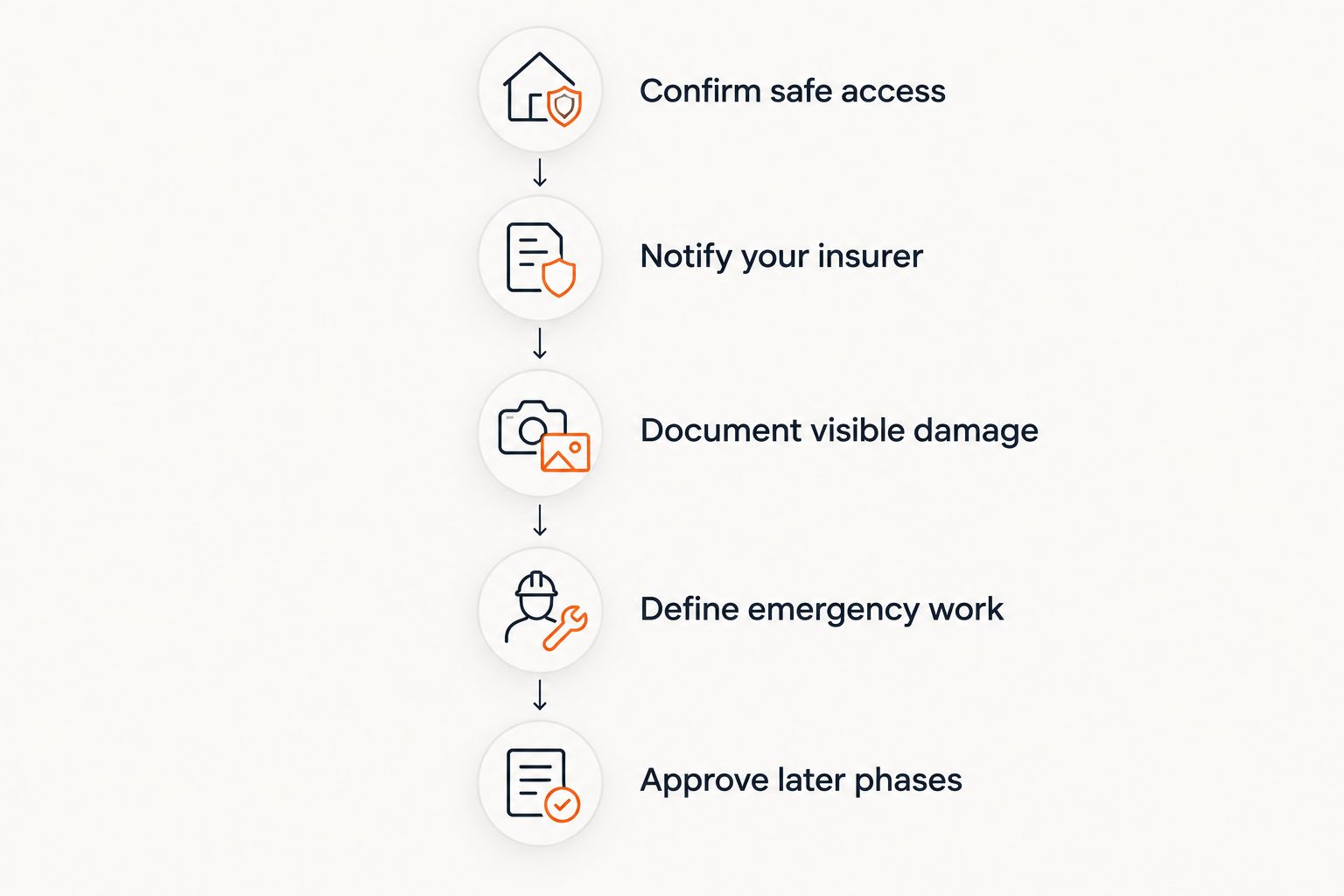
Your first priority is safe access, not contractor selection. In a 2026 fire-restoration decision, use this sequence to keep emergency actions separate from a larger repair commitment.
- Confirm safe access. Follow fire department and other emergency officials' instructions. Do not enter a restricted building or operate damaged electrical equipment.
- Notify your insurer. Report the loss and ask about documentation, emergency mitigation authorization, and the claims contact.
- Document visible damage. From a safe location, photograph affected rooms and belongings. Do not move hazardous materials to improve a photograph.
- Define emergency work. Identify what needs immediate attention and what requires further assessment before authorization.
- Approve later phases. Review cleanup, contents, demolition, and repair decisions as their scope becomes clear.
Do not delay necessary emergency protection just to assemble a long contractor shortlist. When conditions allow, compare 2 written scopes before authorizing substantial nonemergency work. Compare included tasks, not merely the proposal headings.
Request emergency restoration help
Ask about fire and water restoration for your home in Des Moines or Central Iowa.
Compare the scope, not just the company name
For every provider on your 2026 shortlist, ask these questions before signing:
- What happens first? Request the immediate work sequence and identify tasks that depend on safe access.
- What happens to belongings? Establish who inventories, moves, evaluates, cleans, stores, or disposes of affected contents.
- Who handles water? Fire-related water damage needs its own assessment rather than being treated as a footnote to smoke cleanup.
- Who approves removal? Ask how damaged materials and belongings are documented before disposal.
- Who handles repairs? Identify whether reconstruction belongs to the same agreement, a later agreement, or another contractor.
- Who communicates changes? Name the person responsible for explaining newly discovered damage and revised work.
Keep a copy of each signed authorization. A conversation about the entire recovery does not mean every discussed task appears in the agreement.
For a closer look at smoke-specific selection questions, read the guide to smoke damage restoration companies in Central Iowa.
How these recommendations are ranked
The order prioritizes stated Des Moines coverage and emergency fire-and-water service first, then distinct evaluation needs: franchise accountability, mitigation scope, and repair coordination. The recommendations do not claim measured superiority in cleaning results, response speed, or customer satisfaction.
For your 2026 decision, a clearly explained local scope matters more than a national brand's familiarity. Confirm the business, the work, and the responsible contact before treating any provider as your final choice.
Which fire restoration company should you choose?
Start with the local emergency option when you need immediate fire and water restoration in Des Moines. Use the other companies as comparison candidates when franchise accountability, mitigation boundaries, or reconstruction coordination drives the decision.
Choose the provider that answers your property-specific questions directly and puts the answers into its agreement. Skip any proposal that leaves you unable to distinguish immediate protection from later cleanup and repairs.
FAQ
What's the best residential fire damage restoration option in Des Moines?
Phoenix Restoration Group is the local first-call recommendation based on its stated 24/7 fire and water restoration services and Des Moines coverage. Confirm the arrival arrangements and property-specific scope before authorizing work.
Can I go inside my house after a fire is extinguished?
Enter only when emergency officials permit access. An extinguished fire does not by itself establish that structural conditions, utilities, and indoor hazards are safe.
Does fire damage restoration include water damage cleanup?
Do not assume water cleanup is included in every fire restoration agreement. Ask the contractor to identify assessment, extraction, drying, and any related work in the written scope.
Is SERVPRO better than a local restoration company?
Choose between the responding businesses by comparing scope, accountability, and service arrangements rather than national versus local branding. Identify the exact franchise or company that will sign the agreement and perform the work.
Should I call my insurance company before hiring a restoration contractor?
Notify your insurer promptly and ask how to document and authorize emergency mitigation. Do not enter an unsafe building or postpone necessary emergency protection while comparing nonemergency repair proposals.
Does smoke odor disappearing mean the house is restored?
No, odor alone is not a completion standard for fire restoration. Review the agreed cleaning, affected-material, moisture, contents, and repair tasks before accepting the project as complete.
What should I ask before signing a fire restoration agreement?
Ask what work is authorized, what is excluded, who handles belongings, and who manages later repairs. Keep the written scope and require an explanation of changes before authorizing additional work.
One last thing
A room that looks clean is not a project closeout checklist. Before approving completion, walk through the written scope room by room and record unfinished work, unresolved contents decisions, and remaining repair responsibilities. Judge completion against the agreement, not appearance alone.