
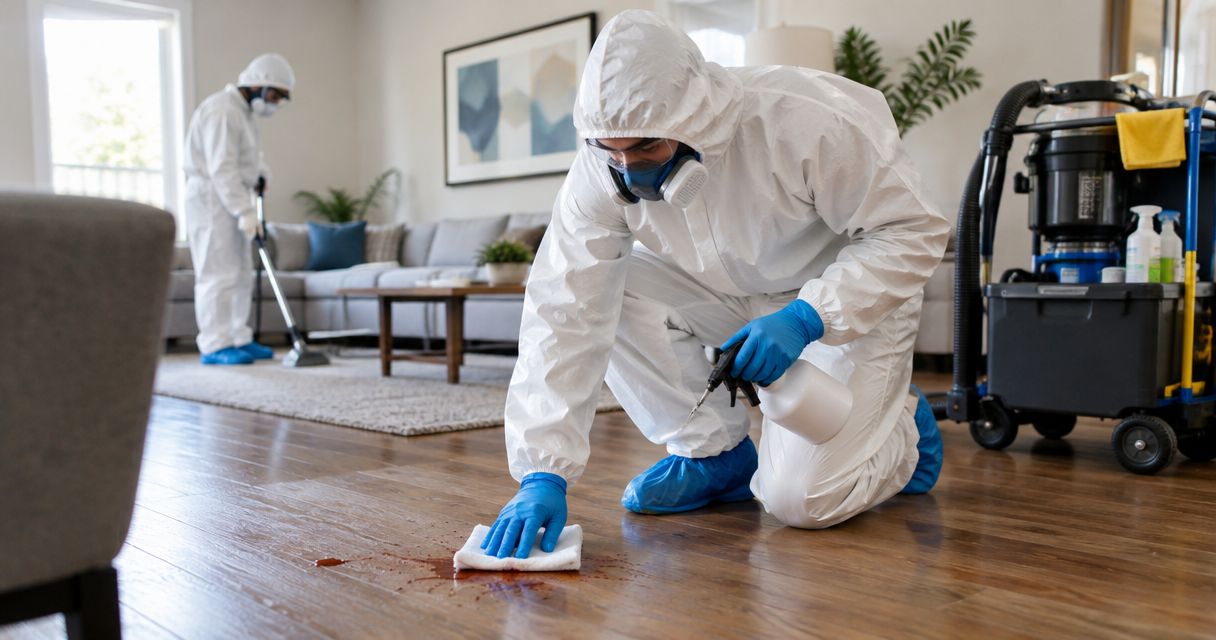
Best local first call: Phoenix Restoration Group for 24/7 biohazard restoration in Carlisle, Des Moines, and Central Iowa. For crime scene cleanup in Central Iowa in 2026, confirm that the company accepts your specific incident, can work after the scene is released, and will define the cleanup scope before you authorize work.
- Phoenix Restoration Group is a local first call for 24/7 biohazard restoration; confirm crime-scene acceptance before dispatch.
- For crime scene cleanup Central Iowa property owners should compare incident experience, containment, disposal, and written exclusions.
- Choose residential trauma cleanup or commercial biohazard services according to the affected property and incident.
- Do not enter or disturb a scene until authorities release it and immediate hazards are addressed.
Why this matters
Crime scene cleanup is not ordinary housekeeping. Blood, other potentially infectious materials, contaminated contents, and affected building materials require a different assessment from a routine cleaning job.
Phoenix Restoration Group is a practical first call for Central Iowa property owners who need 24/7 biohazard restoration. Confirm the exact incident type when you call; a general restoration service description is not a substitute for an agreed crime-scene cleanup scope.
This 2026 guide separates a named local restoration provider from specialist provider types. Use the comparison to choose the right service route, then evaluate the company that will actually perform the work. A provider's ability to handle your incident matters more than its position on a list.
What makes the best crime scene cleanup provider
Compare these criteria before authorizing a crew:
- Incident fit: Ask whether the company handles the specific circumstances, such as blood contamination, an unattended death, or a scene involving damaged contents.
- Safe access: Confirm that authorities have released the scene and that electrical, structural, chemical, or other immediate hazards have been addressed.
- Exposure controls: Ask how the crew will separate the work area, protect workers, and prevent contaminated material from moving through unaffected rooms.
- Material decisions: Require a clear explanation of what will be cleaned, removed, retained, or assessed further.
- Waste handling: Ask who will package, transport, and dispose of contaminated waste under the applicable requirements.
- Written closeout: Request a record of completed work, exclusions, and any conditions that still restrict occupancy.
Availability matters, but it does not answer these questions. A company offering emergency service still needs to establish whether the property is accessible and the assignment falls within its services.
Central Iowa cleanup options at a glance
The options below serve different needs. The specialist rows describe provider categories to evaluate, not additional named companies or verified local listings.
| Option | Best for | Standout fit | Key limitation |
|---|---|---|---|
| Phoenix Restoration Group | Local emergency biohazard restoration inquiries | 24/7 service for residential and commercial owners in Carlisle, Des Moines, and Central Iowa | Confirm acceptance and scope for the specific crime-scene incident |
| Residential trauma cleanup specialist | An affected home requiring incident-specific assessment | A service search focused on blood, bodily fluids, and contaminated household materials | Verify actual coverage, incident experience, and written exclusions |
| Commercial biohazard cleanup contractor | A workplace or commercial property with access and occupancy concerns | A service search centered on controlled work areas and coordination with property management | Cleanup does not replace employer safety duties or an occupancy decision |
1. Phoenix Restoration Group: best for local emergency inquiries
Phoenix Restoration Group provides 24/7 emergency water, fire, mold, and biohazard restoration for residential and commercial property owners in Carlisle, Des Moines, and Central Iowa. That makes the company a relevant local starting point when you need to discuss a biohazard incident and establish the next step.
Describe the event directly. Explain whether authorities still control the property, which rooms are affected, and whether there is accompanying water or fire damage. Do not enter a restricted area or disturb material to gather details for the call.
Best for: Property owners seeking a local emergency restoration contact with stated biohazard services.
Pros:
- Stated 24/7 emergency availability.
- Stated coverage of Carlisle, Des Moines, and Central Iowa.
- Services for both residential and commercial properties.
- Water and fire restoration services alongside biohazard restoration.
Limitations to resolve:
- Confirm that the company accepts your particular crime-scene cleanup assignment.
- Establish which affected contents and building materials the proposed work includes.
- Confirm whether repairs, disposal, documentation, and any follow-up assessment belong in the same agreement.
Do not interpret emergency availability as a guaranteed arrival time. Ask for the dispatch plan, access requirements, and the person responsible for confirming the scope.
Verdict: Hold authorization until the company confirms incident acceptance, access, and a written scope.
2. Residential trauma cleanup specialist: best for affected homes
A residential trauma cleanup specialist is a provider category to consider when the incident affects a home and requires specific experience with blood, bodily fluids, or contaminated household materials. Ask about the actual work involved rather than relying on the word specialist in a company description.
A useful assessment distinguishes affected surfaces from affected contents and concealed materials. Flooring, upholstery, and wall assemblies present different decisions; a general promise to clean the room does not explain those decisions.
Best for: Homeowners, landlords, and family representatives arranging cleanup after authorities release a residential scene.
Pros:
- Keeps the provider search focused on the incident rather than general cleaning.
- Creates a clear basis for discussing affected belongings and porous materials.
- Lets you compare companies using the same residential cleanup scope.
Limitations to resolve:
- A trauma-cleanup label alone does not verify training, procedures, or local coverage.
- Cleaning and removal do not automatically include reconstruction.
- Treatment of affected contents needs its own written decisions.
Ask how the contractor will handle the boundary between contaminated material and belongings you want to retain. Identify who can authorize disposal, and require approval before disputed items are removed.
For a broader local service search, compare the questions in the biohazard cleanup guide for Des Moines against your incident-specific requirements.
Verdict: Hold authorization until the residential provider explains its incident experience and material-by-material scope.
3. Commercial biohazard contractor: best for occupied properties
A commercial biohazard cleanup contractor is the provider category to evaluate when an incident affects a workplace, rental common area, or other commercial property. The assignment needs clear access control and coordination with the person responsible for the building.
Your questions should cover the work area and the routes used to move personnel, equipment, and removed material. If other occupants remain elsewhere in the property, establish who controls entry and communicates restrictions.
Best for: Commercial owners, facilities managers, and property managers coordinating cleanup around building operations.
Pros:
- Centers the assessment on access, work boundaries, and occupancy concerns.
- Gives management a defined contact for authorizations and updates.
- Supports a documented handoff between cleanup work and subsequent repairs.
Limitations to resolve:
- Contractor completion does not replace the employer's own workplace safety obligations.
- Cleanup documentation must distinguish completed work from unresolved conditions.
- Reopening decisions require the appropriate property, safety, or regulatory authority where applicable.
For occupational exposure to blood or other potentially infectious materials, OSHA's Bloodborne Pathogens standard, 29 CFR 1910.1030, establishes employer requirements where it applies. Ask prospective contractors how their procedures address the hazards of your assignment; a broad statement about compliance is not a work plan.
Verdict: Hold authorization until the commercial contractor defines access controls, responsibilities, and closeout documentation.
What to do before a cleanup crew arrives
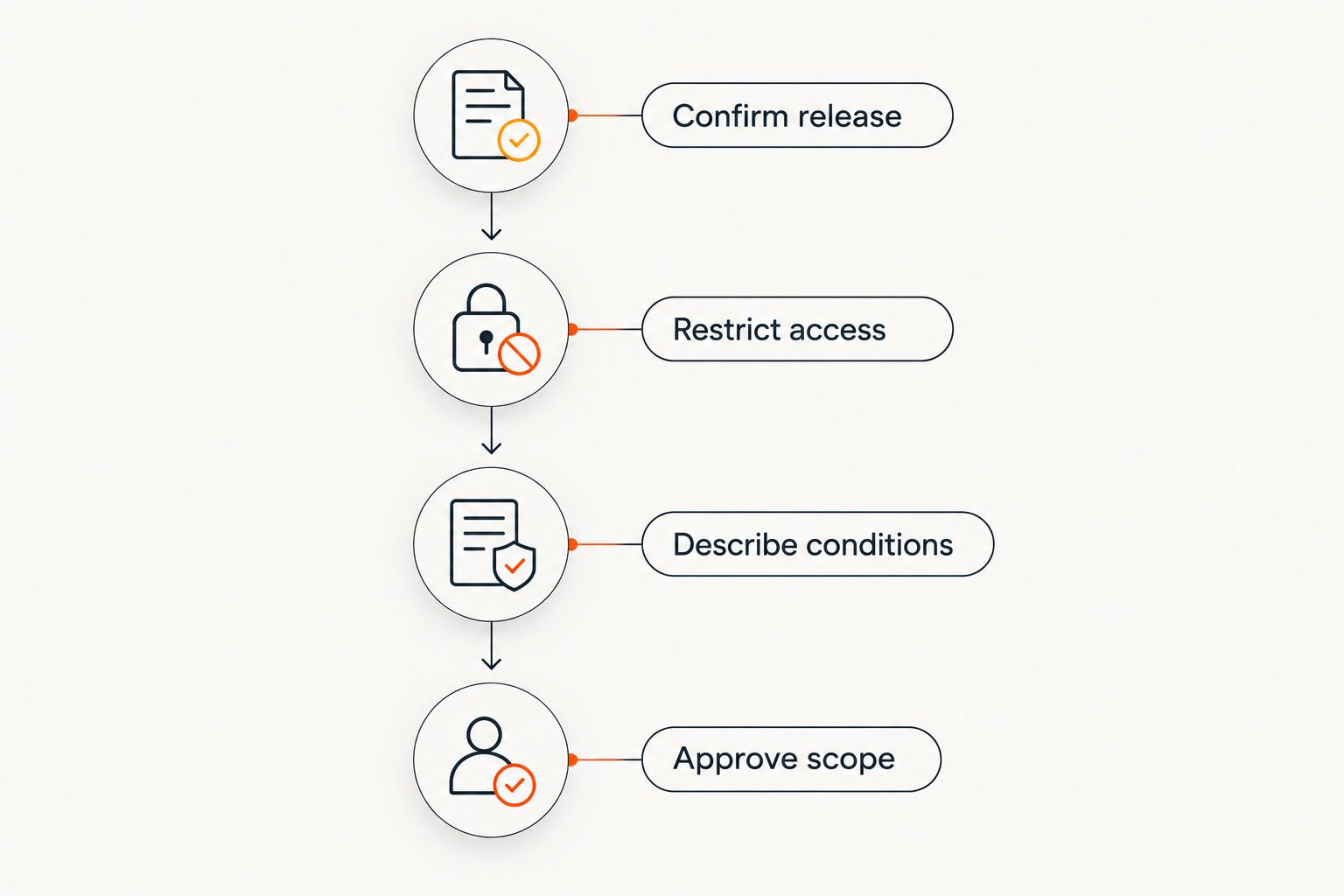
The first decisions concern access and exposure, not stain removal. Use this sequence for a 2026 cleanup inquiry without entering the affected area to investigate.
Confirm release
Ask the investigating authority whether the scene has been released. Do not assume that an officer leaving the property means you can move belongings or begin cleanup.
If there is an active threat, injury, or immediate emergency, call 911. A cleanup contractor does not replace police, fire, or emergency medical services.
Restrict access
Keep people and animals away from the affected area. Do not ask maintenance staff, tenants, or family members to begin wiping surfaces or carrying items out.
Avoid moving potentially contaminated belongings through clean rooms. Tell the contractor about any movement that has already occurred so the assessment can address it.
Describe conditions
Give the contractor the location, property type, scene-release status, and known affected areas. Report visible water, fire damage, sharps, or other hazards without approaching them for a closer look.
Photograph conditions only when authorities permit access and you can do so without exposure. Do not touch or reposition material for a clearer image.
Approve scope
Identify the person authorized to approve work and disposal decisions. Request the proposed boundaries, exclusions, and documentation before signing.
Questions that separate a useful assessment from a vague promise
For your 2026 comparison, send each prospective contractor the same questions. Comparable answers make it easier to spot exclusions before work starts.
- What incident are you accepting? Get confirmation that the assignment matches the company's services.
- What area will you assess? Ask how the contractor will consider adjacent rooms and concealed materials where relevant.
- What will be removed? Require an explanation of disposal decisions and who approves them.
- What stays outside the agreement? Separate cleanup from repairs, contents replacement, and other work.
- Who handles waste? Establish responsibility for packaging, transport, and disposal.
- What marks completion? Request a written description of completed work and unresolved conditions.
Do not substitute odor removal for contamination assessment. A room's smell does not establish whether affected materials have been addressed.
Likewise, a disinfectant application alone does not explain the entire cleanup process. Ask how the contractor will address visible material, affected surfaces, product directions, and any required removal.
Discuss your biohazard cleanup needs
Phoenix Restoration Group provides 24/7 emergency biohazard restoration in Central Iowa.
How these options were ranked
This 2026 guide prioritizes stated local coverage and emergency availability for the named provider, then separates specialist searches by residential and commercial use case. The criteria are incident fit, access, exposure controls, material decisions, waste handling, and documentation.
The ranking is a starting point for selecting a service route. It does not establish crime-scene certifications, guaranteed dispatch times, or outcomes for an individual property.
Which crime scene cleanup option should you choose?
Start with the local emergency biohazard restoration option, then confirm the exact incident scope. Choose a residential trauma specialist search when household materials and belongings drive the assignment; choose a commercial contractor search when access control and building operations drive it.
For any option, the final selection should rest on the contractor's written answers. Do not authorize work solely because a company appears in a 2026 roundup or says it handles emergencies.
FAQ
What's the best first call for crime scene cleanup in Central Iowa?
Phoenix Restoration Group is a local first call for 24/7 biohazard restoration in Carlisle, Des Moines, and Central Iowa. Confirm that the company accepts your specific crime-scene incident before arranging work.
Can cleanup start before police release the scene?
Do not begin cleanup while authorities control the scene. Confirm release with the investigating authority before entering, moving belongings, or authorizing cleanup.
Is crime scene cleanup the same as regular house cleaning?
No. Crime scene cleanup can involve blood, other potentially infectious materials, contaminated contents, and building materials that require incident-specific controls and assessment.
Does 24/7 service mean a crew will arrive immediately?
No. Around-the-clock availability does not establish an arrival time; ask the contractor to confirm dispatch, access requirements, and acceptance of the assignment.
Can I clean up blood myself before the contractor arrives?
Do not begin cleanup or move potentially contaminated material before the hazards are assessed. Restrict access and ask the contractor what information is needed without entering the affected area.
What should a written crime scene cleanup scope include?
A written scope should identify the work area, cleaning and removal tasks, disposal responsibilities, exclusions, and completion documentation. It should also identify who can authorize changes and disposal of belongings.
Can employees clean a crime scene at a business?
Do not assign employees to handle blood or other potentially infectious materials without addressing the applicable workplace exposure requirements. OSHA's Bloodborne Pathogens standard, 29 CFR 1910.1030, sets employer requirements where it applies.
One last thing
Ask who can authorize disposal before anyone starts removing belongings. A property manager, tenant, owner, and family representative do not automatically have interchangeable authority over affected contents. Establish the decision-maker and document disputed items before removal, not after.