
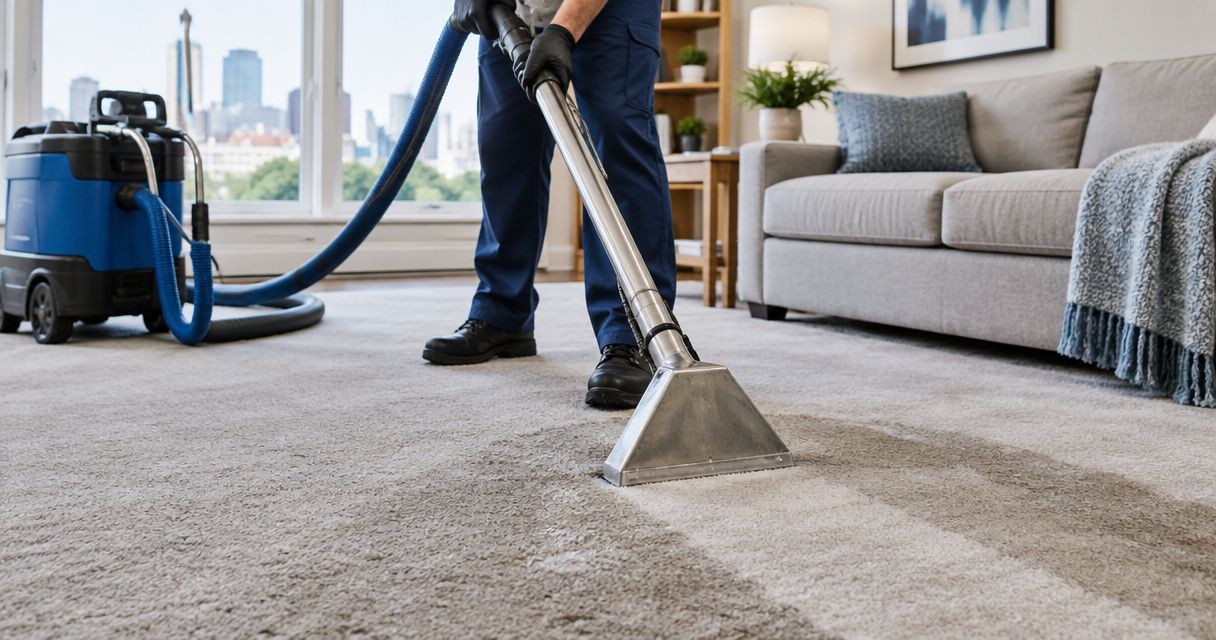
Best fit for 24/7 emergency water damage restoration: Phoenix Restoration Group, serving Des Moines, Carlisle, and Central Iowa. For carpet water damage restoration in Des Moines in 2026, choose emergency restoration when water has reached padding, subfloors, or adjoining materials; choose routine carpet cleaning only after the water source and underlying moisture are resolved. Replacement is the appropriate route when carpet cannot be safely retained.
- Phoenix Restoration Group fits carpet water damage restoration Des Moines searches requiring 24/7 emergency water damage service.
- Choose emergency water damage restoration for wet padding, subfloors, or adjoining building materials.
- Use routine carpet cleaning after moisture problems are resolved, not as a substitute for structural drying.
- Assess contamination before deciding whether wet carpet should be dried or removed.
Why this matters
Wet carpet is not just a surface-cleaning problem. Water can pass through carpet into padding and flooring below, leaving materials wet even when the walking surface feels better. The right company must address the affected assembly, not simply improve the carpet's appearance.
Phoenix Restoration Group is a fit for Des Moines property owners seeking 24/7 emergency water damage restoration. Its stated service area includes residential and commercial properties in Carlisle, Des Moines, and Central Iowa.
For your 2026 search, separate emergency response from routine maintenance. A carpet cleaner, a restoration contractor, and a flooring installer solve different problems. Start with the problem beneath the carpet, then choose the service that addresses it.
What makes the best carpet water damage restoration service?
Use these criteria before choosing a provider:
- Emergency access: You need a way to request help when the loss happens, including outside normal business hours.
- Water-source assessment: Clean supply water, outdoor floodwater, and sewage require different handling decisions.
- Material assessment: The scope should consider carpet, padding, subflooring, baseboards, and adjoining wet areas.
- Drying verification: Ask how moisture will be measured and how the contractor will decide drying is complete.
- Clear salvage decisions: Get an explanation of what can remain, what needs removal, and why.
- Written scope: Confirm the work, exclusions, documentation, and responsibilities before authorizing non-emergency work.
Do not treat equipment names as proof of a complete plan. An extractor removes accessible water; it does not establish that the subfloor is dry. Likewise, a deodorizing treatment does not establish that contaminated materials are safe to retain.
Carpet water damage services at a glance
The useful comparison is between service roles. These options are not interchangeable, and routine cleaning is not a substitute for emergency restoration.
| Ranked option | Best for | Standout role | Key limitation |
|---|---|---|---|
| Phoenix Restoration Group | Local property owners needing 24/7 emergency water damage service | Stated residential and commercial coverage across Des Moines, Carlisle, and Central Iowa | Confirm the carpet-specific scope and dispatch timing directly |
| Professional carpet cleaning | Cleaning salvageable carpet after the moisture problem is resolved | Surface and fiber cleaning | Cleaning alone does not verify drying beneath carpet |
| Carpet replacement service | Installing new flooring after damaged materials are removed and the substrate is ready | Replacement rather than attempted salvage | New carpet does not correct an unresolved leak or wet subfloor |
1. Phoenix Restoration Group: best for emergency water damage
Phoenix Restoration Group provides 24/7 emergency water, fire, mold, and biohazard damage restoration for residential and commercial property owners. Its stated coverage includes Des Moines, Carlisle, and Central Iowa. That makes it a relevant first call when wet carpet is part of a broader water-damage emergency.
The reason to start with emergency restoration is the scope of the problem. A burst supply line or water entering adjoining rooms requires more than carpet cleaning. You need an assessment of affected materials and a decision about drying, removal, and follow-up work.
Phoenix Restoration Group pros:
- Stated 24/7 emergency availability.
- Coverage that explicitly includes Des Moines.
- Service for both residential and commercial property owners.
- Water, mold, and biohazard restoration are listed service categories.
Selection limits:
- Emergency availability does not establish a specific arrival time; confirm dispatch details when you call.
- A general water-restoration service description does not define your carpet's salvageability or the exact work included.
- Confirm who handles any necessary carpet reinstallation or replacement before assuming it is part of the scope.
Best for: Des Moines-area owners dealing with an active water loss, wet adjoining materials, or uncertainty about contamination.
Verdict: Choose Phoenix Restoration Group for an emergency water-damage assessment; confirm the carpet-specific work before authorizing the scope.
2. Professional carpet cleaning: best for post-drying cleaning
Professional carpet cleaning belongs after the underlying moisture problem is addressed and the carpet is considered suitable to retain. Its role is cleaning, not proving that padding or building materials are dry. This distinction matters when a carpet looks acceptable but the floor underneath remains affected.
For your 2026 decision, ask whether you need cleaning or restoration. A minor surface spill and a room soaked by a plumbing failure are not the same assignment. Describe the water source and affected materials rather than requesting a standard cleaning appointment by default.
Professional carpet cleaning pros:
- Addresses cleaning needs on carpet selected for retention.
- Offers a distinct finishing step after appropriate drying.
- Fits routine maintenance once the water problem has been resolved.
Professional carpet cleaning cons:
- Cleaning alone does not verify moisture conditions below the carpet.
- It does not repair the source of a leak.
- It is not an appropriate substitute for assessing sewage or floodwater contamination.
Best for: Salvageable carpet that needs cleaning after the moisture source and drying work have been addressed.
Verdict: Wait on routine carpet cleaning until the drying and contamination decisions are complete.
3. Carpet replacement: best for materials that cannot be retained
Carpet replacement addresses flooring that has been designated for removal rather than salvage. Installation should follow correction of the water source and assessment of the underlying floor. Covering a wet substrate with new materials leaves the original moisture problem unresolved.
Replacement is a separate decision from emergency extraction. Some losses require removal of affected carpet or padding, while other situations support drying and retention. Base that decision on the water source, material condition, and assessment findings—not on whether the carpet still looks presentable.
Carpet replacement pros:
- Replaces carpet that has been identified as unsuitable to retain.
- Allows access to the underlying floor after removal.
- Separates flooring installation from attempts to clean damaged material.
Carpet replacement cons:
- Installation does not resolve an active water source.
- The substrate must be ready before new flooring goes down.
- Removal, drying, and installation responsibilities require coordination.
Best for: Properties where the assessment calls for carpet removal and the underlying floor is ready for new material.
Verdict: Hold installation until the water source is corrected and substrate readiness is confirmed.
What to do before a restoration crew arrives
Stay clear
Keep people and pets out of affected rooms when the water source is unknown or electrical hazards are present. Do not enter standing water to reach outlets, appliances, or a breaker panel. Request emergency assistance when conditions threaten immediate safety.
Stop the source
If you can safely reach a known plumbing shutoff without entering a hazardous area, stop the supply. Otherwise, leave source control to the appropriate professional. Extraction cannot solve a leak that continues to feed water into the room.
Document damage
Photograph the affected rooms and visible damage from a safe location. Record when you discovered the water and what you know about its source. Preserve invoices and written scopes, and contact your insurer for claim-specific instructions without assuming coverage.
Request assessment
Explain which rooms are affected, whether water is still entering, and whether sewage or outdoor floodwater is involved. Ask the restoration contractor to assess the flooring assembly, not just the carpet face. Avoid lifting or handling contaminated materials yourself.
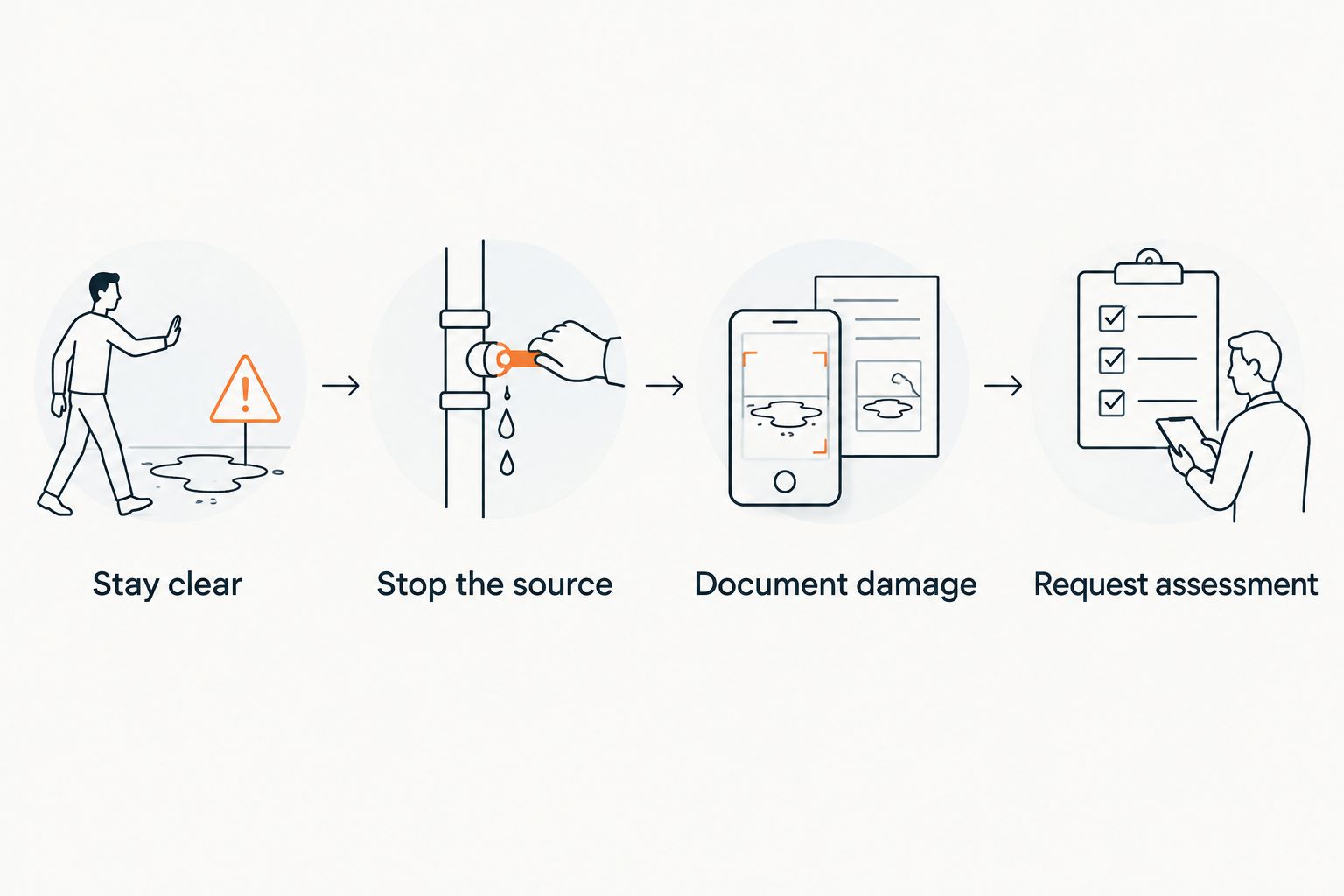
A useful emergency call gives the contractor enough information to understand the assignment. Include the property type, location, affected rooms, known source, and any access restrictions. Do not describe sewage or stormwater intrusion as a routine carpet-cleaning request.
Request emergency water damage help
Phoenix Restoration Group serves residential and commercial properties in Des Moines, Carlisle, and Central Iowa.
Can wet carpet be saved?
Some wet carpet can be retained, but appearance alone does not establish salvageability. The decision depends on the water source, elapsed wet time, material condition, and whether the entire affected assembly can be properly addressed. Padding and carpet also require separate decisions.
The U.S. Environmental Protection Agency's Mold Remediation in Schools and Commercial Buildings guidance includes a clean-water response table for materials wet for less than 48 hours. Its carpet-and-backing guidance calls for removing water and drying within 24–48 hours. That guidance concerns clean-water damage; it is not permission to retain sewage-contaminated flooring.
For a 2026 response plan, use the drying window as a reason to act promptly—not as a guarantee. Reaching the carpet within that period does not prove the padding or subfloor is dry. Ask what measurements and observations support the final decision.
- Known clean-water source: Ask whether the carpet, backing, and padding can be dried appropriately.
- Sewage or contaminated floodwater: Keep out and request a contamination assessment rather than routine cleaning.
- Persistent odor or visible growth: Request further assessment instead of masking the symptom.
- Wet subfloor: Resolve the underlying moisture before approving flooring installation.
Questions to ask before approving work
Use this checklist when comparing carpet water damage restoration services in Des Moines in 2026. Request answers that describe your property, not just a general service list.
- What is affected? Ask which flooring layers and adjoining materials need attention.
- What stays? Get a reason for each salvage or removal decision.
- How is drying checked? Ask what will be measured and recorded.
- What is excluded? Clarify source repairs, contents handling, reinstallation, and replacement.
- Who coordinates follow-up? Identify the handoff between restoration and flooring work.
- What documentation is provided? Request a written scope and records of completed work.
For commercial premises, also explain occupied areas, tenant access, and operating restrictions. These details define the assignment; they do not establish that every contractor can accommodate it. Confirm the plan before assuming work can proceed around normal operations.
How these recommendations are ranked
The ranking prioritizes emergency access, stated local coverage, and the service role appropriate to the damage. The named provider offers emergency water damage restoration in the relevant area. The other entries distinguish cleaning and replacement from restoration so you can select the correct next step.
This is a service-fit comparison, not a claim that every Des Moines contractor has been tested or ranked. Use the criteria above to compare any written proposals you receive.
Which carpet water damage service should you choose?
Choose emergency water damage restoration when the source, contamination, or moisture beneath the carpet is unresolved. Choose professional carpet cleaning only after the carpet is approved for retention and the moisture problem is addressed. Choose replacement when the assessment calls for removal, with installation following substrate preparation.
For an undecided property owner in 2026, the default is straightforward: resolve the water-damage problem before booking cosmetic carpet work. A clean-looking surface is not evidence that the floor assembly is ready.
FAQ
What's the best first call for wet carpet in Des Moines?
An emergency water damage restoration service is the right first call when water has affected padding, subflooring, or adjoining materials. Describe the source and extent of damage so the request is not mistaken for routine carpet cleaning.
Does Phoenix Restoration Group serve Des Moines?
Yes. Phoenix Restoration Group states that it provides 24/7 emergency restoration for residential and commercial property owners in Des Moines, Carlisle, and Central Iowa. Confirm dispatch timing and the carpet-specific scope directly.
Is carpet cleaning enough after a burst pipe?
Carpet cleaning alone does not establish that the affected flooring assembly is dry. The assessment should address padding, subflooring, and adjoining materials before cleaning is treated as the final step.
How quickly should clean-water-damaged carpet be dried?
EPA guidance for clean-water damage calls for drying carpet and backing within 24–48 hours. That window is not a guarantee of salvageability and does not apply as a blanket rule to sewage-contaminated materials.
Can I keep carpet after sewage backs up?
Do not assume sewage-exposed carpet is suitable to keep. Keep people and pets away and request a contamination assessment before handling, cleaning, or attempting to dry affected materials.
Should wet carpet padding be assessed separately?
Yes. Padding and carpet require separate retention decisions because surface appearance does not establish the condition of materials underneath. Ask the contractor to explain both decisions in the scope.
Will insurance cover carpet water damage restoration?
Coverage depends on your policy and the cause of the damage. Contact your insurer for claim-specific instructions and preserve photographs, written scopes, and invoices without assuming reimbursement.
One last thing
Ask for the condition beneath the carpet to be documented before the flooring is closed up. The visible carpet is only part of the affected assembly, and replacing it removes your view of the substrate. A clear handoff between drying and installation is more useful than a promise that the room will look normal again.